
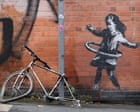
The Guardian view on anonymity in art: the ‘unmasking’ of Banksy and Ferrante should stop | Editorial
#Banksy #Elena Ferrante #anonymity #art #editorial #unmasking #The Guardian
📌 Key Takeaways
- The Guardian editorial argues against the public unmasking of anonymous artists like Banksy and Elena Ferrante.
- It asserts that anonymity is a legitimate artistic choice that should be respected by the public and media.
- The piece suggests that revealing identities undermines the artists' work and their intended relationship with the audience.
- It calls for a cultural shift to value the art itself over the celebrity or personal details of the creator.
📖 Full Retelling
🏷️ Themes
Artistic Anonymity, Media Ethics
📚 Related People & Topics
Elena Ferrante
Pseudonymous Italian writer
Elena Ferrante (Italian pronunciation: [ˈɛːlena ferˈrante]) is a pseudonymous Italian novelist. Ferrante's books, originally published in Italian, have been translated into many languages. Her four-book series of Neapolitan Novels are her most widely known works.
Banksy
Graffiti artist, political activist and painter
Banksy is a pseudonymous England-based street artist, political activist, and film director whose real name and identity remain unconfirmed and the subject of speculation. Active since the 1990s, his satirical street art and subversive epigrams combine dark humour with graffiti executed in a distinc...

The Guardian
British national daily newspaper
The Guardian is a British daily newspaper. It was founded in Manchester in 1821 as The Manchester Guardian and changed its name in 1959, followed by a move to London. Along with its sister paper, The Guardian Weekly, The Guardian is part of the Guardian Media Group, owned by the Scott Trust Limited.
Entity Intersection Graph
No entity connections available yet for this article.
Mentioned Entities
Deep Analysis
Why It Matters
This editorial matters because it defends artistic anonymity as a legitimate creative choice that protects artists from celebrity culture and allows their work to speak for itself. It affects artists who choose anonymity, their audiences who engage with the work on its own terms, and media outlets that pursue 'unmasking' stories. The debate touches on fundamental questions about artistic integrity, privacy rights, and whether public curiosity should override an artist's chosen relationship with their audience.
Context & Background
- Banksy is a pseudonymous England-based street artist whose identity has been speculated about since the early 2000s, with his work often containing political and social commentary.
- Elena Ferrante is the pseudonym of an Italian novelist whose true identity was controversially revealed by an investigative journalist in 2016 against her stated wishes.
- Artistic anonymity has historical precedents including the Brontë sisters publishing under male pseudonyms (Currer, Ellis, and Acton Bell) in the 19th century.
- The tension between public curiosity and artistic privacy has intensified with digital media and data analysis tools that make 'unmasking' easier.
- Many anonymous artists argue that removing their personal identity allows audiences to focus purely on the work's message rather than the creator's biography.
What Happens Next
Media outlets will likely continue facing ethical decisions about whether to publish speculative 'unmasking' stories, potentially leading to industry guidelines. Legal frameworks around artistic pseudonyms and privacy may see renewed discussion, especially in Europe with strong data protection laws. The debate may influence how platforms handle anonymous artistic content, and we could see more artists choosing collective or rotating pseudonyms to further complicate identification attempts.
Frequently Asked Questions
They choose anonymity to separate their personal lives from their artistic work, allowing audiences to engage with the art itself rather than the creator's identity. This also protects them from celebrity culture and enables more authentic creative expression without public persona constraints.
Unmasking violates the artist's chosen relationship with their audience and can distort how the work is received. It turns artistic discussion into celebrity gossip and may cause artists to withdraw or alter their creative output due to lost privacy.
While public curiosity is natural, the editorial argues there's rarely legitimate public interest that outweighs an artist's right to creative anonymity. True artistic appreciation doesn't require biographical knowledge, and unmasking often serves commercial media interests more than public enlightenment.
Anonymity can both challenge and intrigue the art market—while some collectors value the mystery, others want provenance certainty. Banksy's work has gained value despite (or because of) anonymity, showing market adaptation to pseudonymous artists.
Protections vary by jurisdiction but generally include copyright law (protecting the work regardless of name), privacy laws, and in some cases contractual agreements. However, these often conflict with free speech rights of journalists and researchers investigating identities.