
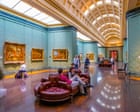
The Guardian view on the funding crisis at the National Gallery: the public should not pay the price | Editorial
#National Gallery #Funding Crisis #Free Access #Cultural Institutions #UK Culture #Art Funding #Public Museums #Heritage
📌 Key Takeaways
- The National Gallery faces an £8.2m deficit, potentially leading to reduced free access and job losses
- The crisis reflects broader difficulties in the UK's cultural sector, with institutions like the Tate also making cuts
- Founded in 1824 with the principle of free access, the gallery now houses 2,300 paintings
- Two £150m donations are ringfenced for a new contemporary art wing, not operational costs
📖 Full Retelling
The National Gallery in London is facing a severe funding crisis with an £8.2m deficit for the coming year in 2025, potentially forcing the institution to reduce free exhibitions, increase ticket prices, limit international borrowing, and cut jobs, according to recent announcements that come just months after the gallery celebrated its 200th anniversary with record-breaking visitor numbers. The prestigious institution, which houses Leonardo da Vinci, Titian, and Rembrandt masterpieces, has been slow to recover from the pandemic, with visitor numbers dropping from 6 million annually to 3.8 million in the 12 months to September 2025. Despite recent successes including a blockbuster Van Gogh exhibition that attracted 335,000 visitors and a 60% increase in visitors during its 200th anniversary celebrations, the gallery's financial situation has deteriorated rapidly due to public funding cuts, inflation, and challenges with corporate sponsorship. The crisis reflects a broader perilous state for the UK's cultural sector, with similar difficulties reported at the Tate (which lost 7% of its workforce) and London's Royal Academy. The National Gallery receives an annual government grant of £32m, covering roughly half its costs, with the remainder coming from exhibition fees, commercial activities, and philanthropic support. Two significant donations of £150m each have been ringfenced specifically for building a new wing for contemporary art, not for daily operational expenses. As the UK celebrates the 25th anniversary of its policy providing free admission to national museums and galleries, the funding crisis has reignited debate about whether maintaining this access should remain a priority amid competing demands for increased spending in areas like defense and special educational needs.
🏷️ Themes
Cultural Funding, Public Access, Heritage Preservation, Government Priorities
📚 Related People & Topics

National Gallery
Art museum in London, England
The National Gallery is an art museum in Trafalgar Square in the City of Westminster, in Central London, England. Founded in 1824, it houses a collection of more than 2,300 paintings dating from the mid-13th century to 1900. The current director of the National Gallery is Gabriele Finaldi.
Entity Intersection Graph
No entity connections available yet for this article.
Mentioned Entities
Original Source
The Guardian view on the funding crisis at the National Gallery: the public should not pay the price Editorial Financial difficulties at one of the UK’s most prestigious institutions are a sign of the times. But maintaining free access to great art must be a priority “T he National Gallery is doing a great job isn’t it?” David Hockney reflected in 2024. “Everything in the collection is good, every single picture is good.” Judging by recent performance, the artist would seem to be right. The gallery’s blockbuster Van Gogh exhibition closed in January last year after a record-breaking 335,000 visitors. Its 200th anniversary celebrations, including the opening of the newly designed Sainsbury Wing and rehang , attracted a 60% rise in visitors since May. But barely 10 months later, the art world is digesting the stark news that the National Gallery will face a deficit of £8.2m in the coming year. Proposed cuts could include fewer free exhibitions, higher ticket prices, less international borrowing and job losses. Two huge cash donations of £150m each are ringfenced to build an ambitious new wing for contemporary art , not for daily running costs. The National’s predicament is a grim reflection of the perilous state of the country’s cultural sector as a whole. Last year the Tate lost 7% of its workforce , and staff took strike action over “endemic low pay”; jobs have been also lost at London’s opulent Royal Academy. Public funding cuts, inflation and dilemmas of corporate sponsorship have left many institutions struggling. The National Gallery has been slow to recover from the pandemic, with visitor numbers down from 6 million a year to 3.8 million in the 12 months to September 2025. One of the gallery’s founding principles, when it opened on 10 May 1824, was that it must be “free to anyone who applied at the door” . What began with 38 paintings, bought by the government after the death of a financier collector , is now a collection of 2,300. In the 1850s, its first direc...
Read full article at source