
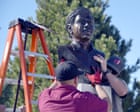
The legend of Cesar Chavez will never be the same after multiple rape allegations | Moira Donegan
#Cesar Chavez #rape allegations #Moira Donegan #labor rights #legacy #historical figures #misconduct
📌 Key Takeaways
- Multiple rape allegations have emerged against Cesar Chavez, challenging his legacy.
- The allegations are detailed in a report by Moira Donegan, prompting public reevaluation.
- Chavez's iconic status as a labor and civil rights leader is now under scrutiny.
- The story highlights the broader issue of reassessing historical figures amid misconduct claims.
📖 Full Retelling
🏷️ Themes
Historical Reckoning, Sexual Misconduct
📚 Related People & Topics

Cesar Chavez
American civil rights activist (1927–1993)
Cesario Estrada Chavez (; Spanish: [ˈtʃaβes]; March 31, 1927 – April 23, 1993) was an American labor leader and civil rights activist. Along with Dolores Huerta and lesser known Gilbert Padilla, he co-founded the National Farm Workers Association (NFWA), which later merged with the Agricultural Work...
Shitty Media Men
Crowdsourced allegations of sexual misconduct in the media industry
Shitty Media Men was a crowdsourced Google spreadsheet created in October 2017 that collected allegations and rumors of sexual misconduct by about 70 men in the media industry, particularly in New York City. Moira Donegan, a former assistant editor at The New Republic, initially began the spreadshee...
Entity Intersection Graph
Connections for Cesar Chavez:
Mentioned Entities
Deep Analysis
Why It Matters
This news matters because it challenges the legacy of one of America's most celebrated labor and civil rights icons, potentially reshaping how historical figures are remembered and evaluated. It affects the Latino community, labor movement supporters, historians, and educational institutions that teach about Chavez's contributions. The allegations force a reexamination of how society balances a leader's public achievements against private misconduct, with implications for how other revered historical figures might be similarly scrutinized.
Context & Background
- Cesar Chavez (1927-1993) co-founded the United Farm Workers union and became a national symbol for labor rights and nonviolent protest
- Chavez has been honored with a federal holiday in several states, numerous schools and streets named after him, and a posthumous Presidential Medal of Freedom
- The #MeToo movement since 2017 has led to renewed scrutiny of historical figures' personal conduct alongside their public legacies
- Previous historical reassessments have affected figures like Thomas Jefferson, Mahatma Gandhi, and Martin Luther King Jr. regarding their personal lives
What Happens Next
Historians and biographers will likely conduct deeper investigations into the allegations and Chavez's personal life. Educational materials may be revised to present a more nuanced portrait. The United Farm Workers and related organizations may issue statements addressing these claims. Public commemorations of Chavez may face renewed debate about whether to maintain, modify, or contextualize tributes to his legacy.
Frequently Asked Questions
The article references multiple rape allegations, though specific details would require examination of the original reporting. Such allegations typically involve claims of sexual assault or misconduct that contradict Chavez's public image as a moral leader.
Chavez's legacy will likely become more complex, with historians and the public grappling with how to reconcile his labor movement achievements with serious personal misconduct allegations. This parallels similar reassessments of other historical figures whose private behavior contradicted their public values.
The #MeToo movement has created an environment where victims feel more empowered to come forward about historical abuse. Changing social norms around discussing sexual violence have made previously suppressed or ignored allegations more likely to surface and be taken seriously.
Schools and museums will need to decide whether to present a more balanced portrait that acknowledges both achievements and allegations, potentially using this as a case study in how societies evaluate complex historical figures. This presents challenges for curriculum developers and public historians.