
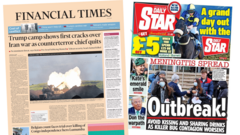
The Papers: 'First cracks' in Trump camp over Iran war and UK tackles meningitis outbreak
#US Iran conflict #Israel military operations #Trump advisors divided #UK meningitis outbreak #national emergency #public health crisis #vaccination drive
📌 Key Takeaways
- US-Israel military operations against Iran continue
- Cracks emerging in Trump's foreign policy team over Iran approach
- UK declares national emergency over meningitis outbreak
- Health services implementing urgent vaccination campaigns
📖 Full Retelling
🏷️ Themes
International Conflict, Public Health Emergency
📚 Related People & Topics

BBC News (British TV channel)
British 24-hour television news channel
The BBC News channel is a British free-to-air public broadcast television news channel owned and operated by the BBC. The channel is based at and broadcasts from Broadcasting House in the West End of London from which it is anchored during British daytime, with overnight broadcasts anchored from Was...
Entity Intersection Graph
Connections for BBC News (British TV channel):
Mentioned Entities
Deep Analysis
Why It Matters
This news is important as it highlights two critical developments with significant global implications. The US-Iran tensions could escalate into a wider regional conflict, affecting international stability, oil markets, and potentially drawing in other nations. Meanwhile, the UK's meningitis outbreak represents a serious public health emergency that could impact thousands of citizens and strain healthcare resources. Both developments require immediate attention and coordinated responses to prevent further escalation and harm.
Context & Background
- The US and Iran have had strained relations since the 1979 Iranian Revolution, with periods of heightened tension over nuclear ambitions and regional influence
- Former President Trump withdrew the US from the Iran nuclear deal in 2018 and implemented 'maximum pressure' sanctions, including the 2020 assassination of Iranian General Qasem Soleimani
- Trump's administration maintained a hardline stance against Iran, with advisors often advocating for maximum pressure tactics
- The UK has experienced periodic meningitis outbreaks, with vaccination programs in place for several strains, though new virulent strains can emerge
- Meningitis is an inflammation of the protective membranes covering the brain and spinal cord, caused by viruses, bacteria, or fungi
- National health emergencies are declared when outbreaks spread rapidly, affect multiple regions, and overwhelm healthcare capacity
What Happens Next
For the Iran situation, we can expect continued diplomatic efforts to de-escalate tensions, with potential UN Security Council involvement. Trump's advisors may publicly voice their concerns more forcefully if military operations intensify. For the meningitis outbreak, the UK will likely expand vaccination campaigns, implement stricter public health measures, and potentially request international assistance if the situation worsens. Health authorities will continue enhanced surveillance in schools, universities, and healthcare facilities, with possible travel restrictions or public health advisories being issued.
Frequently Asked Questions
Symptoms include sudden fever, severe headache, stiff neck, sensitivity to light, confusion, nausea, and vomiting. In some cases, a distinctive rash may appear that doesn't fade when pressed.
The Middle East is critical for oil production and shipping. Any escalation could disrupt oil supplies, potentially causing price spikes and economic instability worldwide, as seen in previous regional conflicts.
The Iran nuclear deal (JCPOA) was an agreement limiting Iran's nuclear program in exchange for sanctions relief. The US withdrew in 2018, citing concerns about Iran's ballistic missile program and regional activities.
Meningitis vaccines are generally effective against specific bacterial strains, but may not protect against all types. Health authorities are likely identifying the specific strain to determine which vaccines are most appropriate for the outbreak response.
Advisors may be concerned about potential military escalation leading to broader regional conflict, negative political consequences, or economic impacts from oil price volatility. Some may prefer diplomatic solutions over continued military pressure.