
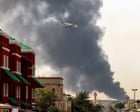
The war in Iran is ripping up the Gulf’s plan for stability | Sanam Vakil
#Iran #Gulf #stability #war #security #diplomacy #instability
📌 Key Takeaways
- The conflict in Iran is disrupting Gulf stability plans.
- Regional security strategies are being undermined by the war.
- Diplomatic efforts for stability are facing significant challenges.
- The situation may lead to broader regional instability.
📖 Full Retelling
🏷️ Themes
Regional Conflict, Security
📚 Related People & Topics

Iran
Country in West Asia
# Iran **Iran**, officially the **Islamic Republic of Iran** and historically known as **Persia**, is a sovereign country situated in West Asia. It is a major regional power, ranking as the 17th-largest country in the world by both land area and population. Combining a rich historical legacy with a...

Bay
Recessed, coastal body of water connected to an ocean or lake
A bay is a recessed, coastal body of water that directly connects to a larger main body of water, such as an ocean, a lake, or another bay. A large bay is usually called a gulf, sea, sound, or bight. A cove is a small, circular bay with a narrow entrance.
Entity Intersection Graph
Connections for Iran:
Mentioned Entities
Deep Analysis
Why It Matters
This analysis matters because it highlights how Iran's internal conflict is destabilizing the entire Gulf region, which is crucial for global energy security and economic stability. The disruption affects neighboring countries' security strategies, international diplomatic efforts, and could trigger wider regional instability. This impacts global oil markets, international shipping through critical waterways like the Strait of Hormuz, and the security interests of major powers including the US, China, and European nations.
Context & Background
- The Gulf region has historically been a geopolitical flashpoint with tensions between Iran and Arab Gulf states dating back decades
- Iran has pursued regional influence through proxy networks and military capabilities while Gulf Arab states have sought security through US partnerships and economic diversification
- Recent years saw diplomatic efforts like the 2021 Iraq-mediated talks between Saudi Arabia and Iran aimed at reducing tensions
- The Gulf Cooperation Council (GCC) states have developed Vision 2030-style economic plans requiring regional stability for successful implementation
- The Strait of Hormuz handles about 20% of global oil consumption, making regional stability a vital international concern
What Happens Next
Expect increased security deployments by Gulf Arab states and their international partners, potential escalation of proxy conflicts in neighboring countries like Yemen and Syria, and possible emergency OPEC+ meetings to address oil market volatility. Diplomatic efforts through regional mediators like Oman or Iraq may intensify, while international powers will likely increase naval presence in the Gulf waters. The situation may affect upcoming GCC summit agendas and could influence Iran's nuclear negotiations timeline.
Frequently Asked Questions
Iran's instability threatens oil exports through the Strait of Hormuz, potentially disrupting 20% of global oil supply. This creates market uncertainty that typically drives prices upward, affecting economies worldwide and potentially triggering inflation in energy-importing nations.
Gulf states fear spillover violence, disruption of critical infrastructure like oil facilities, and potential exploitation of internal divisions by regional actors. They're particularly concerned about Iran's missile capabilities and proxy networks that could target their territories or interests.
The US will likely reinforce security commitments to Gulf partners while balancing diplomatic engagement with Iran. This could lead to increased military presence, revised sanctions policies, and intensified coordination with European and regional allies on containment strategies.
Regional mediation through neutral parties like Oman or Iraq could facilitate dialogue, while international frameworks like UN-sponsored talks might address security concerns. Confidence-building measures around maritime security and economic cooperation could provide pathways for de-escalation.
China faces conflicting priorities between maintaining energy imports from the region and preserving its diplomatic relationship with Iran. Beijing may increase mediation efforts while protecting its substantial investments in Gulf infrastructure and energy projects.