
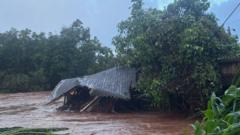
Thousands evacuated as Hawaii faces worst flooding in 20 years
#Hawaii #flooding #evacuation #natural disaster #emergency #infrastructure #damage
📌 Key Takeaways
- Thousands of residents evacuated due to severe flooding in Hawaii
- Flooding described as the worst in the past two decades
- Emergency response efforts underway to manage the crisis
- Significant property damage and infrastructure disruption reported
📖 Full Retelling
🏷️ Themes
Natural Disaster, Emergency Response
📚 Related People & Topics

Hawaii
U.S. state
Hawaii ( hə-WY-ee; Hawaiian: Hawaiʻi [həˈvɐjʔi, həˈwɐjʔi]) is an island state of the United States, in the Pacific Ocean about 2,000 miles (3,200 km) southwest of the U.S. mainland. One of the two non-contiguous U.S. states (along with Alaska), it is the only state not on the North American mainlan...
Entity Intersection Graph
Connections for Hawaii:
Mentioned Entities
Deep Analysis
Why It Matters
This flooding represents the most severe weather event Hawaii has experienced in two decades, directly threatening residents' safety, property, and critical infrastructure. It affects thousands of evacuated families, emergency responders, and local businesses facing operational disruptions. The event highlights Hawaii's vulnerability to extreme weather patterns, which may intensify with climate change, requiring urgent attention to disaster preparedness and infrastructure resilience.
Context & Background
- Hawaii's geography makes it prone to flash flooding, especially during heavy rainfall events in mountainous regions
- The state experienced significant flooding in 2006 that caused widespread damage and prompted infrastructure improvements
- Climate models predict increased frequency and intensity of extreme precipitation events in the Pacific region due to global warming
- Hawaii's emergency management systems were tested during the 2018 Kīlauea eruption, leading to evacuation procedure refinements
- The state's aging drainage infrastructure in some areas may be inadequate for handling unprecedented rainfall volumes
What Happens Next
Emergency crews will conduct damage assessments once waters recede, with initial reports expected within 48-72 hours. State officials will likely request federal disaster declaration for FEMA assistance within the week. Recovery operations may take months, particularly for infrastructure repairs and addressing displaced residents' housing needs.
Frequently Asked Questions
Low-lying coastal communities and valleys on multiple islands are experiencing the worst impacts, particularly where drainage systems are overwhelmed. Specific evacuation zones include floodplains near rivers and streams that have exceeded their banks.
This event exceeds the 2006 floods in both rainfall intensity and geographic scope, making it the most severe in 20 years. Preliminary data suggests rainfall rates have broken records in several locations across the islands.
Evacuated individuals should remain at designated shelters or with host families until authorities declare areas safe for return. They should register with Red Cross and monitor official channels for re-entry instructions and assistance programs.
Warmer ocean temperatures contribute to increased atmospheric moisture, leading to more intense rainfall events. Sea level rise also exacerbates coastal flooding during storm surges, creating compound flooding risks.
The Small Business Administration will likely offer disaster loans, while state programs may provide temporary relief. Businesses should document all damages thoroughly and contact their insurance providers immediately.