
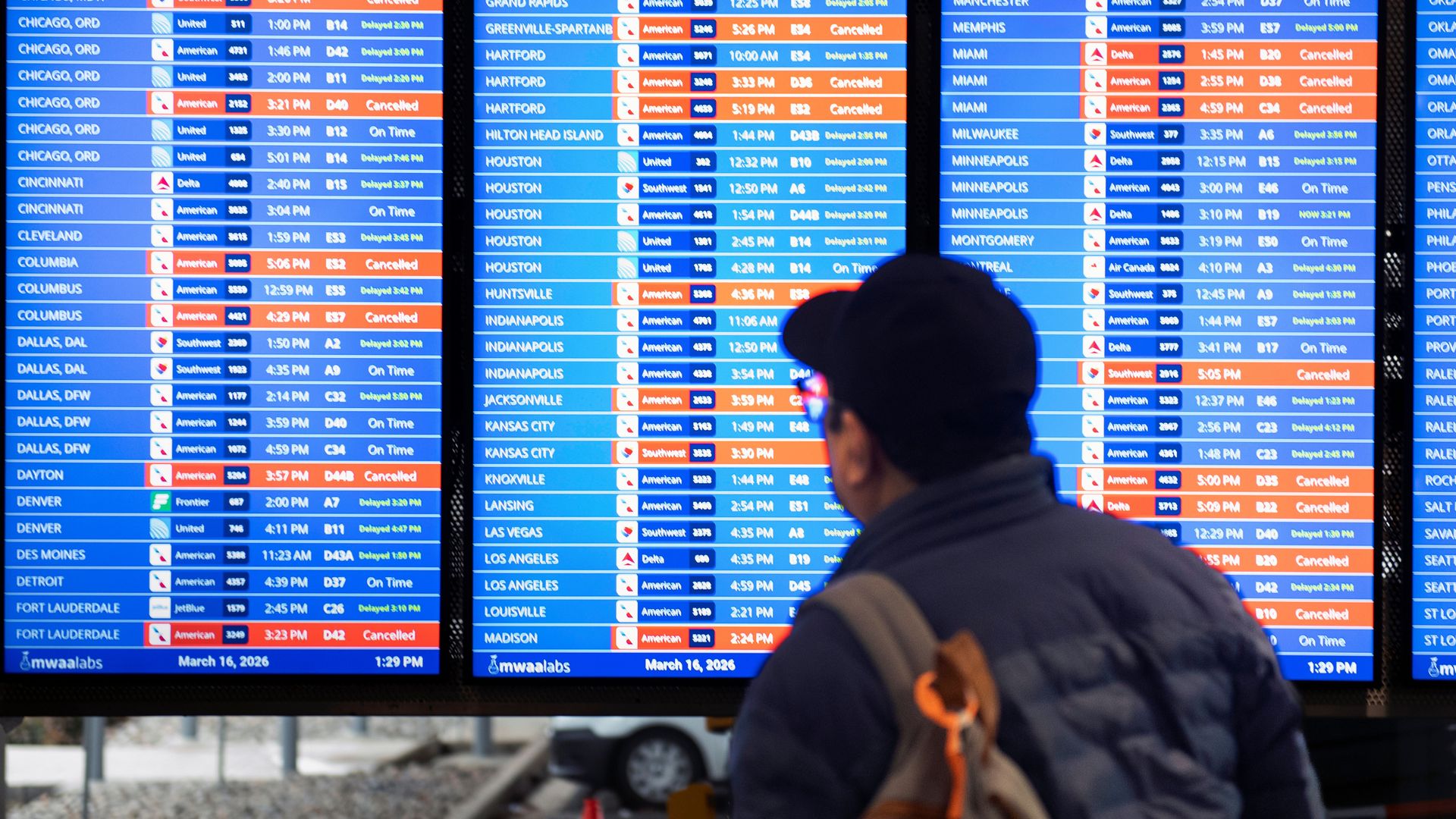
Thousands of US flights cancelled or delayed and several states under tornado watch
#flights cancelled #flights delayed #tornado watch #severe weather #travel disruptions #airports #weather alerts #U.S. flights
📌 Key Takeaways
- Thousands of flights across the U.S. have been cancelled or delayed due to severe weather.
- Several states are under a tornado watch, heightening safety concerns.
- The disruptions are impacting major airports and travel plans nationwide.
- Authorities are advising travelers to check flight statuses and stay informed about weather alerts.
📖 Full Retelling
🏷️ Themes
Travel Disruptions, Severe Weather
Entity Intersection Graph
No entity connections available yet for this article.
Deep Analysis
Why It Matters
This news matters because it represents a major disruption to national transportation affecting hundreds of thousands of travelers during a peak travel period. The combination of severe weather and flight cancellations creates safety risks for people in affected states while causing significant economic losses for airlines and stranded passengers. This event highlights the vulnerability of air travel infrastructure to extreme weather events, which are becoming more frequent due to climate change.
Context & Background
- The US experiences approximately 1,200 tornadoes annually, with peak season typically occurring between April and June
- Major US airlines cancelled over 100,000 flights during the 2022 holiday season due to winter storms and operational issues
- The Federal Aviation Administration (FAA) has been implementing new air traffic control technology to better manage weather-related disruptions since 2021
- Tornado watches are typically issued when conditions are favorable for tornado development, while tornado warnings indicate immediate danger
What Happens Next
The National Weather Service will continue monitoring storm systems and issue updated warnings through the weekend. Airlines will implement recovery schedules over the next 48-72 hours to reposition aircraft and crews. Affected airports will likely experience residual delays through Monday as operations normalize. The Department of Transportation may review airline response protocols if disruptions exceed certain thresholds.
Frequently Asked Questions
Contact your airline immediately for rebooking options, as federal regulations require airlines to provide refunds or rebooking for cancelled flights. Check if travel insurance covers weather-related cancellations, and document all communications with the airline for potential compensation claims.
Tornado watches are usually issued for 4-8 hours and cover broad geographic areas where conditions are favorable for tornado development. Residents should monitor local weather alerts closely, as watches can be upgraded to warnings with little notice when rotation is detected.
Major hub carriers like American, Delta, and United typically experience the highest volume of cancellations during system-wide disruptions. Regional airlines operating smaller aircraft are often first to cancel flights when severe weather approaches.
While airlines aren't required to compensate for weather-related cancellations, they must provide refunds or rebooking. Some carriers may offer hotel or meal vouchers during extended delays, but this varies by airline policy rather than federal mandate.
This event appears similar in scale to the December 2022 holiday cancellations, though likely less severe than the Southwest Airlines operational meltdown that affected nearly 17,000 flights. The combination with active tornado watches makes this particularly dangerous for ground operations.