
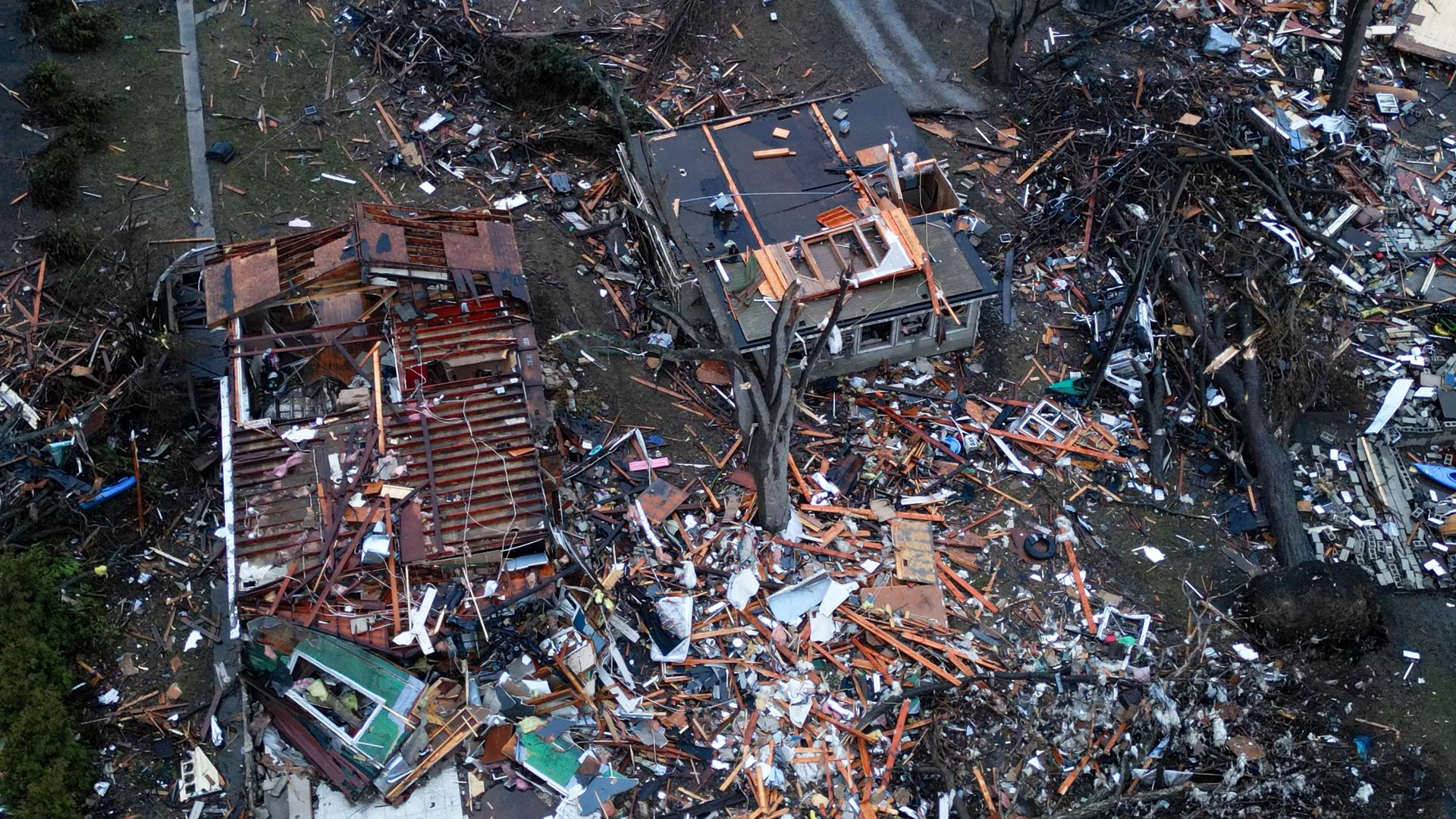
Tornadoes kill two in Indiana and rip through Illinois
#tornadoes #Indiana #Illinois #fatalities #storm damage #severe weather #emergency response
📌 Key Takeaways
- Two fatalities reported in Indiana due to tornadoes
- Tornadoes caused significant damage across Illinois
- Severe weather outbreak impacted multiple states in the region
- Emergency responders are assessing damage and aiding affected communities
📖 Full Retelling
🏷️ Themes
Severe Weather, Natural Disasters
📚 Related People & Topics

Illinois
U.S. state
Illinois ( IL-ih-NOY) is a state in the Midwestern region of the United States. It borders on Lake Michigan to its northeast, the Mississippi River to its west, and the Wabash and Ohio rivers to its south. Of the fifty U.S. states, Illinois has the fifth-largest gross domestic product (GDP), the si...

Indiana
U.S. state
Indiana ( IN-dee-AN-ə) is a state in the Midwestern region of the United States. It borders Lake Michigan to the northwest, Michigan to the north and northeast, Ohio to the east, the Ohio River and Kentucky to the south and southeast, and the Wabash River and Illinois to the west. Nicknamed "the Ho...
Entity Intersection Graph
Connections for Illinois:
View full profileMentioned Entities
Deep Analysis
Why It Matters
This news matters because tornadoes have caused fatalities and significant property damage across multiple states, directly impacting residents' safety and livelihoods. It highlights ongoing severe weather threats in the Midwest region, which can disrupt communities, emergency services, and local economies. The event underscores the importance of weather preparedness and early warning systems for vulnerable populations.
Context & Background
- The Midwest United States, including Indiana and Illinois, is part of 'Tornado Alley,' a region prone to frequent and intense tornado activity, especially during spring and early summer.
- Tornadoes are rated on the Enhanced Fujita (EF) scale from EF0 (weak) to EF5 (violent), with stronger tornadoes capable of causing catastrophic damage and loss of life.
- Historically, tornado outbreaks in this region have led to major disasters, such as the 2011 Super Outbreak across the Southeastern and Midwestern U.S., which resulted in hundreds of fatalities and billions in damages.
- Advances in meteorology, including Doppler radar and improved forecasting, have enhanced tornado warning systems, but rapid-forming tornadoes still pose significant challenges for timely alerts.
What Happens Next
Emergency response teams will likely conduct search and rescue operations, assess damage, and provide aid to affected communities. The National Weather Service may survey the damage to determine tornado intensity and paths. Local and state governments could declare states of emergency to access federal resources for recovery efforts. Insurance claims and rebuilding processes may begin in the coming weeks, while meteorologists monitor for additional severe weather threats in the region.
Frequently Asked Questions
Residents should immediately seek shelter in a basement, storm cellar, or an interior room on the lowest floor, away from windows. It's crucial to stay informed via weather radios or alerts and avoid mobile homes or vehicles, which offer little protection.
Tornadoes are relatively common in both states, with Illinois averaging about 54 tornadoes per year and Indiana about 22, based on historical data. They occur most frequently from April to June, though they can happen year-round.
Tornadoes often form from severe thunderstorms when warm, moist air from the Gulf of Mexico collides with cool, dry air from the north, creating instability. Wind shear—changes in wind speed and direction with height—can cause rotation, leading to tornado development.
Communities can prepare by developing and practicing emergency plans, installing sirens or alert systems, and ensuring access to shelters. Public education on tornado safety and regular drills, especially in schools and workplaces, are key to reducing risks.