
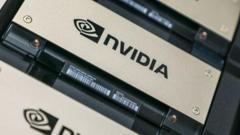
Trio charged over alleged plot to smuggle Nvidia chips from US to China
#Nvidia chips #Smuggling #Export controls #US-China tech competition #Semiconductor #Artificial intelligence #National security #Technology restrictions
📌 Key Takeaways
- Three individuals charged with smuggling Nvidia chips from US to China
- Alleged use of fake papers and dummy equipment to circumvent export controls
- Chips valued at billions of dollars and critical for AI and military applications
- Part of broader US-China tech competition and export control enforcement
📖 Full Retelling
🏷️ Themes
Technology smuggling, US-China relations, Export controls
📚 Related People & Topics

Smuggling
Illegal movement of goods or people
Smuggling is the illegal transportation of objects, substances, information or people, such as out of a house or buildings, into a prison, or across an international border, in violation of applicable laws or other regulations. More broadly, social scientists define smuggling as the purposeful movem...
Semiconductor
Material of moderate electrical conductivity
A semiconductor is a material with electrical conductivity between that of a conductor and an insulator. Its conductivity can be modified by adding impurities ("doping") to its crystal structure. When two regions with different doping levels are present in the same crystal, they form a semiconductor...

Artificial intelligence
Intelligence of machines
# Artificial Intelligence (AI) **Artificial Intelligence (AI)** is a specialized field of computer science dedicated to the development and study of computational systems capable of performing tasks typically associated with human intelligence. These tasks include learning, reasoning, problem-solvi...
Export control
Legislation regulating the export of harmful items
Export control is legislation that regulates the export of goods, software and technology. Some items could potentially be useful for purposes that are contrary to the interest of the exporting country. These items are considered to be controlled.
Entity Intersection Graph
No entity connections available yet for this article.
Mentioned Entities
Deep Analysis
Why It Matters
This case highlights the escalating technological competition between the US and China, with significant implications for national security and global tech markets. The alleged smuggling attempt underscores the lengths to which parties will go to circumvent export controls on advanced semiconductors. This affects not only the legal standing of the accused but also sets precedents for future enforcement actions and may impact international supply chains and tech development in China.
Context & Background
- US-China technological tensions have been escalating since at least 2018 when the Trump administration imposed tariffs on Chinese goods
- In 2022, the Biden administration implemented stricter export controls on advanced semiconductors and chip-making equipment to China
- Nvidia has been granted temporary licenses to sell some lower-tier chips to China while being restricted from selling its most advanced products
- China has been investing heavily in domestic semiconductor production to reduce dependence on US technology
- The US government views advanced computing technology as critical to maintaining military superiority over China
- Previous cases have involved individuals and companies attempting to circumvent export controls, including the 2019 case of Chinese telecom giant Huawei
- The semiconductor industry is a key battleground in the broader US-China trade and technology war
What Happens Next
The three individuals will likely face a trial in US federal court, which could occur within the next 6-12 months depending on legal proceedings. Nvidia may implement additional security measures to prevent future smuggling attempts. The US government may announce further crackdowns on similar smuggling operations, potentially leading to more indictments. China may respond with diplomatic protests or countermeasures, potentially escalating tensions between the two nations. The case could also prompt other countries to strengthen their own export control regimes.
Frequently Asked Questions
Nvidia's high-performance GPUs are critical for China's artificial intelligence development, supercomputing capabilities, and advanced military applications. These chips help China advance its technological capabilities in areas like machine learning, data processing, and autonomous systems.
If convicted, the three individuals could face significant prison sentences and substantial fines. The severity would depend on the specific charges and the scale of the alleged smuggling operation, with export control violations often carrying penalties of up to 20 years in prison and millions of dollars in fines.
US export controls restrict the sale of advanced technologies to countries deemed national security risks. For semiconductors, this involves licensing requirements, product classifications, and restrictions on end-use to prevent military applications. Companies must verify buyers and intended uses comply with regulations.
This case could lead to stricter enforcement of existing controls, potentially disrupting supply chains and increasing compliance costs for semiconductor companies. It may accelerate China's efforts to develop domestic alternatives and could lead to more fragmented global tech markets.
Nvidia has adapted by creating specialized versions of its chips for the Chinese market that comply with US regulations. The company has also invested in other international markets to reduce dependence on China, though Chinese customers remain significant for its business.