
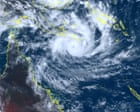
Tropical Cyclone Narelle could be ‘biggest system in living memory’ when it crosses Queensland coast, authorities warn
#Tropical Cyclone Narelle #Queensland #cyclone warning #weather emergency #coastal impact #authorities #living memory
📌 Key Takeaways
- Tropical Cyclone Narelle is forecast to be the largest cyclone in living memory upon landfall in Queensland.
- Authorities have issued warnings about the cyclone's potential severity and impact.
- The cyclone is expected to cross the Queensland coast, posing significant threats to the region.
- Residents are urged to prepare for extreme weather conditions and follow safety advisories.
📖 Full Retelling
🏷️ Themes
Natural Disaster, Weather Warning
📚 Related People & Topics

Queensland
State of Australia
Queensland (locally KWEENZ-land, commonly abbreviated as QLD) is a state in northeastern Australia, the second-largest and third-most populous state in Australia. It is bordered by the Northern Territory, South Australia and New South Wales to the west, south-west and south, respectively. To the e...
Entity Intersection Graph
Connections for Queensland:
Mentioned Entities
Deep Analysis
Why It Matters
This warning about Tropical Cyclone Narelle matters because it threatens to be an unprecedented weather event that could cause catastrophic damage to Queensland communities, infrastructure, and ecosystems. It affects coastal residents who may need to evacuate, emergency services preparing for response operations, and the state's agricultural and tourism industries. The 'biggest system in living memory' designation suggests potential for widespread destruction exceeding previous cyclones, making preparedness and public awareness critical for saving lives and minimizing property damage.
Context & Background
- Queensland experiences an average of 4-5 tropical cyclones each year during the November-April season
- Cyclone Yasi in 2011 was one of Queensland's most powerful cyclones, causing $3.6 billion in damage and affecting 300,000 people
- Australia's cyclone intensity scale ranges from Category 1 (weakest) to Category 5 (most severe), with wind speeds over 200 km/h for Category 5 systems
- Queensland's cyclone history includes Cyclone Tracy (1974) which devastated Darwin, though not in Queensland, demonstrating the destructive potential of major systems
- Climate change research suggests warming oceans may increase the intensity of tropical cyclones in some regions
What Happens Next
Emergency services will activate response plans, including potential evacuations of vulnerable coastal areas. The Bureau of Meteorology will issue regular updates on Narelle's projected path and intensity. If the cyclone makes landfall as predicted, immediate impacts will include destructive winds, storm surges, and torrential rainfall, followed by recovery operations assessing damage and restoring essential services.
Frequently Asked Questions
Authorities are likely referring to the combination of projected size, wind intensity, and potential storm surge that could exceed any cyclone Queensland has experienced in recent decades. This assessment considers meteorological data showing unusually large wind fields and low pressure systems that could affect broader areas than typical cyclones.
Residents should follow official evacuation orders if issued, secure their properties by removing loose items, prepare emergency kits with essential supplies for several days, and stay informed through official channels like the Bureau of Meteorology. Those in flood-prone areas should be particularly vigilant about potential storm surges.
While individual cyclones cannot be directly attributed to climate change, warmer ocean temperatures can provide more energy for cyclone intensification. Scientists note that climate change may increase the frequency of severe cyclones and exacerbate associated rainfall and storm surge impacts in vulnerable regions like Queensland.
Coastal communities in the projected path are most vulnerable, particularly low-lying areas susceptible to storm surges. The specific risk zones will depend on the cyclone's final track, but typically include regions from Cairns southward along the Queensland coast where cyclones most commonly make landfall.