
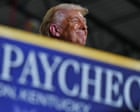
Trump tells Kentucky rally Iran’s military and nuclear capabilities degraded
#Trump #Iran #military #nuclear #rally #Kentucky #degraded
📌 Key Takeaways
- Trump claims Iran's military and nuclear capabilities have been degraded.
- He made these remarks during a rally in Kentucky.
- The statement reflects ongoing U.S. foreign policy tensions with Iran.
- No specific evidence or details were provided to support the claim.
📖 Full Retelling
🏷️ Themes
Foreign Policy, Political Rally
📚 Related People & Topics

Iran
Country in West Asia
# Iran **Iran**, officially the **Islamic Republic of Iran** and historically known as **Persia**, is a sovereign country situated in West Asia. It is a major regional power, ranking as the 17th-largest country in the world by both land area and population. Combining a rich historical legacy with a...

Donald Trump
President of the United States (2017–2021; since 2025)
Donald John Trump (born June 14, 1946) is an American politician, media personality, and businessman who is the 47th president of the United States. A member of the Republican Party, he served as the 45th president from 2017 to 2021. Born into a wealthy New York City family, Trump graduated from the...

Kentucky
U.S. state
Kentucky (US: , UK: ), officially the Commonwealth of Kentucky, is a landlocked state in the Southeastern region of the United States. It borders Illinois, Indiana, and Ohio to the north, West Virginia to the northeast, Virginia to the east, Tennessee to the south, and Missouri to the west. Its nor...
Entity Intersection Graph
Connections for Iran:
Mentioned Entities
Deep Analysis
Why It Matters
This statement matters because it addresses U.S.-Iran relations and nuclear non-proliferation, key issues affecting global security. It signals the Trump administration's continued hardline stance toward Iran, which impacts Middle East stability and international diplomacy. The claim about degraded capabilities could influence domestic political narratives and foreign policy debates ahead of elections. Allies and adversaries alike monitor such declarations for shifts in American strategy toward Tehran.
Context & Background
- The U.S. withdrew from the Iran nuclear deal (JCPOA) in 2018 under Trump, reimposing sanctions and adopting a 'maximum pressure' campaign.
- Iran has gradually breached JCPOA limits since 2019, enriching uranium closer to weapons-grade levels, though it denies seeking nuclear weapons.
- Tensions peaked in early 2020 with the U.S. drone strike killing Iranian General Qasem Soleimani, bringing the countries near direct conflict.
- Iran supports proxy groups across the Middle East, and its military capabilities—including missiles and drones—have been regional concerns for decades.
- The International Atomic Energy Agency (IAEA) monitors Iran's nuclear program, reporting ongoing activities despite diplomatic efforts to revive the deal.
What Happens Next
Analysts will scrutinize intelligence reports to verify Trump's claims about Iran's degraded capabilities. The statement may fuel campaign rhetoric ahead of the 2024 election, with debates over foreign policy effectiveness. If Trump returns to office, it could foreshadow renewed pressure on Iran, potentially affecting nuclear negotiations and regional proxy conflicts.
Frequently Asked Questions
U.S. sanctions and 'maximum pressure' have strained Iran's economy, possibly limiting military funding, but Iran has advanced its nuclear program and drone technology in recent years. Independent verification of degradation would require declassified intelligence or IAEA reports.
Such claims could undermine diplomatic efforts by suggesting pressure alone is sufficient, complicating talks. European and regional partners may question the viability of a deal if perceptions of Iran's weakness are overstated.
Rallies allow politicians to tout foreign policy achievements to domestic audiences, linking them to national security. Kentucky, with military bases and conservative leanings, is a strategic venue for emphasizing strength against adversaries.
It might underestimate Iran's resilience, leading to miscalculations in policy or security preparedness. Allies could doubt U.S. assessments, while Iran might feel provoked to demonstrate strength, escalating tensions.