
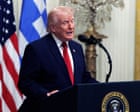
Trump to sign order for DHS to pay TSA agents ‘immediately’ amid funding standoff
#Trump #DHS #TSA #funding standoff #executive order #payments #government shutdown
📌 Key Takeaways
- President Trump plans to sign an order directing DHS to pay TSA agents immediately.
- The action addresses a funding standoff affecting TSA agent compensation.
- The order aims to ensure timely payment amid ongoing budgetary disputes.
- It highlights tensions between executive action and congressional funding processes.
📖 Full Retelling
🏷️ Themes
Government Funding, Executive Action
📚 Related People & Topics

United States Department of Homeland Security
United States federal executive department
The United States Department of Homeland Security (DHS) is the U.S. federal executive department responsible for public security, roughly comparable to the interior, home, or public security ministries in other countries. Its missions involve anti-terrorism, civil defense, immigration and customs, b...

Transportation Security Administration
United States federal government agency
The Transportation Security Administration (TSA) is an agency of the United States Department of Homeland Security (DHS) that has authority over the security of transportation systems within and connecting to the United States. It was created as a response to the September 11 attacks to improve airp...

Donald Trump
President of the United States (2017–2021; since 2025)
Donald John Trump (born June 14, 1946) is an American politician, media personality, and businessman who is the 47th president of the United States. A member of the Republican Party, he served as the 45th president from 2017 to 2021. Born into a wealthy New York City family, Trump graduated from the...
Entity Intersection Graph
Connections for United States Department of Homeland Security:
Mentioned Entities
Deep Analysis
Why It Matters
This news matters because it directly affects the financial security of approximately 60,000 TSA agents who have been working without pay during the government shutdown, potentially impacting airport security operations nationwide. It represents a significant executive action by President Trump to circumvent the congressional funding impasse, testing the boundaries of presidential authority during budget crises. The move has implications for federal workers across other agencies also affected by the shutdown, potentially setting a precedent for how future administrations might handle similar standoffs between the executive and legislative branches.
Context & Background
- The U.S. government entered a partial shutdown on December 22, 2018, when Congress and President Trump failed to agree on funding for border security, particularly the proposed border wall.
- TSA agents are considered 'essential' federal employees, meaning they must continue working during shutdowns but do not receive paychecks until funding is restored.
- This shutdown became the longest in U.S. history, lasting 35 days and affecting approximately 800,000 federal workers across multiple agencies.
- Previous administrations have faced similar shutdowns, but executive orders to pay specific groups of workers during funding gaps have been rare and legally contentious.
- The Department of Homeland Security (DHS) oversees TSA and has faced operational challenges during extended shutdowns, including increased employee call-outs and potential security concerns.
What Happens Next
The immediate next steps involve DHS implementing the order to process back pay for TSA agents, though legal challenges may arise questioning the president's authority to authorize payments without congressional appropriation. Congressional Democrats are likely to scrutinize the order's legality while continuing negotiations over broader government funding. If the shutdown continues, pressure will mount for similar actions for other federal workers, potentially leading to either a broader executive solution or increased urgency for a legislative compromise. The situation may also impact upcoming budget negotiations for fiscal year 2020, as both parties assess their strategies following this executive action.
Frequently Asked Questions
The legal authority is unclear and potentially contentious. While presidents have some discretion during emergencies, the Antideficiency Act generally prohibits federal agencies from spending money without congressional appropriation. Legal experts disagree on whether this situation qualifies for emergency exceptions.
No, this order only addresses pay for TSA agents within DHS. The broader shutdown affecting nine federal departments and numerous agencies would continue until Congress passes and the president signs appropriations legislation or a continuing resolution.
DHS will process payroll for TSA agents using available funds, though the specific funding mechanism remains unclear. Typically, federal agencies must wait for congressional approval to issue back pay after shutdowns end, making this immediate payment order unprecedented.
Initially, this order applies only to TSA agents, but it creates pressure to extend similar relief to other federal workers. Approximately 420,000 'essential' employees across multiple agencies were working without pay during this shutdown, while 380,000 were furloughed.
If courts find the order violates appropriations laws, payments to TSA agents might need to be recalled or offset against future appropriations. Such a ruling could also limit presidential authority in future shutdowns and potentially accelerate congressional negotiations to end the impasse.