
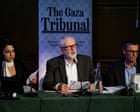
UK complicit in desecration of international law in Gaza, says Corbyn-led tribunal
#Corbyn #tribunal #UK complicity #international law #Gaza #violations #Israel #accountability
📌 Key Takeaways
- A tribunal led by Jeremy Corbyn accuses the UK of complicity in violating international law in Gaza.
- The tribunal's findings suggest UK actions or policies may have contributed to alleged breaches.
- The statement implies a formal judgment or investigation into UK involvement in Gaza.
- The accusation centers on the UK's role in the Israel-Gaza conflict under international legal frameworks.
📖 Full Retelling
🏷️ Themes
International Law, UK Foreign Policy, Gaza Conflict
📚 Related People & Topics

Israel
Country in West Asia
Israel, officially the State of Israel, is a country in the Southern Levant region of West Asia. It is bordered by Lebanon to the north, Syria to the northeast, Jordan to the east, and Egypt to the southwest. Israel occupies the West Bank and the Gaza Strip of the Palestinian territories, as well as...

Jeremy Corbyn
British politician (born 1949)
Jeremy Bernard Corbyn (; born 26 May 1949) is a British politician who has been the Member of Parliament (MP) for Islington North since 1983. He currently sits as an independent, and is the parliamentary leader of Your Party, which he co-founded with Zarah Sultana in July 2025. Corbyn had previously...
Entity Intersection Graph
Connections for Israel:
Mentioned Entities
Deep Analysis
Why It Matters
This news matters because it involves serious allegations against a major Western government regarding international law violations in a conflict zone, potentially damaging the UK's diplomatic standing and moral authority. It affects UK-Israel relations, British foreign policy credibility, and international humanitarian law enforcement mechanisms. The involvement of former Labour leader Jeremy Corbyn gives the tribunal political weight and could influence domestic UK politics and public opinion on the Gaza conflict.
Context & Background
- Jeremy Corbyn served as UK Labour Party leader from 2015-2020 and has been a longstanding critic of Israeli policies toward Palestinians
- The International Criminal Court (ICC) has been investigating potential war crimes in Palestinian territories since 2021
- The UK has historically been a key ally of Israel while also providing humanitarian aid to Palestinians
- Various UN reports have documented alleged violations of international law by multiple parties in the Gaza conflicts
- The UK government has consistently defended Israel's right to self-defense while calling for adherence to international humanitarian law
What Happens Next
The tribunal's findings may lead to increased pressure on the UK government to justify its position and arms exports to Israel. Corbyn and supporting organizations will likely use the report to campaign for policy changes, potentially introducing parliamentary motions or legal challenges. International human rights groups may reference the tribunal's conclusions in their own advocacy, while the UK government will probably dismiss the findings as politically motivated.
Frequently Asked Questions
The tribunal alleges UK complicity in violations of international law in Gaza, suggesting British policies, arms exports, or diplomatic support have enabled actions that breach humanitarian law. This implies the UK shares responsibility for consequences in the conflict.
The allegations could strain diplomatic relations if the UK government feels pressured to alter its stance. However, the current UK administration will likely maintain its support for Israel while emphasizing the need for humanitarian protections.
No, this appears to be a civil society tribunal without official legal power. Such tribunals rely on moral and political influence rather than binding legal authority, though their findings can inform official investigations.
The UK government will likely reject the tribunal's findings as biased and politically motivated. Officials will probably reiterate existing policy positions while emphasizing UK contributions to humanitarian efforts in Gaza.
While unlikely to cause immediate policy shifts, the tribunal adds to growing domestic pressure that could influence future arms export decisions or diplomatic approaches, particularly if public opinion shifts significantly.