
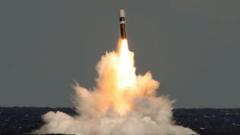
UK must build own nuclear missiles to end reliance on US, say Lib Dems
#UK nuclear deterrent #Sir Ed Davey #Lib Dems #Trident missile system #US-UK relations #Defense independence #Nuclear weapons policy #Post-Brexit security
📌 Key Takeaways
- Lib Dem leader Sir Ed Davey calls for independent British nuclear deterrent
- Current UK nuclear system relies heavily on US technology
- Proposal would require significant investment and development time
- Debate reflects changing geopolitical landscape and post-Brexit identity
📖 Full Retelling
🏷️ Themes
National Security, Technological Sovereignty, Defense Policy, International Relations
📚 Related People & Topics

Ed Davey
British politician (born 1965)
Sir Edward Jonathan Davey (born 25 December 1965) is a British politician who has served as Leader of the Liberal Democrats since 2020. He served in the Cameron–Clegg coalition as Secretary of State for Energy and Climate Change from 2012 to 2015 and as Deputy Leader to Jo Swinson in 2019. An "Orang...
Liberal Democrats (UK)
British political party
The Liberal Democrats, colloquially known as the Lib Dems, is a political party in the United Kingdom. Ideologically adhering to liberalism, it was founded in 1988. The party is based at Liberal Democrat Headquarters, which since September 2025 has been based at Buckingham Gate, in the Westminster a...
Entity Intersection Graph
Connections for Ed Davey:
Mentioned Entities
Deep Analysis
Why It Matters
This news is significant as it challenges the long-standing UK-US nuclear partnership and could fundamentally reshape UK defense policy. If implemented, it would require massive investment and represent a major shift in the UK's approach to national security. This affects not only UK-US relations but also the broader geopolitical landscape in Europe and the UK's post-Brexit identity as an independent military power.
Context & Background
- The UK has maintained its nuclear deterrent since the Cold War, with successive governments viewing it as essential to national security and international standing
- The current Trident system has relied heavily on US technology since its inception
- The UK is one of only nine countries known to possess nuclear weapons
- Post-Brexit, the UK has been seeking to define its independent role in global affairs
- Nuclear deterrence has been a cornerstone of UK defense policy for decades
- The US-UK nuclear relationship has been a cornerstone of the 'special relationship' between the two countries
What Happens Next
The government is likely to formally respond to the Lib Dem proposal in the coming weeks. If there's political will, we might see the beginning of feasibility studies or policy reviews. However, given the enormous costs and technical challenges, any actual development would likely take years to materialize, potentially spanning multiple parliamentary terms. The debate may also influence upcoming defense spending reviews and strategic defense documents.
Frequently Asked Questions
The UK's nuclear deterrent is based on the Trident system, which consists of four Vanguard-class submarines equipped with Trident II D5 missiles. The system has relied heavily on US technology for both the missiles and their maintenance.
While exact figures aren't provided in the article, developing a completely independent nuclear arsenal would likely cost tens of billions of pounds over many years, given the research, development, manufacturing, and infrastructure required.
The move reflects broader geopolitical tensions and the UK's post-Brexit search for its independent identity in global affairs. Proponents argue it would enhance national sovereignty and security independence.
The challenges include the enormous financial cost, the technical complexity of nuclear weapons technology, the need for specialized manufacturing facilities, recruitment and retention of specialized personnel, and the time required for development.
The UK has historically developed its own nuclear warheads (like the Chevaline program), but has always relied on US delivery systems for its main deterrent force since the Polaris and then Trident systems.
Such a move could strain the 'special relationship' between the UK and US, as it represents a significant shift in defense cooperation. However, both countries might find ways to maintain strong diplomatic and security ties despite this change.