
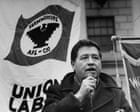
United Farm Workers union cancels Cesar Chavez events over abuse allegations
#United Farm Workers #Cesar Chavez #canceled events #abuse allegations #union #legacy #controversy
📌 Key Takeaways
- The United Farm Workers union has canceled events honoring Cesar Chavez.
- The cancellation is a direct response to allegations of abuse against Chavez.
- This action reflects a reassessment of Chavez's legacy in light of the allegations.
- The union is distancing itself from the traditional celebrations due to the controversy.
📖 Full Retelling
🏷️ Themes
Labor Unions, Historical Reckoning
📚 Related People & Topics

United Farm Workers
American trade union
The United Farm Workers of America, or more commonly just United Farm Workers (UFW), is a labor union for farmworkers in the United States. It originated from the merger of two workers' rights organizations, the National Farm Workers Association (NFWA) led by César Chávez, Dolores Huerta, and Gilber...

Cesar Chavez
American civil rights activist (1927–1993)
Cesario Estrada Chavez (; Spanish: [ˈtʃaβes]; March 31, 1927 – April 23, 1993) was an American labor leader and civil rights activist. Along with Dolores Huerta and lesser known Gilbert Padilla, he co-founded the National Farm Workers Association (NFWA), which later merged with the Agricultural Work...
Entity Intersection Graph
Connections for United Farm Workers:
Mentioned Entities
Deep Analysis
Why It Matters
This news matters because it represents a significant reckoning within one of America's most iconic labor movements, forcing a re-evaluation of a historical figure whose legacy has inspired generations of activists. The cancellation affects farm workers who rely on these events for community organizing and cultural celebration, as well as educational institutions that teach Chavez's legacy. It also impacts the broader labor movement, which must navigate how to honor historical figures while acknowledging their flaws. The decision signals a shift toward greater accountability in how organizations handle allegations against revered leaders.
Context & Background
- Cesar Chavez co-founded the United Farm Workers (UFW) in 1962 and led the union through landmark strikes and boycotts that improved conditions for agricultural workers.
- Chavez has been celebrated as a civil rights icon, with a federal holiday in several states and numerous schools, streets, and public spaces named in his honor.
- The UFW has faced previous criticism over Chavez's leadership style, including reports of purges within the union and controversial practices during the 1970s.
- Recent years have seen increased scrutiny of historical figures across various movements, with organizations reassessing legacies in light of new information about personal conduct.
What Happens Next
The UFW will likely conduct an internal review of the allegations and may establish a process for addressing historical grievances. Educational materials about Chavez may be revised to present a more nuanced portrait. Other organizations bearing Chavez's name may face pressure to re-examine their commemorations. The union will need to develop new programming that maintains its mission while distancing itself from problematic aspects of its history.
Frequently Asked Questions
While the article doesn't detail specific allegations, such cancellations typically respond to documented patterns of behavior including verbal abuse, intimidation of union members, or authoritarian leadership practices that contradict the union's stated values of dignity and respect for workers.
While the UFW's decision doesn't directly control state or local observances, it may influence how some communities approach the holiday, potentially leading to more balanced programming that acknowledges both achievements and controversies.
Short-term disruptions may occur as the union recalibrates its public messaging, but long-term it could strengthen organizing by demonstrating accountability and creating space for more inclusive leadership models that better reflect modern worker movements.
This decision may prompt similar evaluations within other unions, particularly those with iconic founders whose personal conduct hasn't been thoroughly examined through contemporary ethical lenses regarding power dynamics and organizational culture.