
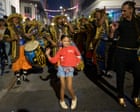
Uruguay’s candombe brings streets to life as the once-banned musical tradition roars back
#Uruguay #candombe #musical tradition #cultural heritage #Afro-Uruguayan #drumming #street music #revival
📌 Key Takeaways
- Candombe, a traditional Uruguayan musical genre, is experiencing a resurgence after being historically banned.
- The music is revitalizing public spaces and community gatherings in Uruguay's streets.
- Candombe's revival reflects cultural preservation efforts and renewed interest in Afro-Uruguayan heritage.
- The tradition involves drumming and dance, serving as a symbol of resistance and identity.
📖 Full Retelling
🏷️ Themes
Cultural Revival, Music Tradition
📚 Related People & Topics

Uruguay
Country in South America
Uruguay, officially the Oriental Republic of Uruguay, is a country in South America. It shares borders with Argentina to its west and southwest and Brazil to its north and northeast, while bordering the Río de la Plata to the south and the Atlantic Ocean to the southeast. It is part of the Southern ...
Entity Intersection Graph
Connections for Uruguay:
View full profileMentioned Entities
Deep Analysis
Why It Matters
This revival matters because it represents cultural reclamation and social healing for Afro-Uruguayan communities whose traditions were suppressed during Uruguay's 1973-1985 military dictatorship. It affects Uruguay's national identity by restoring an important African-rooted cultural expression that was historically marginalized. The resurgence also impacts tourism and cultural diplomacy as candombe becomes a symbol of Uruguayan heritage recognized by UNESCO as intangible cultural heritage.
Context & Background
- Candombe originated with enslaved Africans brought to Uruguay during the colonial period, particularly from Bantu regions
- The tradition was banned during Uruguay's 1973-1985 military dictatorship as part of broader cultural repression
- Candombe was declared Intangible Cultural Heritage of Humanity by UNESCO in 2009
- The musical tradition centers around three drum types: chico, repique, and piano drums played in collective ensembles called 'comparsas'
- Candombe has been historically associated with Montevideo's Barrio Sur and Palermo neighborhoods where Afro-Uruguayan communities are concentrated
- The annual 'Llamadas' parade in February features candombe groups processing through these historic neighborhoods
What Happens Next
Increased international recognition will likely lead to more candombe performances at global cultural festivals throughout 2024-2025. Uruguay's Ministry of Education and Culture will probably expand funding for candombe preservation programs in schools. The tradition may face challenges balancing commercialization with cultural authenticity as tourism interest grows. Expect expanded academic research into candombe's historical roots and contemporary significance.
Frequently Asked Questions
Candombe is a Uruguayan musical tradition with African roots featuring drum ensembles, dance, and call-and-response singing. It developed among Afro-Uruguayan communities in Montevideo and represents both musical expression and cultural resistance.
During Uruguay's military dictatorship (1973-1985), candombe was banned along with other cultural expressions seen as potentially subversive. The regime viewed collective gatherings and African-rooted traditions as threats to social control.
Revival efforts include community-based teaching programs, inclusion in school curricula, annual public parades called 'Llamadas,' and UNESCO recognition. Younger generations are learning drumming techniques and historical context from elder practitioners.
Candombe serves as both cultural heritage and social commentary, addressing issues of race, identity, and history. It provides economic opportunities through tourism while strengthening Afro-Uruguayan community bonds and visibility.
Unlike Brazil's samba or Cuba's rumba which have similar African roots, candombe maintains distinct Uruguayan characteristics including specific drum patterns, neighborhood-based comparsas, and historical connection to Montevideo's Afro-Uruguayan communities.