
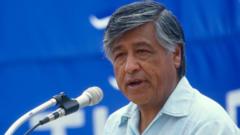
US civil rights leader Cesar Chavez accused of sexual abuse
#Cesar Chavez #sexual abuse #civil rights leader #US #farmworkers #allegations #legacy
📌 Key Takeaways
- Cesar Chavez, a prominent US civil rights leader, faces allegations of sexual abuse.
- The accusations challenge his historical legacy as a champion for farmworkers' rights.
- Details about the specific allegations or accusers are not provided in the article.
- The news may prompt re-evaluation of his public image and contributions.
📖 Full Retelling
🏷️ Themes
Historical Allegations, Civil Rights
📚 Related People & Topics

Cesar Chavez
American civil rights activist (1927–1993)
Cesario Estrada Chavez (; Spanish: [ˈtʃaβes]; March 31, 1927 – April 23, 1993) was an American labor leader and civil rights activist. Along with Dolores Huerta and lesser known Gilbert Padilla, he co-founded the National Farm Workers Association (NFWA), which later merged with the Agricultural Work...
Entity Intersection Graph
Connections for Cesar Chavez:
Mentioned Entities
Deep Analysis
Why It Matters
This news matters because Cesar Chavez is a revered historical figure in the US labor and civil rights movements, particularly for his work organizing farmworkers through the United Farm Workers (UFW). Accusations of sexual abuse challenge his legacy and force a re-examination of historical figures, potentially affecting how his contributions are taught and remembered. It impacts farmworker communities, historians, educational institutions, and organizations that have built upon his work, while also resonating with broader conversations about power, accountability, and historical reckoning.
Context & Background
- Cesar Chavez (1927–1993) was a Mexican American labor leader and civil rights activist who co-founded the National Farm Workers Association, later the United Farm Workers (UFW).
- He is best known for organizing the Delano grape strike (1965–1970) and leading national boycotts that improved conditions for agricultural workers.
- Chavez has been widely celebrated with a federal holiday in several states, numerous schools and streets named after him, and a posthumous Presidential Medal of Freedom in 1994.
- Historical re-evaluations of prominent figures have increased in recent years, often focusing on allegations of misconduct previously overlooked or suppressed.
- The UFW and Chavez's legacy have faced previous criticisms over internal union practices and his management style, though sexual abuse accusations represent a new dimension of scrutiny.
What Happens Next
Investigations by historians or journalists will likely follow to verify the accusations and gather testimonies. Educational and cultural institutions may review how Chavez is portrayed, potentially leading to renamed buildings or revised curricula. The UFW and affiliated organizations might issue statements addressing the allegations and their impact on the farmworker movement's legacy. Public discourse will continue debating how to balance historical contributions with personal misconduct.
Frequently Asked Questions
Cesar Chavez was a Mexican American civil rights and labor leader who co-founded the United Farm Workers union. He organized strikes and boycotts that significantly improved wages and working conditions for agricultural laborers, becoming an iconic figure in social justice movements.
The accusations could lead to a critical re-evaluation of Chavez's legacy, potentially diminishing his heroic status. Institutions honoring him may face pressure to reconsider tributes, while his contributions to labor rights may be viewed more complexly alongside the allegations.
It requires balancing their documented contributions with verified personal misconduct, considering the historical context and available evidence. The process often involves acknowledging both positive impacts and harms caused, avoiding simplistic glorification or cancellation.
Reactions may be mixed, with some defending Chavez's achievements despite personal flaws, while others, particularly abuse survivors, may feel betrayed. The UFW and related groups might emphasize ongoing labor struggles while addressing the allegations transparently.
Criminal prosecution is impossible due to his death, but civil claims could potentially be pursued depending on jurisdiction and statute of limitations. The primary implications are historical, cultural, and symbolic rather than legal.