
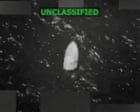
US military kills six in strike on alleged drug boat in Pacific
#US military #drug boat #Pacific Ocean #strike #six killed #counter-narcotics #smuggling vessel
📌 Key Takeaways
- US military conducted a strike on a suspected drug smuggling vessel in the Pacific Ocean
- Six individuals aboard the boat were killed in the operation
- The vessel was allegedly involved in drug trafficking activities
- The incident highlights US military involvement in counter-narcotics operations in international waters
📖 Full Retelling
🏷️ Themes
Military Operation, Drug Interdiction
📚 Related People & Topics

Pacific Ocean
Largest ocean
The Pacific Ocean is the largest and deepest of Earth's five oceanic divisions. It stretches from the Arctic Ocean in the north to the Southern Ocean, or, depending on the definition, to Antarctica in the south, and is bounded by the continents of Asia and Australia in the west and the Americas in t...
United States Armed Forces
Combined military forces of the United States
The United States Armed Forces are the military forces of the United States. U.S. federal law names six armed forces: the Army, Marine Corps, Navy, Air Force, Space Force, and Coast Guard, each assigned their role and domain. From their inception during the American Revolutionary War, the Army and...
Entity Intersection Graph
Connections for Pacific Ocean:
Mentioned Entities
Deep Analysis
Why It Matters
This incident matters because it represents an escalation of US military involvement in counter-narcotics operations in international waters, potentially setting precedents for future engagements. It affects regional security dynamics in the Pacific, raises questions about rules of engagement and civilian casualties, and impacts international drug trafficking networks operating in maritime routes. The families of those killed and regional governments monitoring US military activities are directly affected by this development.
Context & Background
- The US has conducted counter-narcotics operations in the Pacific region for decades, particularly targeting drug trafficking from South America to Australia and Asia
- US Southern Command and Indo-Pacific Command have authority to intercept suspected drug vessels under various bilateral agreements and international law provisions
- Previous similar incidents include the 2019 seizure of $1 billion worth of cocaine by US Coast Guard in the Eastern Pacific and 2021 interdiction operations near Central America
- The legal framework for such strikes typically involves the Maritime Drug Law Enforcement Act and international law regarding hot pursuit and flag state consent
- Pacific drug routes have seen increased trafficking activity in recent years, with cocaine and methamphetamine shipments moving from Latin America to Oceania and Asia
What Happens Next
The US military will likely conduct an internal investigation into the strike's justification and procedures, with findings potentially released in coming weeks. Regional governments may request briefings or express concerns about sovereignty and escalation. The incident could lead to revised rules of engagement for counter-narcotics operations and increased diplomatic discussions about maritime security cooperation in the Pacific. Future patrols and intelligence-sharing operations with partner nations may be adjusted based on lessons learned.
Frequently Asked Questions
The US typically operates under the Maritime Drug Law Enforcement Act and bilateral agreements with coastal states, combined with international law principles regarding interdiction of stateless vessels engaged in illicit activities. However, the use of lethal force requires specific rules of engagement approval and justification of imminent threat.
Most interdictions involve boarding and seizure rather than lethal strikes. This incident suggests either an assessment of imminent threat to US personnel or intelligence indicating the vessel posed significant security risks beyond standard drug trafficking.
While the article doesn't specify, such operations typically involve coordination with countries in whose territorial waters or exclusive economic zones the vessel was operating, or with flag states if the vessel was registered. Pacific Island nations and regional partners like Australia and New Zealand may have been consulted.
Primary drugs include cocaine from South America destined for Australia and New Zealand markets, and methamphetamine precursors moving from Asia to North America. Synthetic drugs and heroin also transit these maritime routes, with trafficking networks exploiting vast, poorly monitored ocean areas.
Responses will vary—some nations may welcome enhanced counter-narcotics efforts, while others may express concerns about sovereignty and escalation of military activities in their regions. The incident will likely be discussed in upcoming regional security forums and bilateral meetings.