| United Kingdom
| politics
| ✓ Verified - theguardian.com
US military strike kills three in second alleged drug boat attack this week
#US military strike#drug boat#Eastern Pacific#US Southern Command#extrajudicial killings#Trump administration#ACLU#narco-trafficking
📌 Key Takeaways
US military killed three in second drug boat strike this week, bringing total to at least 148 since September
Legal experts and ACLU criticize operations as extrajudicial killings that violate US and international law
General Francis Donovan leads Southern Command after Admiral Holsey's retirement reportedly over policy disagreements
Trump administration has increased military presence in the region to combat drug trafficking
📖 Full Retelling
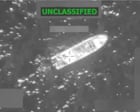
The US military launched a strike on an alleged drug smuggling boat in the eastern Pacific on Friday, killing three men in its second strike this week, according to US Southern Command, which oversees operations in Latin America and the Caribbean under General Francis Donovan. The strike brought the total number of people killed in US operations on suspected drug-smuggling vessels since September to at least 148, with another attack earlier this week claiming 11 lives. Intelligence confirmed the targeted vessel was transiting along known narco-trafficking routes and was engaged in drug trafficking operations, though no US military personnel were harmed in the operation. Southern Command released a 16-second video showing the strike that caused the boat to burst into flames.
These operations are part of the Trump administration's increased military presence in the region aimed at intercepting drug traffickers, but have raised significant legal and ethical concerns among lawmakers and legal experts. Critics argue that the Pentagon is engaging in extrajudicial killings and exerting an "abuse of power with life-or-death consequences." The American Civil Liberties Union has specifically stated that "under both U.S. and international law, it is flagrantly illegal to use the military to kill civilians suspected only of crimes," emphasizing that civilians, even those suspected of drug smuggling, are not lawful military targets.
General Donovan assumed leadership of US Southern Command following the abrupt retirement of Admiral Alvin Holsey, reportedly due to disagreements about the strike policy. The escalating military operations against suspected drug vessels reflect the administration's hardline approach to drug trafficking in the region, though questions remain about the legal justification, potential civilian casualties, and the precedent being set for the use of lethal force without due process.
🏷️ Themes
Military Operations, Drug Trafficking, Legal Concerns, US Foreign Policy
The United States Southern Command (USSOUTHCOM), located in Doral in Greater Miami, Florida, is one of the eleven unified combatant commands in the United States Department of Defense. It is responsible for providing contingency planning, operations, and security cooperation for Central and South Am...
The Pacific Ocean is the largest and deepest of Earth's five oceanic divisions. It stretches from the Arctic Ocean in the north to the Southern Ocean, or, depending on the definition, to Antarctica in the south, and is bounded by the continents of Asia and Australia in the west and the Americas in t...
The American Civil Liberties Union (ACLU) is an American nonprofit civil rights organization founded in 1920. ACLU affiliates are active in all 50 states, Washington, D.C., and Puerto Rico. The budget of the ACLU in 2024 was $383 million.
The U.S. military’s ongoing strikes on suspected drug smuggling boats have resulted in at least 148 deaths, raising serious questions about the legality and proportionality of these actions. The operations also highlight the growing use of military force in law-enforcement roles and the potential erosion of international norms.
Context & Background
Since September, U.S. strikes on suspected drug smuggling vessels have killed at least 148 people.
The operations are part of a broader effort to curb drug trafficking in the Eastern Pacific.
Legal and human rights experts argue that targeting civilians is inconsistent with U.S. and international law.
What Happens Next
Congress and legal scholars are likely to intensify scrutiny of the strikes, potentially leading to investigations and policy reviews. The U.S. may face international criticism and legal challenges if the operations are deemed extrajudicial killings. Future actions will depend on the outcome of these inquiries and any changes to the strike policy.
Frequently Asked Questions
Are the targeted vessels considered legitimate military targets?
Under U.S. and international law, civilians are not lawful targets; the legality of the strikes is contested.
What is the U.S. justification for the strikes?
The U.S. claims the vessels were engaged in drug trafficking and posed a threat to maritime security.
What are the potential legal consequences?
The strikes could face lawsuits, congressional investigations, and international criticism.
}
Original Source
US military strike kills three in second alleged drug boat attack this week Move brings total number of people killed in US strikes on suspected boats since September to at least 148 The US military launched a strike on an alleged drug smuggling boat in the eastern Pacific on Friday, killing three men in its second strike this week. “Intelligence confirmed the vessel was transiting along known narco-trafficking routes in the Eastern Pacific and was engaged in narco-trafficking operations,” US Southern Command, which oversees operations in Latin America and the Caribbean, said on Twitter/X . No US military forces were harmed, according to Southern Command, which is now led by Gen Francis Donovan. Friday’s strike brought the total number of people killed in US strikes on suspected drug-smuggling boats since September to at least 148. Earlier this week, another US military strike killed 11 people , making it one of the deadliest attacks this year. A 16-second clip posted by the Southern Command on Friday shows a single strike being launched at the boat, which later burst into flames. The strike is part of the Trump administration’s buildup of US forces in the region to allegedly intercept drug traffickers. Just how legal these strikes are has been of rising concern for lawmakers and legal experts, with some arguing that the Pentagon is carrying out extrajudicial killings and exerting “abuse of power with life-or-death consequences”. “Under both U.S. and international law, it is flagrantly illegal to use the military to kill civilians suspected only of crimes,” reads a December statement by Jeffrey Stein, a staff attorney with the American Civil Liberties Union , and Christopher Anders, director of the Democracy and Technology Division at ACLU. “Civilians, including those suspected of smuggling drugs, are not lawful targets. Just because the Trump administration says these strikes are firmly grounded in law doesn’t make it true.” Donovan took over the US Southern Comman...