
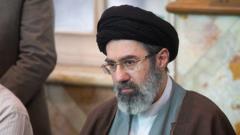
Who is Mojtaba Khamenei, Iran's new supreme leader?
#Mojtaba Khamenei #Supreme Leader #Iran #succession #Ayatollah Ali Khamenei #theocracy #political influence
📌 Key Takeaways
- Mojtaba Khamenei is being discussed as a potential successor to his father, Supreme Leader Ayatollah Ali Khamenei.
- He is a mid-ranking cleric with significant influence within Iran's political and religious circles.
- His potential appointment raises questions about hereditary succession in Iran's theocratic system.
- The article explores his background, roles, and the implications of his possible rise to power.
📖 Full Retelling
🏷️ Themes
Succession, Iran Politics
📚 Related People & Topics

Ali Khamenei
Supreme Leader of Iran since 1989
Ali Hosseini Khamenei (born 19 April 1939) is an Iranian cleric and politician who has served as the second supreme leader of Iran since 1989. He previously served as the third president of Iran from 1981 to 1989. His tenure as supreme leader, spanning 36 years, makes him the longest-serving head of...
Supreme Leader
Topics referred to by the same term
A supreme leader or supreme ruler is a powerful figure with an unchallenged authority.

Iran
Country in West Asia
# Iran **Iran**, officially the **Islamic Republic of Iran** and historically known as **Persia**, is a sovereign country situated in West Asia. It is a major regional power, ranking as the 17th-largest country in the world by both land area and population. Combining a rich historical legacy with a...
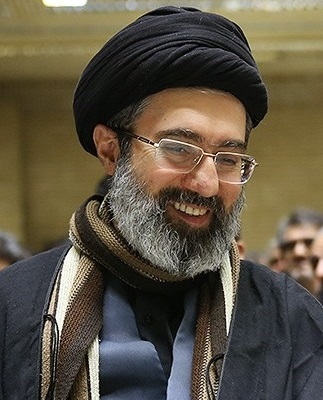
Mojtaba Khamenei
Iranian politician and cleric (born 1969)
Mojtaba Hosseini Khamenei (born 8 September 1969) is an Iranian politician and Muslim cleric. The second eldest child of Ali Khamenei, the former supreme leader of Iran, Mojtaba Khamenei served in the Iran–Iraq War from 1987 to 1988, and also reportedly took control of the Basij that was used to sup...
Entity Intersection Graph
Connections for Ali Khamenei:
View full profileMentioned Entities
Deep Analysis
Why It Matters
This news matters because the selection of Iran's next supreme leader will determine the country's political, religious, and foreign policy direction for decades. The position holds ultimate authority over Iran's military, judiciary, and media, affecting 85 million Iranians directly and shaping Middle Eastern geopolitics. The succession process will influence Iran's nuclear negotiations, regional proxy conflicts, and domestic stability during a period of economic hardship and social unrest. The outcome will also impact global energy markets and international relations with Western powers.
Context & Background
- Iran's supreme leader is the highest-ranking political and religious authority in the Islamic Republic, established after the 1979 revolution
- The current supreme leader Ali Khamenei, 84, has held the position since 1989 following the death of founder Ayatollah Ruhollah Khomeini
- Succession is decided by the Assembly of Experts, an 88-member clerical body elected every 8 years by Iranian voters
- The position combines religious authority (Marja') with political power as commander-in-chief and head of state
- Previous succession in 1989 saw a relatively smooth transition despite initial constitutional ambiguities about qualifications
What Happens Next
The Assembly of Experts will convene after Ali Khamenei's death or incapacitation to select his successor, likely within days. Mojtaba Khamenei's candidacy will face scrutiny regarding his religious credentials and political experience. Regional allies (Hezbollah, Hamas) and adversaries (Israel, Saudi Arabia) will adjust strategies based on the new leader's perceived orientation. Domestic protests may intensify if hardliners consolidate power, while nuclear negotiations could stall during the transition period.
Frequently Asked Questions
The supreme leader controls the armed forces, intelligence agencies, judiciary appointments, and state media. They also appoint half of the Guardian Council members who vet electoral candidates and interpret the constitution, effectively controlling Iran's political process.
Mojtaba Khamenei has been groomed for leadership through decades as his father's closest advisor, building relationships with Revolutionary Guard commanders and clerical elites. His insider status and conservative credentials make him acceptable to Iran's power centers despite questions about his religious qualifications.
Today's transition occurs amid severe economic sanctions, widespread protests, and regional tensions absent in 1989. The Revolutionary Guard now wields greater power, and the clerical establishment faces unprecedented public skepticism, making consensus-building more challenging.
Yes, other candidates include senior clerics like Judiciary Chief Gholam-Hossein Mohseni-Ejei or former president Hassan Rouhani, though hardliners may block moderates. The Assembly might also select a collective leadership temporarily if no consensus emerges on a single figure.
A Mojtaba Khamenei leadership would likely continue current hardline policies toward the West and support for regional proxies. However, economic pressures might force pragmatic adjustments in nuclear negotiations while maintaining anti-Israel and anti-Saudi postures.