
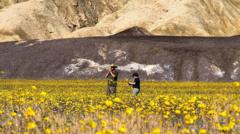
Wildflowers blanket Death Valley in best display since 2016
#Death Valley #wildflowers #bloom #Hurricane Hilary #rainfall #tourism #national park #superbloom
📌 Key Takeaways
- Death Valley is experiencing its most significant wildflower bloom since 2016.
- The bloom is attributed to heavy rainfall from Hurricane Hilary in August 2023.
- The event is drawing increased tourism to the typically arid national park.
- The display is expected to peak in the coming weeks, offering a rare natural spectacle.
🏷️ Themes
Nature, Tourism
📚 Related People & Topics

Hurricane Hilary
Category 4 Pacific hurricane in 2023
Hurricane Hilary was a large and intense Pacific hurricane in August of 2023 that brought torrential rainfall and gusty winds to the Pacific Coast of Mexico of Baja California Peninsula, and the Southwestern United States, resulting in widespread flooding and mudslides to the region. The hurricane w...

Death Valley
Valley in the Mojave Desert, Eastern California
Death Valley (Panamint: Tümpisa [tɨmbiʃa]) is a desert valley in Eastern California, United States, in the northern Mojave Desert, bordering the Great Basin Desert. The World Meteorological Organization lists Death Valley as the site of the hottest surface temperature recorded on Earth. Death Valley...
Entity Intersection Graph
No entity connections available yet for this article.
Mentioned Entities
Deep Analysis
Why It Matters
This event matters because it showcases a rare ecological phenomenon in one of Earth's harshest environments, offering scientists valuable data on desert ecosystem resilience and climate patterns. It affects tourism and local economies as visitors flock to witness the spectacle, boosting park revenue and nearby businesses. The bloom also provides crucial resources for pollinators and wildlife in an otherwise barren landscape, supporting biodiversity in extreme conditions.
Context & Background
- Death Valley is the hottest, driest, and lowest national park in the United States, with average annual rainfall of less than 2 inches
- Superblooms typically occur following unusually wet winter seasons when dormant seeds receive enough moisture to germinate simultaneously
- The 2016 superbloom was considered one of the most spectacular in decades, attracting over 1 million visitors to the park
- Desert wildflowers have evolved to remain dormant for years until specific temperature and moisture conditions trigger germination
- Death Valley's elevation ranges from 282 feet below sea level to over 11,000 feet, creating diverse microclimates that support different plant species
What Happens Next
Park officials will likely extend visitor hours and increase staffing to manage the influx of tourists through April. Scientists will conduct field studies to document species diversity and seed bank responses. The bloom will gradually fade as temperatures rise in late spring, with seeds returning to dormancy until the next favorable conditions.
Frequently Asked Questions
Superblooms require a precise combination of factors: sufficient rainfall during winter months, followed by warm but not extreme temperatures. The rainfall must be substantial enough to penetrate deep into the soil and trigger germination of dormant seeds that have accumulated over years.
The bloom typically peaks for 2-4 weeks depending on elevation and species. Lower elevation flowers appear first in February-March, while higher elevation blooms may continue into May if temperatures remain moderate.
Common species include desert gold, desert five-spot, sand verbena, and various evening primroses. Different elevations feature distinct plant communities, with cactus flowers appearing later in the season at higher elevations.
The bloom provides essential nutrition for pollinators, insects, and small animals, creating a temporary but vital food web. However, increased human visitation requires careful management to prevent damage to delicate soils and plant communities.
Scientists are studying whether changing precipitation patterns might alter superbloom frequency. While wetter winters could theoretically increase blooms, extreme heat and drought periods may reduce seed bank viability over time.