
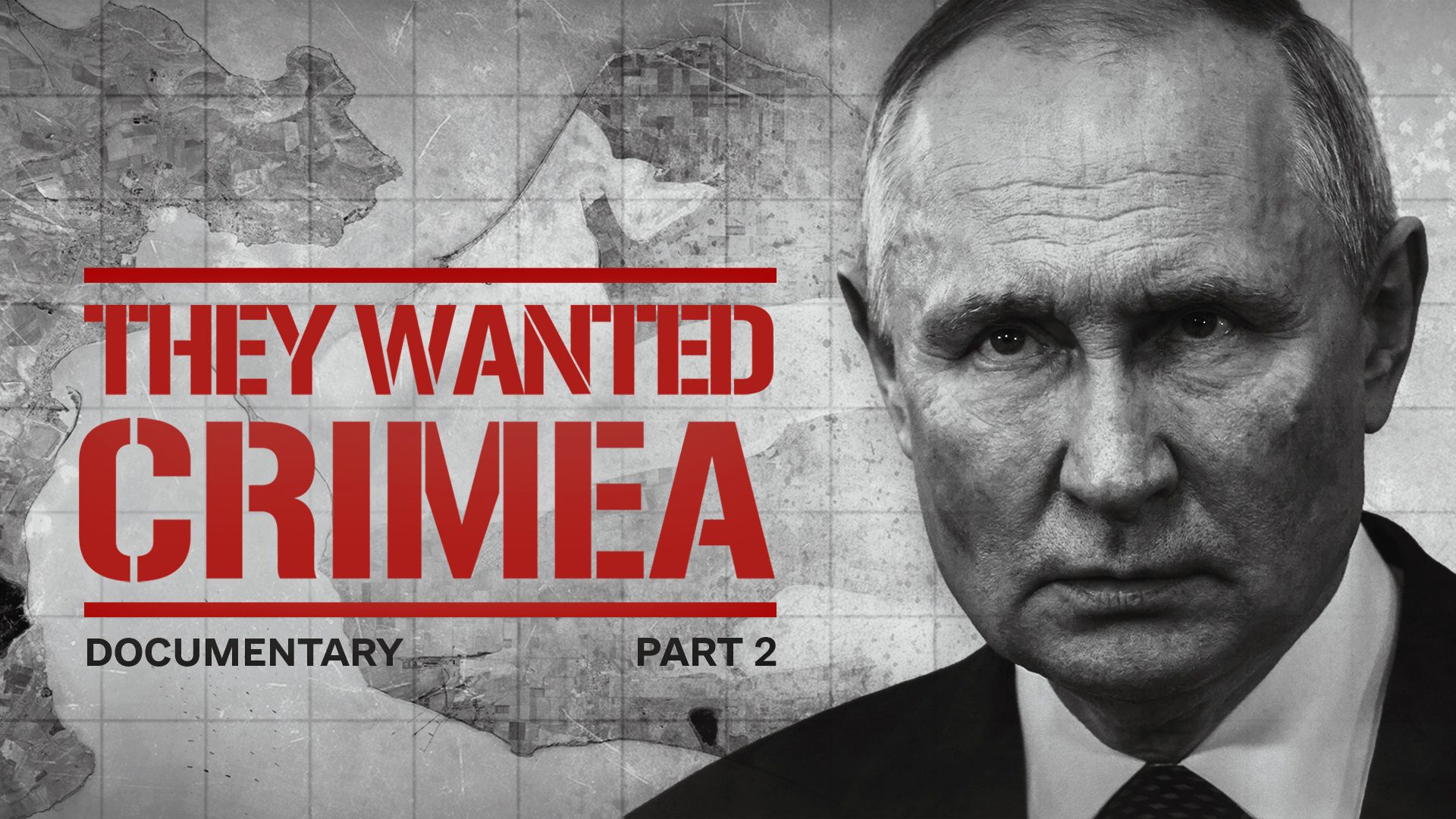
Crimea: The War Before the War | Part 2
#Crimea #Russia #Ukraine #Annexation #Military Buildup #Geopolitics #2014
📌 Key Takeaways
- The article explores the historical and geopolitical tensions in Crimea preceding the 2022 Russian invasion.
- It details the 2014 annexation of Crimea by Russia and its immediate aftermath.
- The piece examines the strategic importance of Crimea to both Russia and Ukraine.
- It highlights the ongoing military buildup and conflicts in the region prior to the full-scale war.
📖 Full Retelling
🏷️ Themes
Geopolitical Conflict, Historical Analysis
📚 Related People & Topics

Russia
Country in Eastern Europe and North Asia
Russia, or the Russian Federation, is a country in Eastern Europe and North Asia. It is the largest country in the world, spanning eleven time zones and sharing land borders with fourteen countries. With a population of over 140 million, Russia is the most populous country in Europe and the ninth-mo...

Crimea
Peninsula in Europe
Crimea ( kry-MEE-ə) is a peninsula in Eastern Europe, on the northern coast of the Black Sea, almost entirely surrounded by the Black Sea and the smaller Sea of Azov. The Isthmus of Perekop connects the peninsula to Kherson Oblast in mainland Ukraine. To the east, the Crimean Bridge, constructed in...

Ukraine
Country in Eastern Europe
# Ukraine **Ukraine** is a country located in Eastern Europe. It is the second-largest country in Europe by area, after Russia. Known for its extensive fertile plains, the nation serves as a critical global exporter of grain and is considered a middle power in international affairs. ## Geography a...

Annexation
Concept in political science
Annexation, in international law, is the forcible acquisition and assertion of legal title over one state's territory by another state, usually following military occupation of the territory. In current international law, it is generally held to be an illegal act. It is distinct from the concepts of...
Entity Intersection Graph
Connections for Russia:
Mentioned Entities
Deep Analysis
Why It Matters
This analysis of Crimea's annexation matters because it reveals the strategic blueprint Russia used to reshape European borders through hybrid warfare, affecting millions of Crimeans who experienced forced citizenship changes and displacement. It impacts international law by challenging post-Cold War norms about territorial sovereignty, creating a dangerous precedent for other regions with Russian-speaking populations. The events directly influence current NATO defense postures and ongoing military aid to Ukraine, while highlighting vulnerabilities in Western intelligence and response mechanisms to covert aggression.
Context & Background
- Crimea was transferred from Russia to Ukraine in 1954 by Soviet leader Nikita Khrushchev, though this was largely symbolic within the USSR
- The region has historically been contested territory, changing hands multiple times between Russian Empire, Ottoman Empire, and various other powers
- Following Ukraine's 1991 independence, Crimea maintained autonomous status with its own parliament but remained under Ukrainian sovereignty
- Russia's Black Sea Fleet has been based in Sevastopol since the 18th century, with a 2010 agreement extending its lease until 2042
- The 2014 Euromaidan protests in Kyiv that ousted pro-Russian President Yanukovych created the political crisis Russia exploited for annexation
What Happens Next
Russia will likely continue militarizing Crimea as a permanent strategic fortress, while Ukraine maintains its goal of eventual de-occupation through diplomatic and military means. International recognition of Crimea's status will remain divided between Western nations (viewing it as occupied) and Russian allies. Future developments may include increased NATO surveillance operations around the peninsula, potential Ukrainian asymmetric warfare targeting Russian military assets there, and ongoing legal battles over maritime rights in the Black Sea region.
Frequently Asked Questions
Crimea provides Russia with year-round warm-water naval access through Sevastopol, crucial for Mediterranean and Middle Eastern power projection. The peninsula also holds deep historical and cultural significance in Russian national identity, while controlling it denies Ukraine strategic coastline and resources.
Russia employed 'hybrid warfare' tactics including covert 'little green men' special forces without insignia, cyber operations disabling Ukrainian communications, and leveraging pre-positioned Black Sea Fleet troops. They combined this with information warfare portraying the intervention as protecting Russian speakers from imaginary threats.
The US and EU imposed escalating sanctions targeting Russian officials, banks, and energy companies, though these failed to reverse the annexation. NATO suspended practical cooperation with Russia and began enhancing eastern flank defenses, while the UN General Assembly passed a resolution declaring the referendum invalid.
Residents experienced rapid rubleization, pension system changes, and pressure to take Russian citizenship while Ukrainian institutions were dismantled. Military infrastructure expanded dramatically, tourism initially collapsed then partially recovered with Russian tourists, and international isolation increased with travel and trade restrictions.
Military recapture would require overwhelming force against heavily fortified Russian positions, risking major escalation. More plausible scenarios involve diplomatic resolution through future negotiations or making Crimea militarily untenable for Russia through long-range strikes on logistics and bases, though both face significant obstacles.