
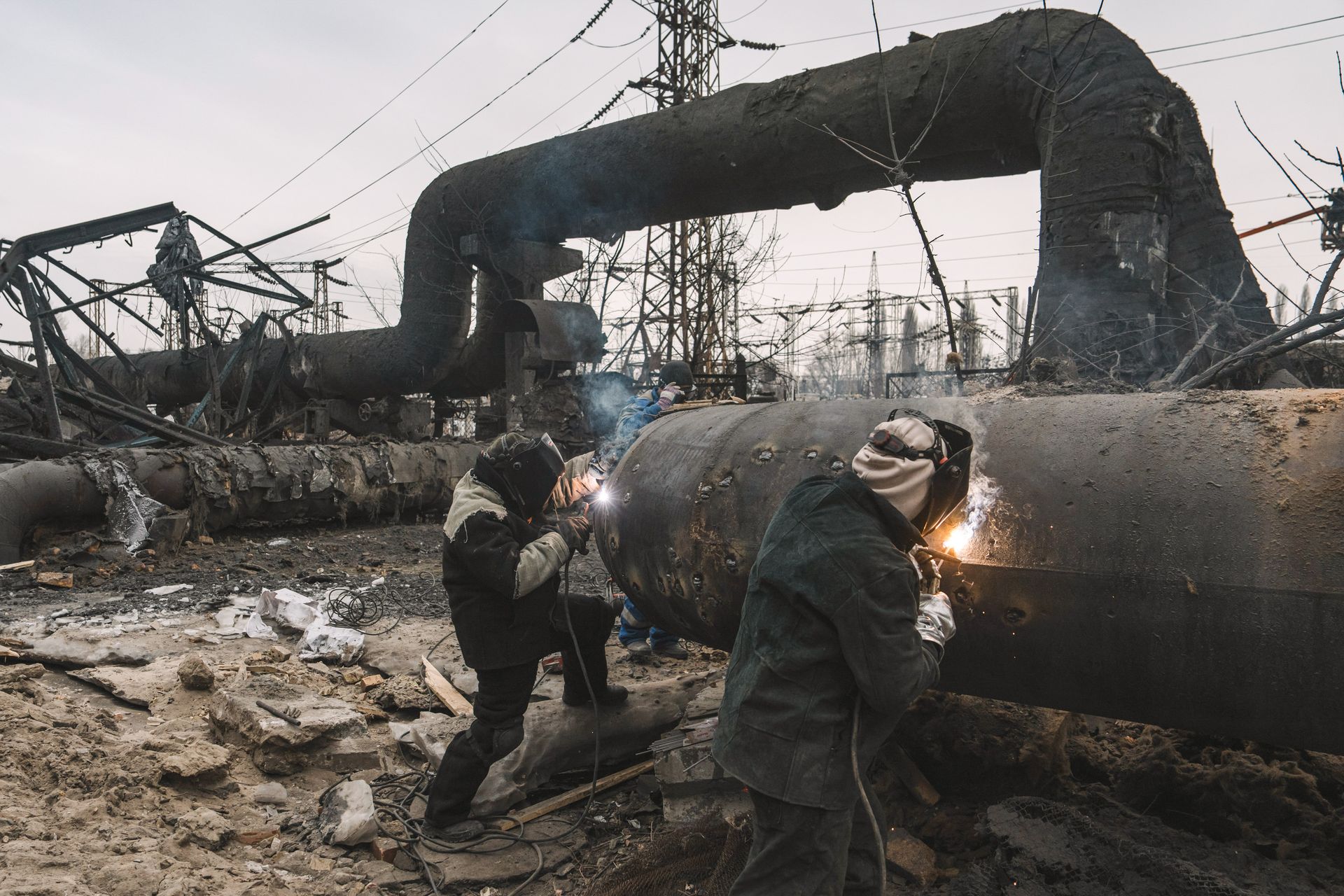
Europe's green transition is now a matter of energy security
#Europe #green transition #energy security #Ukraine #centralised power #decentralised renewables #battery storage #wind power #solar power #Darnytsia Thermal Plant #Russian missile attacks #Stockholm Environment Institute #EU funding #EBRD #EIB #Nordic Green Bank #World Bank #resilience #climate change #municipal infrastructure
📌 Key Takeaways
- Ukraine’s February 2026 missile attacks demonstrate the fragility of centralized energy grids.
- Decentralised wind, solar, and battery systems can provide reliable power for critical infrastructure during grid outages.
- A pilot system near a Ukrainian municipal water station could generate 58.5 GWh annually at a levelised cost of €0.131/kWh, below current EU household rates.
- European financial institutions (EBRD, EIB, Nordic Green Bank, World Bank) can finance such projects through repayable and non‑repayable instruments.
- Resilience through decentralisation aligns climate goals with energy security, requiring policy and investment shifts across the EU.
📖 Full Retelling
Erika Tserkasina, a Climate Systems and Energy Policy expert at the Stockholm Environment Institute Tallinn Centre, argues that Europe’s green transition has become a matter of energy security, especially after Russian missile strikes on Ukraine’s Darnytsia Thermal Power Plant on February 3, 2026. The article, published on February 21, 2026, highlights how the war has exposed the vulnerability of centralized power infrastructure in Europe and calls for a shift to decentralized, local renewable energy systems to ensure resilience during geopolitical crises. In light of Ukraine’s experience, Ukraine and EU member states must invest in small-scale wind, solar, and battery projects that can support critical infrastructure when the central grid is compromised, thereby aligning climate objectives with security needs.
The piece presents an analysis of a wind‑solar‑storage prototype that could serve a municipal water station in Ukraine, demonstrating that a system covering 58.5 GWh per year (enough for about 17,000 households) would cost approximately €46.2 million over its 25‑year life, translating to a levelised cost of electricity of €0.131 per kWh—well below current EU household rates. Critical financing now lies with international institutions such as the EBRD, EIB, Nordic Green Bank, and the World Bank, which can offer repayable and non‑repayable aid to municipalities worldwide.
Tserkasina stresses that energy security can be achieved without compromising sustainability. Decentralized renewables and battery storage build grid resilience, mitigate climate change, and protect essential services during conflict, underscoring the need for EU policymakers to adopt this multifaceted approach to energy strategy.
Key takeaways from the article include the stark lesson Ukraine has paid: size does not guarantee safety; vulnerability arises when power assets are centralized. The solution lies in dispersing risk through localized, renewable, and storaged power systems—an investment that simultaneously advances decarbonisation and safeguards against future disruptions.
The article encourages policymakers to view resilient renewable infrastructure as a pillar of both climate ambition and energy security, urging a strategic, well‑funded transition across Europe and its partner states.
🏷️ Themes
Energy security, Decentralised renewable energy, Infrastructure resilience, Climate action, Geopolitical risk, EU policy and financing
Entity Intersection Graph
No entity connections available yet for this article.
Original Source
Opinion Europe's green transition is now a matter of energy security by Erika Tserkasina February 21, 2026 6:10 PM 5 min read Workers cut damaged pipework near electrical power lines at the Darnytsia Thermal Power Plant following Russian air strikes in Kyiv, Ukraine, on Feb. 4, 2026. (Andrew Kravchenko / Bloomberg via Getty Images) Opinion Erika Tserkasina Climate Systems and Energy Policy unit expert at Stockholm Environment Institute Tallinn Centre Europe's approach to energy security long rested on a simple idea: scale equals safety. That assumption is now being tested in Ukraine — and increasingly proven wrong. For decades, coal-fired power plants have been the backbone of Europe 's energy system, underpinning industrial growth, modern living standards, and what was long assumed to be a secure and resilient energy supply. Today, Ukraine 's costly experience shows that to build resilience, European energy systems must embed local renewables — a shift that requires timely and strategic investment. On Feb. 3, Russian missiles struck Ukraine's Darnytsia thermal power plant, leaving Kyiv without electricity during one of the coldest winters in recent years. According to Ukraine's Energy Minister, four years into Russia's full-scale war against Ukraine, "there is not a single power plant in Ukraine that has not been hit ," illustrating how Russia's systematic attacks have turned centralized civilian energy infrastructure into a weapon of war. Become a member – go ad‑free Ukraine's experience exposes a vulnerability that is not unique to Ukraine but is inherent to Europe's highly centralized energy system architecture, too. In an era of escalating geopolitical risk, Europe can no longer treat centralized energy infrastructure as a guarantee of security. Ukraine's experience, acquired at immense human and economic cost, offers both a warning and a lesson. The question is whether the EU is prepared to learn that lesson and take early action by investing now in local rene...
Read full article at source