
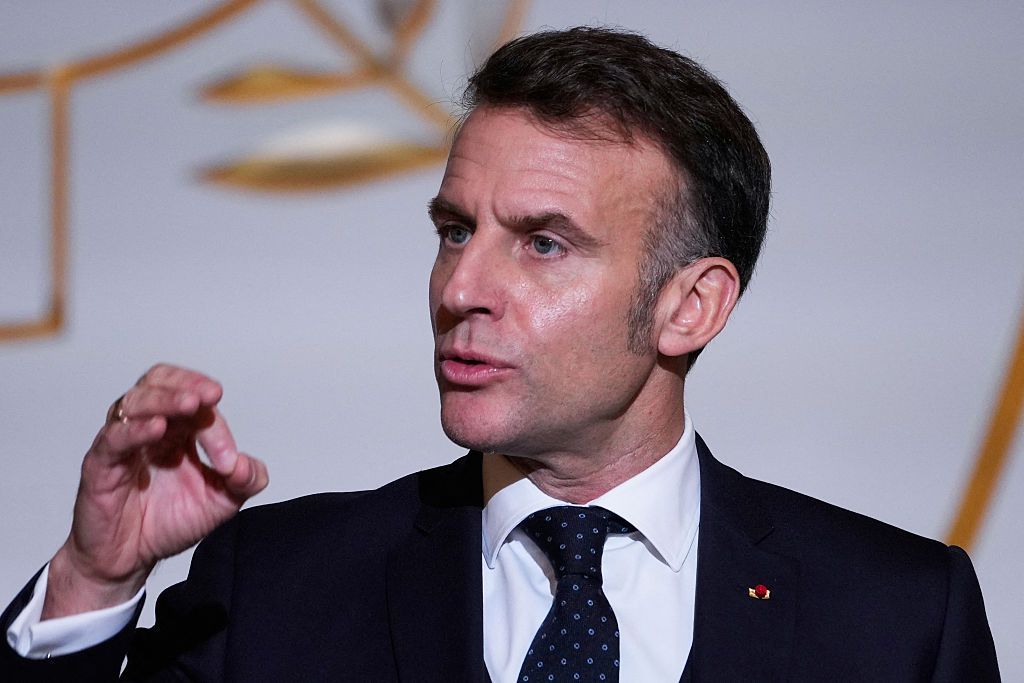
France, allies preparing mission to escort ships through Strait of Hormuz, Macron says
#France #Strait of Hormuz #ship escort #Macron #maritime security #allies #oil shipments #naval mission
📌 Key Takeaways
- France and allies are planning a mission to escort ships through the Strait of Hormuz.
- The announcement was made by French President Emmanuel Macron.
- The mission aims to ensure safe maritime passage in the strategic waterway.
- The Strait of Hormuz is a critical chokepoint for global oil shipments.
📖 Full Retelling
🏷️ Themes
Maritime Security, International Cooperation
📚 Related People & Topics

Strait of Hormuz
Strait between the Gulf of Oman and the Persian Gulf
The Strait of Hormuz ( Persian: تنگهٔ هُرمُز Tangeh-ye Hormoz , Arabic: مَضيق هُرمُز Maḍīq Hurmuz) is a strait between the Persian Gulf and the Gulf of Oman. It provides the only sea passage from the Persian Gulf to the open ocean and is one of the world's most strategically important choke points. ...

France
Country primarily in Western Europe
France, officially the French Republic, is a country primarily located in Western Europe. Its overseas regions and territories include French Guiana in South America, Saint Pierre and Miquelon in the North Atlantic, the French West Indies, and many islands in Oceania and the Indian Ocean. Metropolit...
Entity Intersection Graph
Connections for Macron:
Mentioned Entities
Deep Analysis
Why It Matters
This news is important because the Strait of Hormuz is a critical global chokepoint for oil shipments, with about 20% of the world's oil passing through it. It directly affects global energy security, shipping companies, and economies reliant on stable oil prices. The mission aims to protect commercial vessels from regional tensions, particularly involving Iran, which could otherwise lead to supply disruptions and increased geopolitical instability.
Context & Background
- The Strait of Hormuz is a narrow waterway between Iran and Oman, crucial for transporting oil from the Persian Gulf to global markets.
- Tensions have escalated in recent years due to incidents like tanker attacks and seizures, often linked to Iran's nuclear program and sanctions.
- Previous international efforts, such as the U.S.-led Combined Maritime Forces, have operated in the region to ensure maritime security.
- France has maintained a military presence in the Middle East and has previously participated in anti-piracy and freedom of navigation operations.
What Happens Next
France and its allies will likely formalize the mission details, including participant countries and operational rules, in the coming weeks. Expect increased naval deployments in the Strait of Hormuz, with potential coordination challenges among allies. The mission may face diplomatic pushback from Iran, which could view it as provocative, possibly leading to further regional incidents or negotiations.
Frequently Asked Questions
France has historical ties and strategic interests in the Middle East, and may seek to assert European autonomy in security matters amid shifting U.S. priorities. This allows for a multilateral approach without direct U.S. leadership, potentially reducing escalation risks with Iran.
If the mission successfully deters attacks and ensures safe passage, it could stabilize oil prices by reducing supply disruption fears. However, any military incidents or Iranian retaliation could temporarily spike prices due to market volatility.
Allies such as other European Union members, the United Kingdom, and possibly regional partners like the UAE or Saudi Arabia may participate. The exact coalition will depend on diplomatic negotiations and shared security concerns.
The mission risks being perceived as a hostile act by Iran, potentially leading to confrontations or retaliatory measures like mine-laying or drone attacks. Miscalculations during naval encounters could inadvertently trigger broader military clashes.