
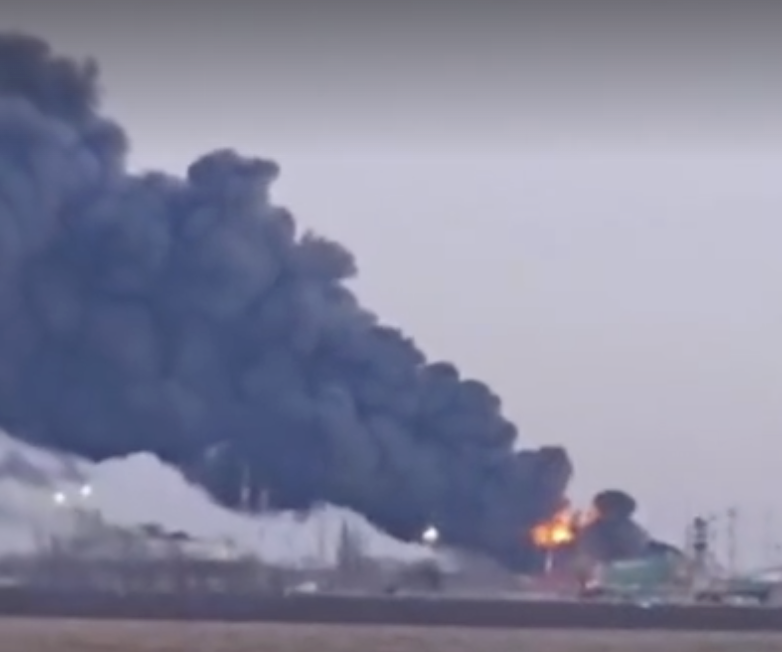
'Fuel tanks are burning' — Major Russian oil hub ablaze after Ukrainian drone strike in Krasnodar Krai, SBU source says
#Ukrainian drone strike #Russian oil hub #Krasnodar Krai #fuel tanks fire #SBU source #energy infrastructure #Russia-Ukraine conflict
📌 Key Takeaways
- Ukrainian drone strike targeted major Russian oil hub in Krasnodar Krai
- Fuel tanks caught fire at the facility according to SBU source
- Attack represents escalation in targeting Russian energy infrastructure
- Incident highlights ongoing cross-border strikes in Russia-Ukraine conflict
📖 Full Retelling
🏷️ Themes
Energy warfare, Military escalation
📚 Related People & Topics

Krasnodar Krai
First-level administrative division of Russia
Krasnodar Krai (Russian: Краснода́рский край, romanized: Krasnodarskiy kray, [krəsnɐˈdarskʲɪj kraj]) is a federal subject of Russia (a krai), located in the North Caucasus region in Southern Russia and is administratively a part of the Southern Federal District. Its administrative center is the city...
Entity Intersection Graph
Connections for Krasnodar Krai:
View full profileMentioned Entities
Deep Analysis
Why It Matters
This attack on a major Russian oil hub represents a significant escalation in Ukraine's strategy to target Russia's energy infrastructure, which directly impacts Russia's military logistics and economic stability. It affects global energy markets by potentially disrupting oil supplies and increasing price volatility. The strike also demonstrates Ukraine's growing capability to conduct long-range drone operations deep inside Russian territory, which could reshape the conflict's dynamics.
Context & Background
- Ukraine has increasingly targeted Russian oil refineries and energy infrastructure since early 2024 as part of its asymmetric warfare strategy
- Krasnodar Krai is a critical region for Russia's energy sector, housing multiple refineries and export terminals on the Black Sea
- Previous Ukrainian drone strikes have successfully damaged or disrupted operations at several Russian refineries, reducing Russia's fuel production capacity
- Russia has responded to these attacks with enhanced air defenses around critical infrastructure and retaliatory strikes on Ukrainian energy facilities
What Happens Next
Russia will likely enhance air defenses around remaining energy facilities and may retaliate with strikes on Ukrainian infrastructure. International oil prices may experience short-term volatility as markets assess the damage's impact on Russian exports. Ukraine will probably continue similar operations, potentially targeting additional refineries or storage facilities in coming weeks.
Frequently Asked Questions
Ukraine aims to disrupt Russia's military logistics by reducing fuel supplies to frontline troops and damage Russia's economy by cutting oil export revenues. These strikes also demonstrate Ukraine's ability to project power deep into Russian territory.
Krasnodar Krai is crucial as it contains multiple oil refineries, storage facilities, and the Novorossiysk oil terminal - Russia's main Black Sea export hub. Damage here directly impacts both domestic fuel supplies and export capabilities.
These strikes could increase global oil prices and affect energy security in Europe and beyond. They also raise questions about escalation risks and potential impacts on international energy markets already strained by sanctions.
Russia has deployed additional air defense systems around critical facilities and conducted retaliatory strikes on Ukraine's energy grid. Moscow has also accused Western countries of providing targeting intelligence for these attacks.
The successful strike indicates Ukraine has developed or acquired long-range drones capable of evading Russian air defenses and hitting precise targets hundreds of kilometers from the front lines, representing a significant advancement in their asymmetric warfare capabilities.