
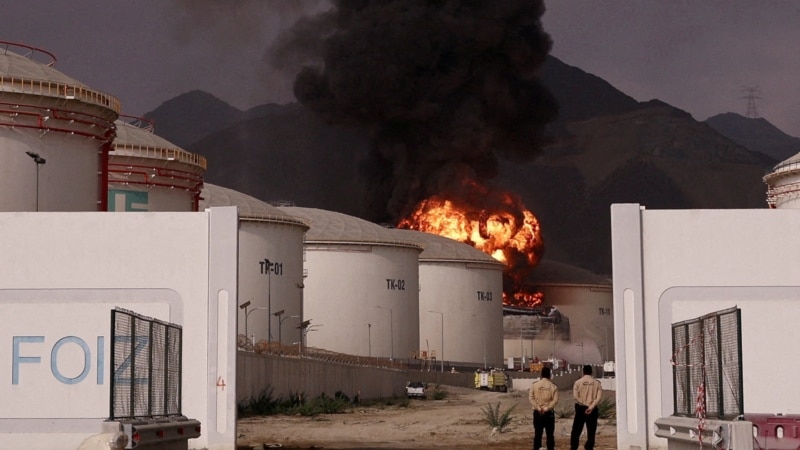
Israel Widens Scope Of Attacks, Hits Northern Iran, While Energy Sites Burn In Gulf Region
#Israel #Iran #Gulf region #energy sites #military attacks #Middle East #escalation
📌 Key Takeaways
- Israel expanded military operations by striking targets in northern Iran.
- Energy infrastructure in the Gulf region was attacked, causing significant fires.
- The attacks mark an escalation in regional tensions and cross-border conflicts.
- The situation raises concerns about broader instability and impacts on global energy markets.
📖 Full Retelling
🏷️ Themes
Military Escalation, Regional Conflict
📚 Related People & Topics

Iran
Country in West Asia
# Iran **Iran**, officially the **Islamic Republic of Iran** and historically known as **Persia**, is a sovereign country situated in West Asia. It is a major regional power, ranking as the 17th-largest country in the world by both land area and population. Combining a rich historical legacy with a...

Middle East
Transcontinental geopolitical region
The Middle East is a geopolitical region encompassing the Arabian Peninsula, Egypt, Iran, Iraq, the Levant, and Turkey. The term came into widespread usage by Western European nations in the early 20th century as a replacement of the term Near East (both were in contrast to the Far East). The term ...

Persian Gulf
Arm of the Indian Ocean in West Asia
The Persian Gulf, sometimes called the Arabian Gulf, is a mediterranean sea in West Asia. The body of water is an extension of the Arabian Sea and the larger Indian Ocean located between the Arabian Peninsula and Iran (Persia). It is connected to the Gulf of Oman in the east by the Strait of Hormuz.

Israel
Country in West Asia
Israel, officially the State of Israel, is a country in the Southern Levant region of West Asia. It is bordered by Lebanon to the north, Syria to the northeast, Jordan to the east, and Egypt to the southwest. Israel occupies the West Bank and the Gaza Strip of the Palestinian territories, as well as...
Entity Intersection Graph
Connections for Iran:
Mentioned Entities
Deep Analysis
Why It Matters
This escalation matters because it represents a significant expansion of the Israel-Iran conflict beyond proxy warfare into direct state-on-state military strikes, dramatically increasing regional instability. It affects global energy markets as attacks on Gulf energy infrastructure threaten oil and gas supplies, potentially causing price spikes worldwide. The situation impacts regional security for all Middle Eastern nations and raises concerns about broader international involvement, particularly given U.S. security commitments to Israel and Gulf allies.
Context & Background
- Israel and Iran have engaged in a long-running shadow war for decades, with Iran supporting proxy groups like Hezbollah and Hamas against Israel.
- Previous Israeli strikes on Iranian targets were typically limited to Syria or covert operations, avoiding direct attacks on Iranian soil to prevent full-scale war.
- The Gulf region hosts approximately 30% of global oil production and 20% of global natural gas exports, making energy infrastructure attacks economically significant worldwide.
- Tensions escalated following Iran's April 2024 direct missile and drone attack on Israel, which was itself retaliation for an alleged Israeli strike on an Iranian diplomatic compound in Syria.
What Happens Next
Iran will likely respond with either direct military retaliation or increased attacks through proxies, potentially targeting Israeli or U.S. assets regionally. The U.S. and other powers will intensify diplomatic efforts to prevent full-scale war, possibly through emergency UN Security Council sessions. Oil prices will likely surge as markets price in supply disruption risks, potentially leading to coordinated strategic petroleum reserve releases by consuming nations. Regional airlines may reroute flights away from conflict zones, and shipping insurance premiums for Gulf transit will increase substantially.
Frequently Asked Questions
Northern Iran hosts key military and nuclear facilities, including the Natanz uranium enrichment site. Strikes in this region likely target Iran's military infrastructure and nuclear program capabilities rather than purely symbolic targets.
Attacks on Gulf energy infrastructure could immediately reduce oil supplies, causing price spikes. Even without direct supply disruptions, market uncertainty typically drives prices upward as traders price in risk premiums.
Both Israel and Iran have historically avoided direct all-out conflict due to mutual deterrence and international pressure. The U.S. and other global powers will likely intervene diplomatically and militarily to prevent escalation that could draw in multiple regional actors.
Gulf Arab states like Saudi Arabia and UAE will likely call for de-escalation while enhancing their air defenses. These countries have complex relationships with both Iran and Israel, balancing security concerns with economic interests.
The U.S. provides military support to Israel but has also engaged in backchannel diplomacy with Iran. American forces in the region could be drawn into the conflict if U.S. assets are targeted or if broader regional stability is threatened.