
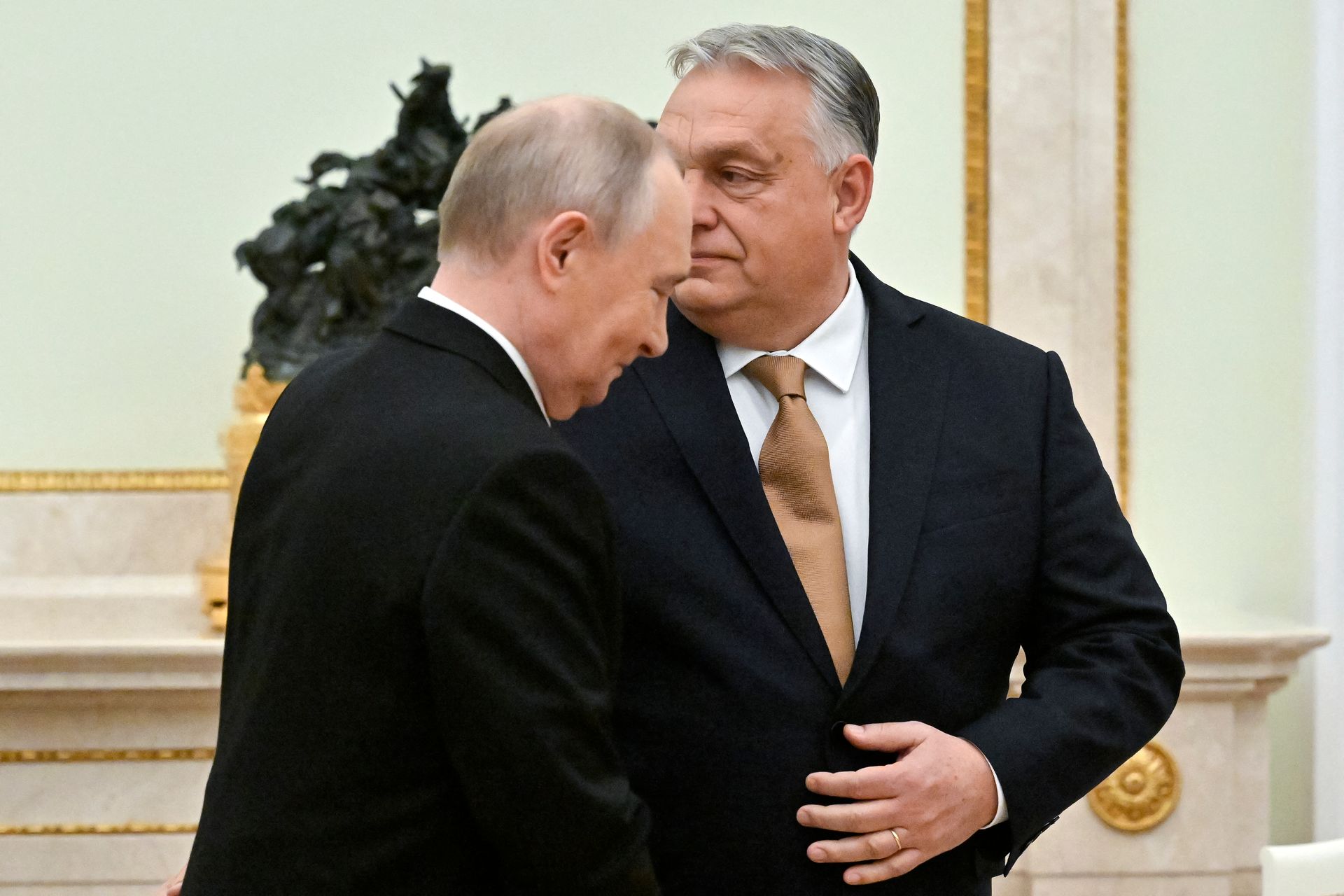
Leak fears grip EU as Hungary maintains 'open line' to Kremlin
#Hungary #European Union #Russia #Kremlin #information leak #diplomacy #geopolitics #security concerns
📌 Key Takeaways
- Hungary's continued diplomatic ties with Russia raise concerns within the EU about potential information leaks.
- EU officials worry sensitive discussions could be compromised due to Hungary's open communication channel with the Kremlin.
- The situation highlights internal divisions within the EU regarding relations with Russia amid ongoing geopolitical tensions.
- This development may impact EU unity and the security of shared intelligence and strategic deliberations.
📖 Full Retelling
🏷️ Themes
EU Security, Diplomatic Tensions
📚 Related People & Topics

Russia
Country in Eastern Europe and North Asia
Russia, or the Russian Federation, is a country in Eastern Europe and North Asia. It is the largest country in the world, spanning eleven time zones and sharing land borders with fourteen countries. With a population of over 140 million, Russia is the most populous country in Europe and the ninth-mo...

Kremlin
Fortified complex in Moscow, Russia
The Moscow Kremlin, commonly known as just the Kremlin, is a fortified complex in Moscow, Russia. Located in the centre of the country's capital city, the Moscow Kremlin comprises five palaces, four cathedrals, and the enclosing Kremlin Wall along with the Kremlin towers. In the complex is the Grand...

European Union
Supranational political and economic union
The European Union (EU) is a supranational political and economic union of 27 member states that are located primarily in Europe. The union has a total area of 4,233,255 km2 (1,634,469 sq mi) and an estimated population of more than 450 million as of 2025. The EU is often described as a sui generis ...

Hungary
Country in Central Europe
Hungary is a landlocked country in Central Europe. Spanning much of the Carpathian Basin, it is bordered by Slovakia to the north, Ukraine to the northeast, Romania to the east and southeast, Serbia to the south, Croatia and Slovenia to the southwest, and Austria to the west. Hungary lies within the...
Entity Intersection Graph
Connections for Russia:
Mentioned Entities
Deep Analysis
Why It Matters
This news matters because Hungary's continued communication with the Kremlin creates security vulnerabilities within the European Union, potentially exposing sensitive diplomatic and strategic information to Russia. It affects all EU member states by undermining collective security and foreign policy unity, particularly regarding sanctions against Russia and support for Ukraine. The situation raises concerns about Hungary's alignment with EU values and could lead to diplomatic isolation or internal conflicts within the bloc.
Context & Background
- Hungary has maintained closer ties with Russia than most EU members since Viktor Orbán became prime minister in 2010
- The EU has implemented multiple sanctions packages against Russia following its 2022 invasion of Ukraine
- Hungary has repeatedly delayed or opposed certain EU measures against Russia, citing energy dependence and economic concerns
- EU institutions have previously expressed concerns about democratic backsliding and rule of law issues in Hungary
What Happens Next
The EU will likely increase pressure on Hungary through diplomatic channels and potentially review information-sharing protocols. Expect emergency meetings of EU foreign ministers to address security concerns. Hungary may face calls for greater transparency about its communications with Russia, possibly leading to formal investigations or restrictions on its access to sensitive EU discussions.
Frequently Asked Questions
Hungary cites pragmatic reasons including energy security, as it relies heavily on Russian natural gas. The government also positions itself as a potential mediator and argues for diplomatic solutions to the Ukraine conflict.
Potential leaks could include EU diplomatic strategies, sanctions planning, intelligence sharing arrangements, and internal debates about Ukraine support. This could compromise negotiations and security cooperation.
The EU could implement stricter information compartmentalization, exclude Hungary from sensitive discussions, or initiate formal proceedings regarding Hungary's compliance with EU foreign policy objectives.
Yes, Hungary has delayed or watered down multiple EU sanctions packages against Russia and opposed measures affecting Russian energy imports, often requiring concessions for its approval.