
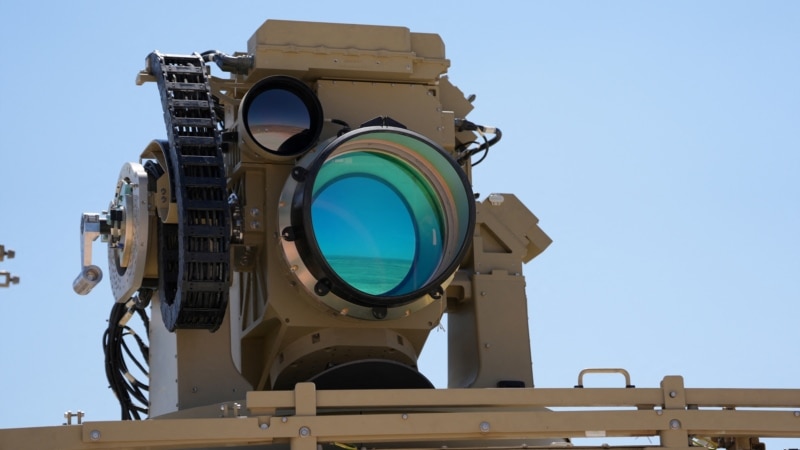
Magic Bullet? Sci-Fi Laser Weapons Are Now An Anti-Drone Reality
#laser weapons #anti-drone #sci-fi #military tech #defense systems #critical infrastructure #cost-effective #security
📌 Key Takeaways
- Laser weapons, once considered science fiction, are now operational for anti-drone defense.
- These systems offer a cost-effective alternative to traditional missile-based countermeasures.
- The technology is being deployed to protect critical infrastructure from drone threats.
- Advancements in laser tech mark a significant shift in modern military and security strategies.
📖 Full Retelling
🏷️ Themes
Military Technology, Drone Defense
📚 Related People & Topics
Magic bullet
Topics referred to by the same term
Magic bullet may refer to: Enchanted bullet obtained through a contract with the devil in the German folk legend Freischütz Der Freischütz, an opera by Carl Maria von Weber based on the legend Magic bullet (medicine), the pharmacological ideal of a drug able to selectively target a disease without ...
Entity Intersection Graph
No entity connections available yet for this article.
Mentioned Entities
Deep Analysis
Why It Matters
This development matters because it represents a significant shift in modern warfare and defense capabilities, moving from theoretical concepts to operational reality. It affects military forces worldwide who must now adapt to drone threats that have become increasingly prevalent in conflicts from Ukraine to the Middle East. The technology also impacts defense contractors, international security dynamics, and potentially civilian airspace protection in the future. This advancement could fundamentally change battlefield tactics and force protection strategies against asymmetric threats.
Context & Background
- Directed energy weapons have been in development since the 1960s, with early laser research focused on missile defense during the Cold War
- Drone warfare has escalated dramatically since 2014, with non-state actors and regular militaries using commercial and military drones for surveillance and attacks
- The U.S. military has tested various laser systems including the Navy's LaWS (Laser Weapon System) deployed on USS Ponce in 2014
- Recent conflicts in Ukraine and Nagorno-Karabakh demonstrated the devastating effectiveness of drone swarms against traditional armor and defenses
- Multiple nations including China, Russia, Israel, and the UK have been developing their own directed energy weapons programs
What Happens Next
Expect increased deployment of laser systems on naval vessels and forward operating bases within 12-18 months, with field testing in active conflict zones likely within 2 years. Defense contractors will compete for larger production contracts as militaries establish procurement programs. International arms control discussions may emerge regarding laser weapon classifications and usage protocols. Research will shift toward increasing power output, improving cooling systems, and developing countermeasures against laser defenses.
Frequently Asked Questions
Laser weapons are particularly effective against drone swarms because they can engage multiple targets rapidly with precision, have virtually unlimited ammunition compared to traditional systems, and operate at the speed of light. Their effectiveness depends on power output, atmospheric conditions, and tracking systems, but they offer a cost-effective solution against inexpensive drone threats.
Current limitations include power requirements and thermal management, as high-energy lasers generate substantial heat requiring advanced cooling systems. Atmospheric conditions like fog, rain, or dust can reduce effectiveness, and the systems typically have limited range compared to some missile defenses. Integration with existing military platforms and command systems also presents engineering challenges.
Laser weapons can be both lethal and non-lethal depending on their power setting and intended use. Lower-power systems can disable sensors, cameras, or electronics without destroying the entire platform, while high-power systems can melt materials and cause catastrophic damage. Military applications typically focus on lethal capabilities for threat elimination, though some systems have adjustable settings.
Laser weapons have significantly lower cost-per-shot since they primarily consume electricity rather than expensive munitions. While initial development and deployment costs are high, operational expenses are minimal compared to missile systems that can cost hundreds of thousands per interception. This makes lasers economically advantageous against low-cost threats like commercial drones.
The 1995 Protocol on Blinding Laser Weapons bans weapons specifically designed to cause permanent blindness, but doesn't prohibit other military laser applications. There are no comprehensive treaties specifically regulating high-energy laser weapons, though general laws of armed conflict apply. As deployment increases, new international agreements may be needed to address classification and usage standards.