
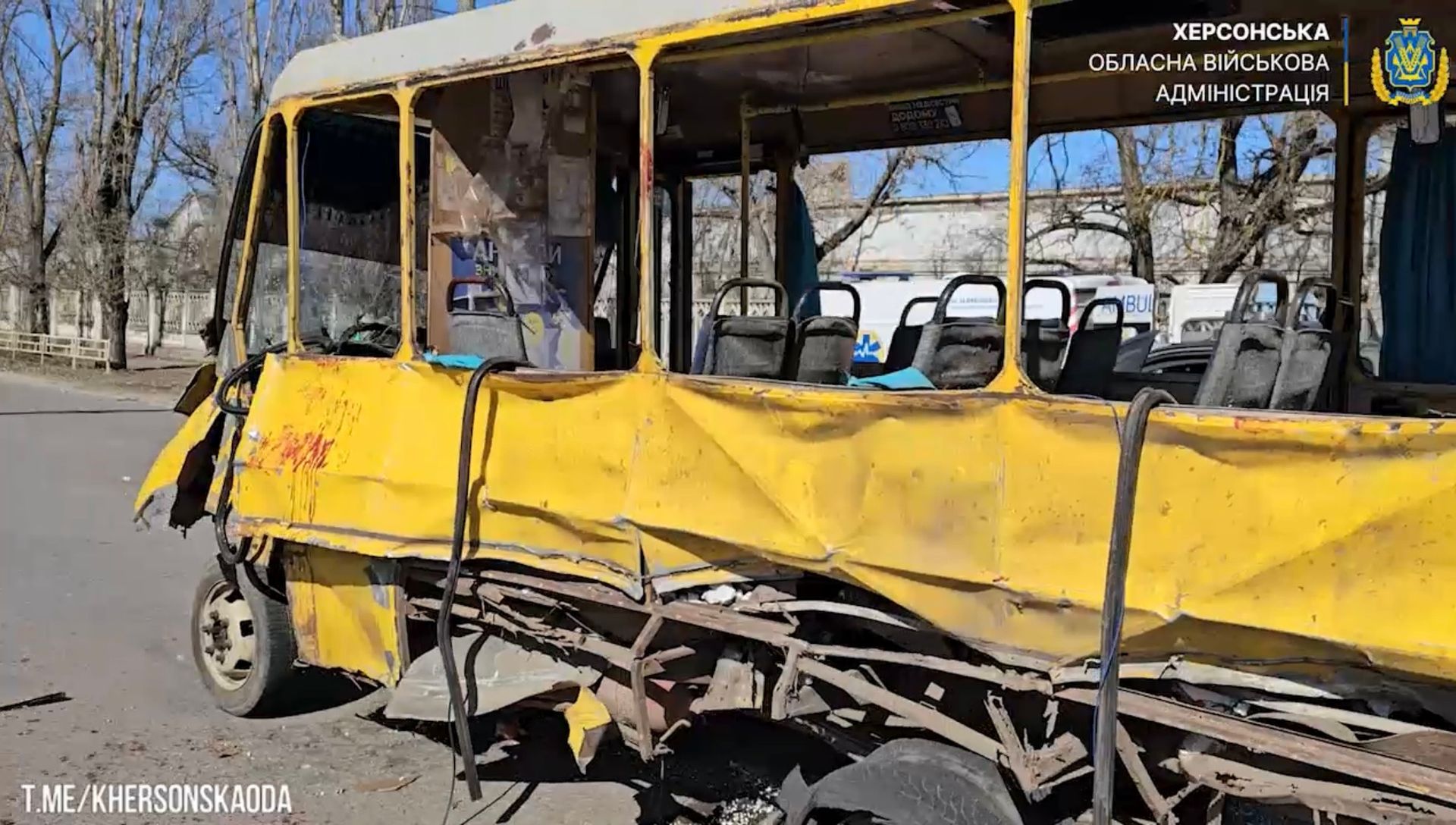
Russian drone hits civilian bus in Kherson, injuring 10
#Russian drone #Kherson #civilian bus #injuries #Ukraine conflict
📌 Key Takeaways
- A Russian drone struck a civilian bus in Kherson, Ukraine.
- The attack resulted in injuries to 10 people.
- The incident highlights ongoing targeting of civilian infrastructure.
- It underscores the continued conflict and humanitarian impact in the region.
🏷️ Themes
War, Civilian Casualties
📚 Related People & Topics

List of wars involving Ukraine
The following is a list of major conflicts fought by Ukraine, by Ukrainian people or by regular armies during periods when independent states existed on the modern territory of Ukraine, from the Kievan Rus' times to the present day. It also includes wars fought outside Ukraine by Ukrainian military....

Kherson
City in Kherson Oblast, Ukraine
Kherson (Ukrainian and Russian: Херсон, Ukrainian: [xerˈsɔn] , Russian: [xʲɪrˈson]) is a port city in southern Ukraine that serves as the administrative centre of Kherson Oblast. Located by the Black Sea and on the Dnieper River, Kherson is the home to a major ship-building industry and is a regiona...
Entity Intersection Graph
Connections for List of wars involving Ukraine:
Mentioned Entities
Deep Analysis
Why It Matters
This attack represents a direct assault on civilian infrastructure and non-combatants, violating international humanitarian law and potentially constituting a war crime. It affects the local population in Kherson who rely on public transportation for essential movement, humanitarian workers trying to assist civilians, and international bodies monitoring conflict escalation. The incident demonstrates the ongoing vulnerability of Ukrainian civilians in frontline regions despite territorial gains, and could influence Western military aid decisions regarding air defense systems.
Context & Background
- Kherson was liberated from Russian occupation in November 2022 after 8 months of control, but remains under constant artillery and drone attacks from Russian forces positioned across the Dnipro River
- Civilian transportation has been repeatedly targeted throughout the war, with previous attacks on train stations, buses, and evacuation convoys documented by UN monitoring missions
- Drone warfare has escalated significantly in the conflict, with both sides deploying thousands of Iranian-made Shahed drones and domestically produced UAVs for reconnaissance and strikes
- The Geneva Conventions explicitly prohibit attacks on civilian objects and require distinguishing between military targets and civilian infrastructure
- Kherson region has experienced some of the most severe flooding damage following the destruction of the Kakhovka Dam in June 2023, complicating humanitarian access
What Happens Next
Ukrainian authorities will likely conduct damage assessments and emergency repairs to transportation infrastructure while providing medical care to victims. International organizations may investigate potential war crimes violations, with findings possibly presented to the International Criminal Court. Russia will probably continue cross-river attacks on Kherson city as part of its strategy to make the region uninhabitable, while Ukraine may request additional air defense systems from Western allies specifically for protecting civilian areas.
Frequently Asked Questions
Military analysts suggest such attacks aim to terrorize civilian populations, disrupt essential services, and depopulate frontline areas to complicate Ukrainian military logistics. Some attacks may represent poor targeting intelligence or weapon inaccuracy rather than deliberate policy.
Drone strikes against civilian infrastructure have become increasingly frequent, with hundreds documented by monitoring groups. Russia has particularly targeted energy facilities, residential buildings, and transportation hubs using Iranian-supplied Shahed drones and Lancet kamikaze drones.
The Geneva Conventions and Additional Protocols require combatants to distinguish between military and civilian objects, avoid disproportionate attacks, and take precautions to spare civilians. Deliberate attacks on civilian transportation constitute violations of these protections.
Such attacks force Ukraine to divert air defense resources to protect civilian areas rather than frontline positions. They also complicate humanitarian evacuation and supply efforts, requiring additional security measures for civilian infrastructure.
While immediate military consequences are unlikely, documented attacks contribute to war crimes investigations and may influence Western decisions on providing more advanced weapons to Ukraine. The incident could also trigger additional sanctions against entities involved in drone production and supply chains.