
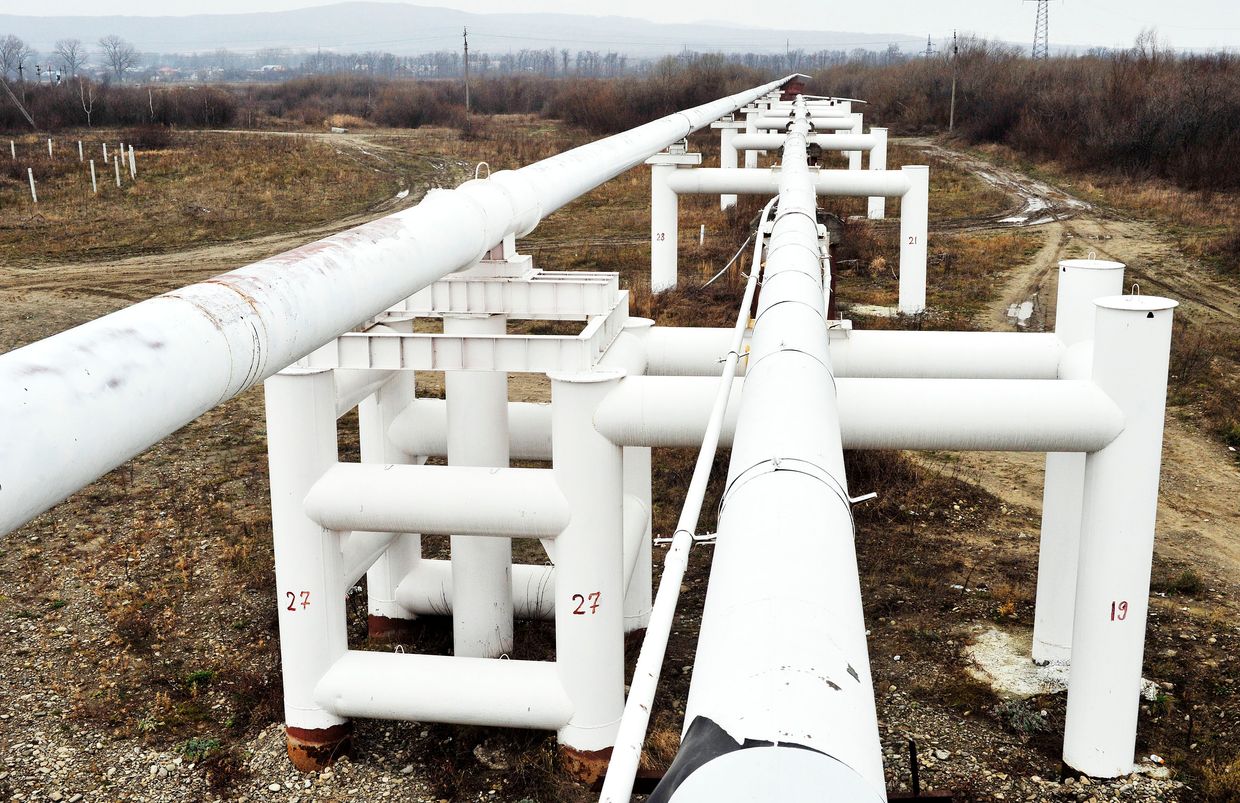
Ukraine accepts EU offer to help restore Druzhba oil pipeline flow to Hungary, Slovakia
#Ukraine #EU #Druzhba pipeline #oil #Hungary #Slovakia #energy restoration
📌 Key Takeaways
- Ukraine accepts EU assistance to restore Druzhba pipeline flow to Hungary and Slovakia.
- The move aims to resume oil supplies disrupted by the Russia-Ukraine conflict.
- It reflects EU efforts to secure energy for member states amid regional tensions.
- The restoration could ease energy pressures in Central Europe.
📖 Full Retelling
🏷️ Themes
Energy Security, International Cooperation
📚 Related People & Topics

Druzhba pipeline
Oil pipeline from Tatarstan, Russia
The Druzhba pipeline (Russian: нефтепровод «Дружба», Czech: Ropovod Družba), also referred to as the Friendship Pipeline and the Comecon Pipeline, is one of the world's longest oil pipelines and one of the largest oil pipeline networks in the world. It began operation in 1964 and remains in operatio...

Slovakia
Country in Central Europe
Slovakia, officially the Slovak Republic, is a landlocked country in Central Europe. It is bordered by Poland to the north, Ukraine to the east, Hungary to the south, Austria to the west, and the Czech Republic to the northwest. Slovakia's mostly mountainous territory spans about 49,000 km2 (19,000 ...

Ukraine
Country in Eastern Europe
# Ukraine **Ukraine** is a country located in Eastern Europe. It is the second-largest country in Europe by area, after Russia. Known for its extensive fertile plains, the nation serves as a critical global exporter of grain and is considered a middle power in international affairs. ## Geography a...

European Union
Supranational political and economic union
The European Union (EU) is a supranational political and economic union of 27 member states that are located primarily in Europe. The union has a total area of 4,233,255 km2 (1,634,469 sq mi) and an estimated population of more than 450 million as of 2025. The EU is often described as a sui generis ...

Hungary
Country in Central Europe
Hungary is a landlocked country in Central Europe. Spanning much of the Carpathian Basin, it is bordered by Slovakia to the north, Ukraine to the northeast, Romania to the east and southeast, Serbia to the south, Croatia and Slovenia to the southwest, and Austria to the west. Hungary lies within the...
Entity Intersection Graph
Connections for Druzhba pipeline:
Mentioned Entities
Deep Analysis
Why It Matters
This development is significant because it addresses critical energy security concerns for Hungary and Slovakia, which have been heavily dependent on Russian oil imports. The restoration of the Druzhba pipeline flow through Ukraine provides these EU nations with an alternative supply route, reducing their vulnerability to geopolitical pressures. This move also demonstrates Ukraine's willingness to maintain energy infrastructure cooperation despite the ongoing conflict, potentially strengthening its position as a reliable energy transit partner for Europe. The agreement affects European energy markets, regional diplomacy, and Ukraine's economic recovery efforts.
Context & Background
- The Druzhba pipeline is one of the world's longest oil pipelines, originally built during the Soviet era to transport Russian oil to Eastern Europe and beyond.
- Following Russia's invasion of Ukraine in 2022, Ukraine suspended oil transit through the Druzhba pipeline's southern branch due to security concerns and sanctions enforcement.
- Hungary and Slovakia have been particularly dependent on Russian oil imports, with Hungary securing exemptions from EU sanctions on Russian oil imports through pipelines.
- The EU has been working to diversify energy supplies away from Russia since the invasion, leading to increased LNG imports and alternative pipeline arrangements.
- Ukraine previously earned significant transit fees from Russian oil flowing through its territory, with energy infrastructure playing a crucial role in its economy and geopolitical positioning.
What Happens Next
Technical teams will likely begin assessments of pipeline infrastructure damage and repair requirements in the coming weeks. Negotiations will proceed regarding financing mechanisms, with the EU potentially providing reconstruction funds through existing energy security programs. Hungary and Slovakia will work to secure alternative oil supplies to flow through the restored pipeline, potentially from Kazakhstan or Azerbaijan via existing routes. The timeline for actual oil flow restoration will depend on technical assessments, security conditions in affected regions, and final agreement terms between all parties.
Frequently Asked Questions
Ukraine suspended transit due to security risks from the ongoing conflict and to comply with international sanctions against Russia. The suspension was also a strategic move to reduce Russian energy revenues funding the war effort.
Restoring this transit route could help stabilize regional oil markets by providing Hungary and Slovakia with more supply options. However, the impact on broader European prices will be limited since these countries represent a relatively small portion of EU oil consumption.
Key challenges include assessing and repairing potential war damage to pipeline infrastructure, ensuring security along the transit route, and securing alternative oil supplies to replace Russian crude. Political negotiations regarding transit fees and liability arrangements also present hurdles.
This move supports EU diversification by maintaining infrastructure that can transport non-Russian oil to Central Europe. It helps reduce specific member states' dependence on Russian supplies while preserving important energy corridors that could serve future alternative suppliers.
The EU is facilitating the agreement and likely providing financial and technical support for pipeline restoration. This aligns with broader EU energy security initiatives and demonstrates Brussels' role in mediating regional energy disputes among member states and neighboring countries.