
Ukraine war latest: 'Murders for the sake of Russian propaganda' — Ukraine identifies 13 collaborators accused of war crimes in Izium
#Ukraine #Izium #collaborators #war crimes #Russian propaganda #occupation #investigation #liberation
📌 Key Takeaways
- Ukraine identifies 13 collaborators accused of war crimes in Izium
- Accusations include murders allegedly committed for Russian propaganda purposes
- The case highlights alleged collaboration with Russian forces during occupation
- It represents part of ongoing war crimes investigations following Izium's liberation
📖 Full Retelling
🏷️ Themes
War Crimes, Collaboration
📚 Related People & Topics

Propaganda in Russia
The propaganda of the Russian Federation promotes views, perceptions or agendas of the government. The media include state-run outlets and online technologies, and may involve using "Soviet-style 'active measures' as an element of modern Russian 'political warfare'". Notably, contemporary Russian pr...

Ukraine
Country in Eastern Europe
# Ukraine **Ukraine** is a country located in Eastern Europe. It is the second-largest country in Europe by area, after Russia. Known for its extensive fertile plains, the nation serves as a critical global exporter of grain and is considered a middle power in international affairs. ## Geography a...

Izium
City in Kharkiv Oblast, Ukraine
Izium or Izyum (Ukrainian: Ізюм, IPA: [iˈzʲum] ; Russian: Изюм) is a city on the Donets River in Kharkiv Oblast, eastern Ukraine that serves as the administrative center of Izium Raion and Izium urban hromada. It is about 120 kilometres (75 mi) southeast of the city of Kharkiv, the oblast's administ...
Entity Intersection Graph
Connections for Propaganda in Russia:
View full profileMentioned Entities
Deep Analysis
Why It Matters
This news is important because it highlights Ukraine's ongoing efforts to hold individuals accountable for war crimes committed during the Russian occupation, reinforcing the rule of law and justice for victims. It affects the families of those killed in Izium, the broader Ukrainian society seeking accountability, and international bodies monitoring human rights violations. The identification of collaborators also underscores internal challenges of occupation and could influence domestic unity and future reconciliation processes.
Context & Background
- Izium, a city in Kharkiv Oblast, was occupied by Russian forces from early April to September 2022, during which widespread atrocities were reported.
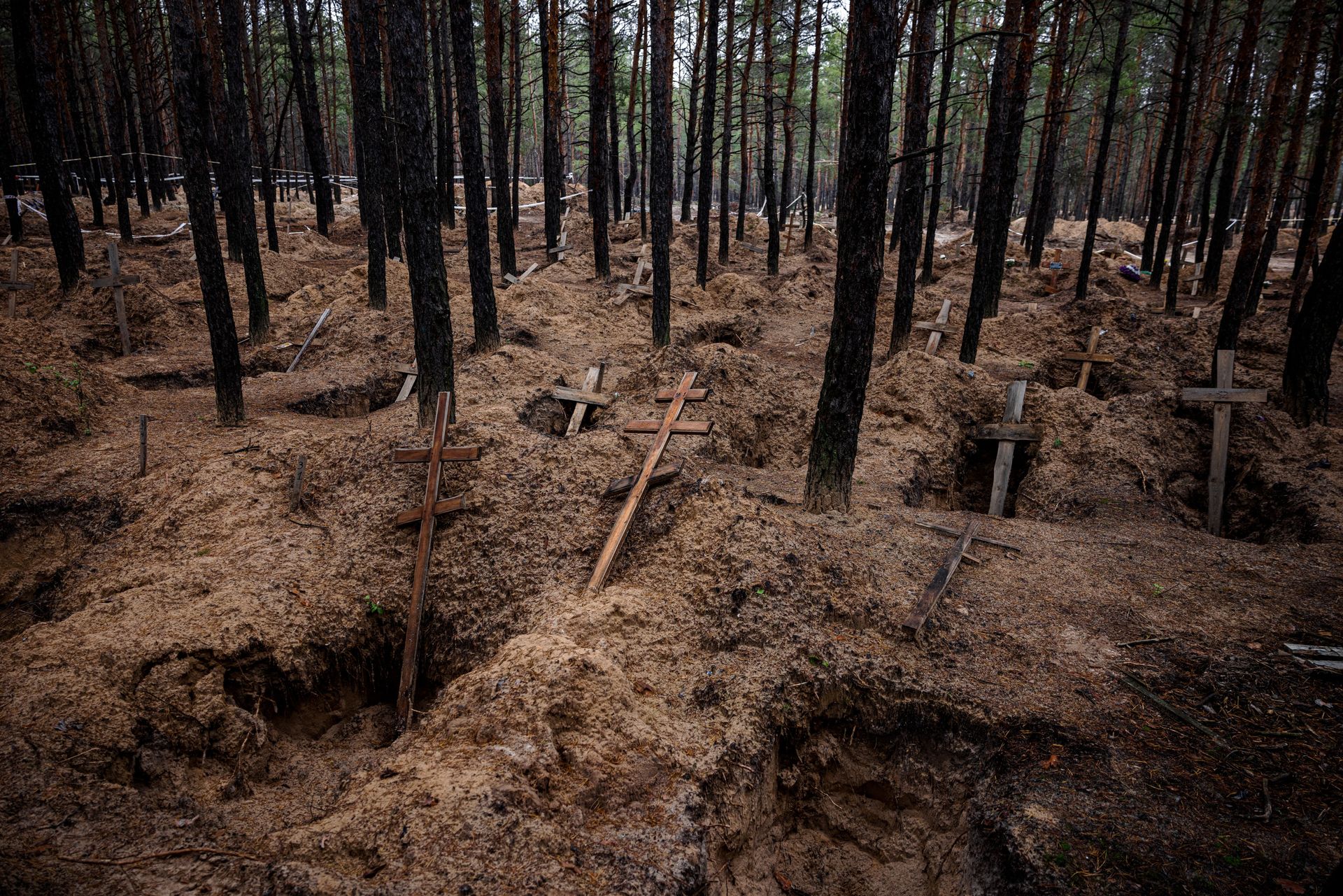
- After Ukraine's counteroffensive liberated Izium in September 2022, mass graves with hundreds of bodies were discovered, prompting war crime investigations.
- Collaborators, often locals accused of aiding occupying forces, have been a focus of Ukrainian legal actions since the full-scale invasion began in February 2022.
- Russian propaganda has frequently used alleged atrocities to justify its invasion, making such cases politically charged in the information war.
What Happens Next
Ukrainian authorities will likely proceed with legal cases against the 13 identified collaborators, potentially leading to trials and verdicts in the coming months. International organizations like the ICC may monitor or support these proceedings as part of broader war crime investigations. Further identifications of collaborators in other occupied areas are expected as Ukraine continues to reclaim territory and gather evidence.
Frequently Asked Questions
They are accused of involvement in murders allegedly committed to support Russian propaganda, though exact details may include killings of civilians or prisoners during the occupation of Izium, as part of broader atrocities documented there.
Ukraine uses evidence from witnesses, documents, and forensic investigations to identify collaborators, prosecuting them under national laws for treason or war crimes, often with support from international legal experts.
Russian propaganda is cited because the accusations suggest murders were staged or exploited to create false narratives justifying the invasion, highlighting the use of violence for disinformation purposes in the war.
These prosecutions may complicate reconciliation by addressing grievances but could also deter future collaboration and reinforce accountability, though they risk deepening societal divisions if not handled transparently.
Yes, international bodies like the International Criminal Court and UN agencies are monitoring such cases, as they relate to broader investigations into potential crimes against humanity in Ukraine since 2022.