
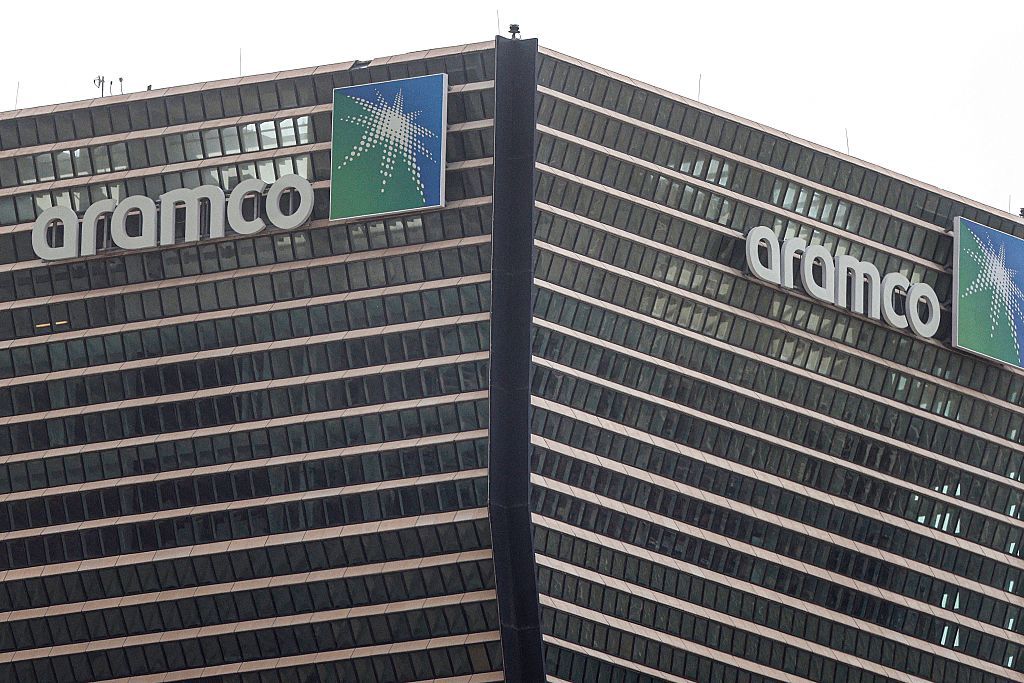
World’s largest oil producer Aramco in talks to buy Ukrainian interceptor drones, WSJ reports
#Aramco #Ukraine #interceptor drones #oil producer #Wall Street Journal #defense deal #security
📌 Key Takeaways
- Saudi Aramco, the world's largest oil producer, is in discussions to purchase Ukrainian-made interceptor drones.
- The talks, reported by The Wall Street Journal, involve drones designed to intercept aerial threats.
- This potential deal highlights Ukraine's growing role as a defense technology exporter.
- The move suggests Aramco is seeking to bolster the security of its critical energy infrastructure.
📖 Full Retelling
🏷️ Themes
Defense Technology, Energy Security
📚 Related People & Topics

Saudi Aramco
Saudi Arabian state-owned petroleum company
Saudi Aramco (Arabic: أرامكو السعودية ʾArāmkū as-Suʿūdiyyah) or Aramco (formerly Arabian-American Oil Company), officially the Saudi Arabian Oil Company, is a majority state-owned petroleum and natural gas company that is the national oil company of Saudi Arabia. As of 2024, it is the fourth-largest...
The Wall Street Journal
American daily business newspaper
The Wall Street Journal (WSJ), commonly known as the Journal, is an American newspaper based in Midtown Manhattan, New York City. The newspaper provides extensive coverage of news, especially business and finance. It operates on a subscription model, requiring readers to pay for access to most of it...

Ukraine
Country in Eastern Europe
# Ukraine **Ukraine** is a country located in Eastern Europe. It is the second-largest country in Europe by area, after Russia. Known for its extensive fertile plains, the nation serves as a critical global exporter of grain and is considered a middle power in international affairs. ## Geography a...
Entity Intersection Graph
Connections for Saudi Aramco:
View full profileMentioned Entities
Deep Analysis
Why It Matters
This potential deal matters because it represents a significant geopolitical realignment where Saudi Arabia's state-owned oil giant is considering purchasing military technology from Ukraine, a country actively at war with Russia. This affects global energy security, Middle Eastern geopolitics, and the ongoing Russia-Ukraine conflict by potentially strengthening Ukraine's defense industry financially while creating new strategic partnerships. The move could strain Saudi-Russian relations within OPEC+ while demonstrating Ukraine's growing role as a defense technology exporter despite the war.
Context & Background
- Saudi Aramco is the world's largest oil company by production and revenue, producing about 10% of global oil supply
- Ukraine has developed advanced drone warfare capabilities during its defense against Russia's invasion, becoming a global leader in cost-effective military drone technology
- Saudi Arabia and Russia have coordinated oil production through OPEC+ agreements since 2016, though relations have been strained by differing positions on the Ukraine war
- Aramco has faced repeated drone and missile attacks from Yemen's Houthi rebels since 2019, targeting critical oil infrastructure
- Ukraine has been seeking to expand its defense industry exports to fund its war effort and reduce dependence on Western military aid
What Happens Next
If negotiations proceed, we can expect formal announcements within 1-3 months, followed by potential testing of Ukrainian drone systems in Saudi Arabia's desert environments. The deal would likely face scrutiny from Western allies concerned about technology transfer implications. Successful implementation could lead to broader Middle Eastern countries considering Ukrainian defense technology, potentially announced at defense exhibitions like IDEX 2025 in Abu Dhabi.
Frequently Asked Questions
Ukrainian drones have proven highly effective against Russian systems in actual combat, offering battle-tested technology at competitive prices. This provides Saudi Arabia with proven counter-drone capabilities while diversifying its defense suppliers beyond traditional Western and Chinese sources.
This deal would likely strain Saudi-Russian relations within OPEC+, as Russia views military support for Ukraine as hostile. However, Saudi Arabia may calculate that securing its oil infrastructure from Houthi attacks outweighs potential diplomatic friction with Moscow.
Aramco is probably interested in interceptor drones designed to neutralize aerial threats, particularly those capable of defending oil facilities against Houthi drone and missile attacks. These would complement existing Patriot and other air defense systems protecting critical infrastructure.
This represents a major opportunity for Ukraine's defense industry, potentially bringing substantial foreign currency revenue and validating its technological capabilities internationally. Successful deals could establish Ukraine as a serious defense exporter post-war.
While no direct violations are apparent, Western nations might express concerns about sensitive defense technology spreading. However, as Ukraine is a sovereign state and Saudi Arabia isn't under arms embargoes, the deal would likely proceed unless specific components contain restricted Western technology.