
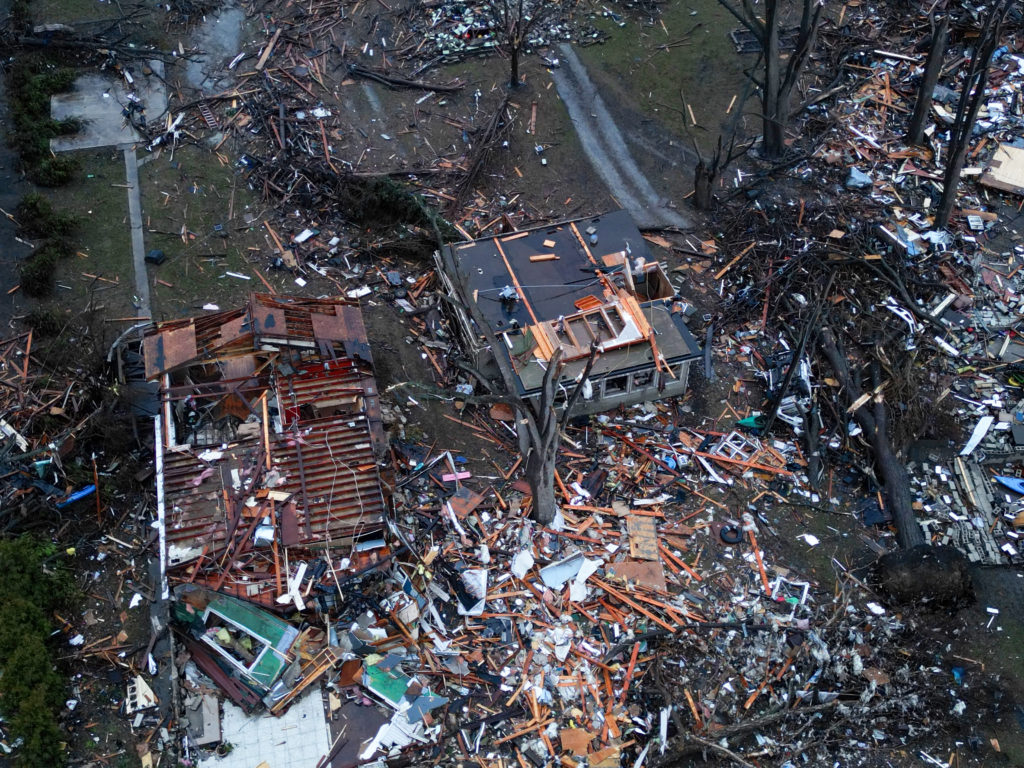
2 killed and homes damaged after tornadoes tear through Illinois and Indiana, with more storms moving in
#tornadoes #Illinois #Indiana #storm damage #fatalities #severe weather #emergency response
📌 Key Takeaways
- Two fatalities reported from tornadoes in Illinois and Indiana
- Multiple homes damaged by severe storms in the affected regions
- Additional storm systems are forecasted to move into the area
- Emergency responders are assessing damage and aiding residents
📖 Full Retelling
🏷️ Themes
Severe Weather, Natural Disasters
📚 Related People & Topics

Illinois
U.S. state
Illinois ( IL-ih-NOY) is a state in the Midwestern region of the United States. It borders on Lake Michigan to its northeast, the Mississippi River to its west, and the Wabash and Ohio rivers to its south. Of the fifty U.S. states, Illinois has the fifth-largest gross domestic product (GDP), the si...

Indiana
U.S. state
Indiana ( IN-dee-AN-ə) is a state in the Midwestern region of the United States. It borders Lake Michigan to the northwest, Michigan to the north and northeast, Ohio to the east, the Ohio River and Kentucky to the south and southeast, and the Wabash River and Illinois to the west. Nicknamed "the Ho...
Entity Intersection Graph
Connections for Illinois:
View full profileMentioned Entities
Deep Analysis
Why It Matters
This tornado outbreak matters because it represents an immediate threat to life and property across multiple states, with confirmed fatalities and significant structural damage. It affects residents who have lost homes or loved ones, emergency responders managing the crisis, and insurance systems that will process claims. The situation is particularly urgent as additional storms are forecasted, potentially compounding the destruction and hampering recovery efforts in affected communities.
Context & Background
- The central United States, including Illinois and Indiana, lies within 'Tornado Alley' and experiences frequent severe weather during spring and early summer.
- Tornado outbreaks in this region have historically caused significant damage, such as the 2013 Moore, Oklahoma EF5 tornado that killed 24 people.
- The National Weather Service uses Enhanced Fujita (EF) scale ratings (EF0-EF5) to classify tornado intensity based on damage surveys.
- Advances in Doppler radar and warning systems have improved lead times for tornado warnings from minutes to potentially 15-20 minutes in recent decades.
What Happens Next
Emergency crews will conduct search and rescue operations while damage assessment teams survey affected areas. The National Weather Service will likely send survey teams to determine tornado intensity ratings. Additional storms forecasted to move into the region may trigger new tornado warnings and complicate recovery efforts. Insurance adjusters will begin processing claims once areas are deemed safe for entry, and temporary shelters may be established for displaced residents.
Frequently Asked Questions
Residents should monitor local weather alerts continuously, have multiple ways to receive warnings, and be prepared to take immediate shelter in basements or interior rooms if new warnings are issued. They should avoid damaged areas and downed power lines while awaiting official safety assessments.
Tornado outbreaks are relatively common in Illinois and Indiana during spring and early summer months when warm, moist air from the Gulf of Mexico collides with cooler air masses. The region typically experiences peak tornado activity from April through June, with multiple tornadoes sometimes occurring during single weather systems.
Tornado damage severity depends on multiple factors including wind speed (rated EF0-EF5), path width and length, duration on ground, and the types of structures encountered. Building construction quality, warning lead time, and population density in the tornado's path also significantly influence the human and economic impact.
The National Weather Service issues tornado warnings based on radar indications of rotation or confirmed tornado sightings. These warnings are disseminated through emergency alert systems, weather radios, mobile apps, and broadcast media. Many communities also use sirens, though these are designed for outdoor warning only.