
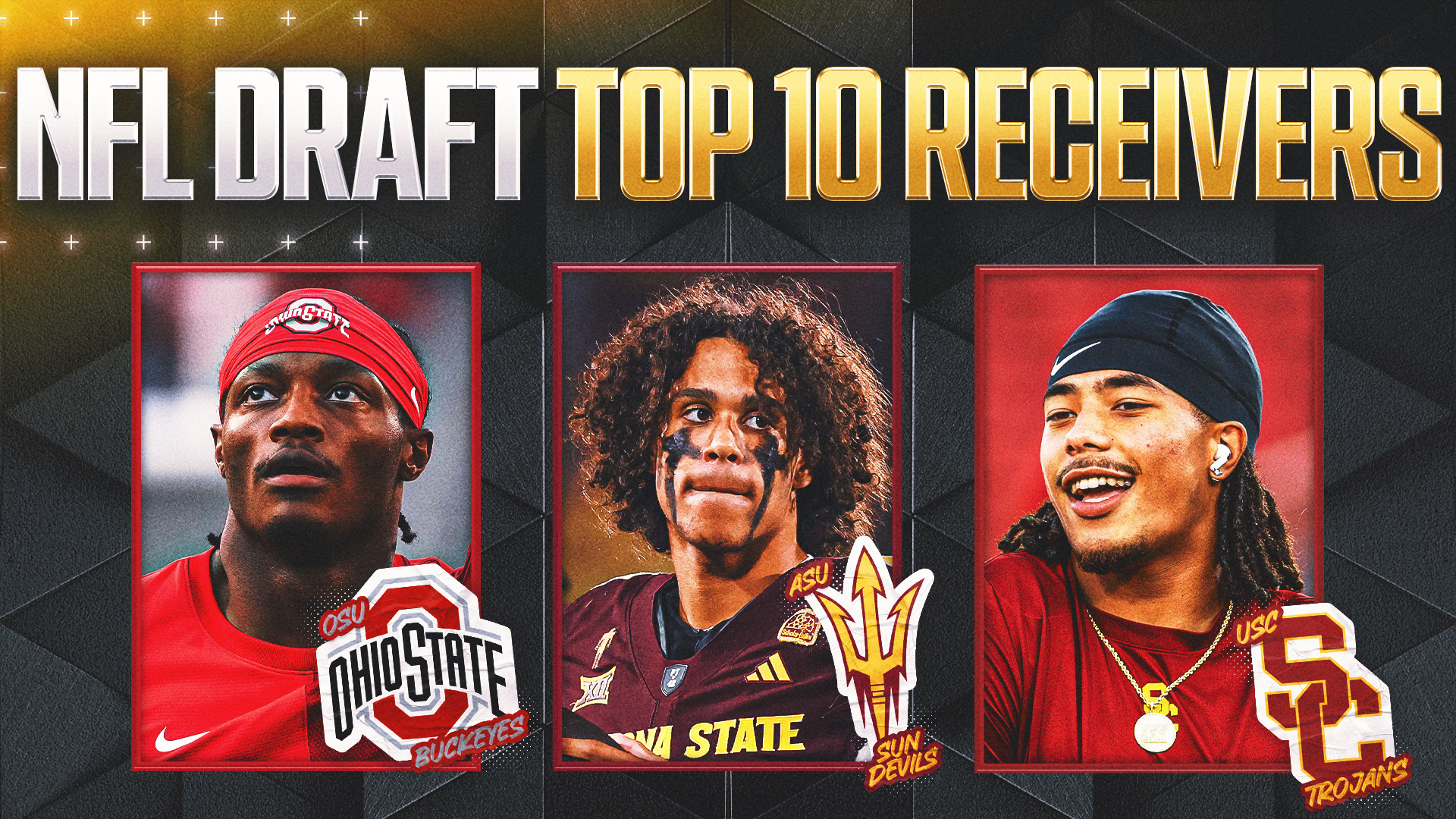
2026 NFL Draft: Ranking and Evaluating the Top 10 Receivers
#2026 NFL Draft #wide receivers #prospects #scouting #player evaluation #draft rankings #pass-catchers
📌 Key Takeaways
- The 2026 NFL Draft features a deep class of receivers with potential for immediate professional impact.
- While lacking consensus blue-chip prospects, the group includes role players who could become superstar specialists.
- Top prospects like Ted Hurst and Denzel Boston are highlighted for their size, ball skills, and matchup advantages.
- Players such as Malachi Fields are noted for traditional 'X' receiver traits despite concerns over speed and combine performance.
📖 Full Retelling
🏷️ Themes
NFL Draft, Receiver Prospects
Entity Intersection Graph
No entity connections available yet for this article.
Deep Analysis
Why It Matters
This analysis matters because the NFL Draft is a critical event that shapes team rosters for years, directly impacting franchise success and fan expectations. For NFL teams, identifying the right receiving talent can transform an offense, particularly as the league becomes increasingly pass-oriented. For players, draft position determines contracts, opportunities, and careers, making these evaluations financially and professionally significant. For fans and fantasy football participants, understanding these prospects helps predict team improvements and future stars.
Context & Background
- The NFL Draft occurs annually in late April/early May, with teams selecting eligible college players in seven rounds to build their rosters
- Wide receiver has become one of the most valued positions in modern NFL offenses, with top receivers commanding contracts exceeding $25 million annually
- The 2026 draft class follows recent trends where teams prioritize size (6'3"+ receivers) and versatility in pass-catchers
- Small-school prospects like Georgia State's Ted Hurst face greater scrutiny but can become stars (examples: Cooper Kupp from Eastern Washington, Davante Adams from Fresno State)
- The NFL Scouting Combine in February/March provides standardized athletic testing that significantly impacts draft stock, as mentioned with Malachi Fields' 40-yard dash time
What Happens Next
These prospects will participate in pro days, private team workouts, and interviews through March and April 2026. The NFL Draft will occur April 23-25, 2026 in Green Bay, Wisconsin, where these receivers will be selected based on team needs and evaluations. Training camps begin in July 2026, where drafted receivers will compete for roster spots and roles. Preseason games in August 2026 will provide first glimpses of how these prospects translate to professional competition.
Frequently Asked Questions
The article suggests this class lacks can't-miss superstars but features numerous specialists who could develop into impact players. This reflects either a deeper pool of good-but-not-great talent or scouts needing more time to identify top-tier prospects as the draft approaches.
While speed matters, the article shows teams value other traits too—Malachi Fields' 4.61-second dash raises concerns but his size and ball skills keep him ranked. Game speed, route-running, and catch ability often outweigh pure timed speed for many NFL evaluators.
An 'X' receiver typically lines up on the weak side (away from tight end) and must win one-on-one matchups, often requiring size, strength, and release skills. Both Ted Hurst and Malachi Fields are described with this prototype that offensive coordinators covet for perimeter dominance.
Absolutely—many Pro Bowl receivers came from non-powerhouse programs. Success requires translating dominant small-school production against higher competition, which Hurst's physical tools (6'4", speed) suggest he can do if he adapts to NFL defensive schemes.
The NFL has increasingly valued size mismatches, particularly in red zones and against press coverage. Tall receivers create larger catch radii and can physically overwhelm smaller defensive backs, aligning with the 'matchup league' evolution mentioned in the article.
Source Scoring
Detailed Metrics
Key Claims Verified
Ted Hurst is a wide receiver for Georgia State. His listed physical attributes are consistent with publicly available data from recruiting and team sites. The ranking itself is the author's subjective prediction.
Denzel Boston is a wide receiver for the University of Washington. His listed physical attributes are consistent with publicly available data from team sites. The ranking itself is the author's subjective prediction.
Malachi Fields is a wide receiver for the University of Virginia, not Notre Dame, according to multiple reputable sports sources. While his physical attributes are generally in line with public data for a receiver, the incorrect collegiate affiliation makes this claim factually erroneous regarding his current team. The 40-yard dash time is a speculative combine prediction for 2026 or an unconfirmed past event.
Supporting Evidence
- Medium 247Sports (Ted Hurst) [Link]
- Primary Georgia State Athletics (Ted Hurst Roster) [Link]
- Primary Washington Huskies Athletics (Denzel Boston Roster) [Link]
- Medium ESPN (Denzel Boston Profile) [Link]
- Primary Virginia Cavaliers Athletics (Malachi Fields Roster) [Link]
- Medium ESPN (Malachi Fields Profile) [Link]
Caveats / Notes
- The article presents a speculative ranking for the 2026 NFL Draft, which is two years in the future. Such predictions are inherently subjective and subject to significant change as player performance and draft stock evolve.
- One key factual error was identified regarding a player's current collegiate affiliation (Malachi Fields is listed as Notre Dame but plays for the University of Virginia), which significantly impacts the reliability of the information provided.
- Player statistics and physical attributes for a future draft are subject to change as players develop, and official combine results for the 2026 NFL Draft are not yet available.