
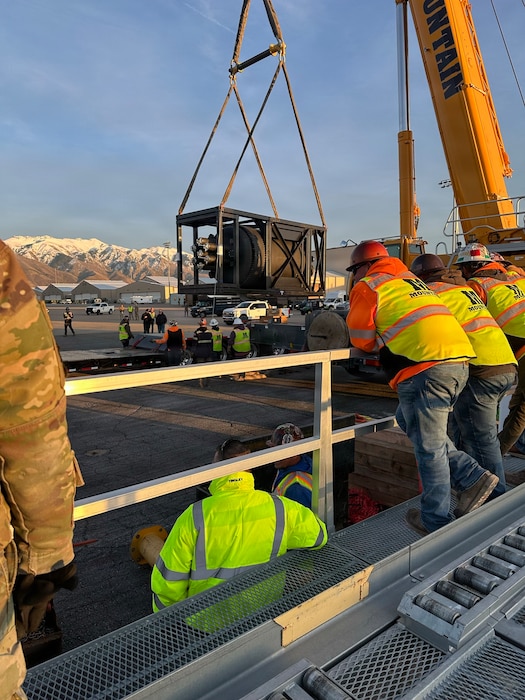
419th Fighter Wing Reservists support first-ever microreactor airlift
#419th Fighter Wing #microreactor #airlift #Air Force Reserve #military logistics #portable power #energy technology
📌 Key Takeaways
- 419th Fighter Wing Reservists assisted in the first-ever airlift of a microreactor.
- The operation marks a milestone in military logistics and energy technology.
- Microreactors offer potential for portable, resilient power in remote locations.
- The event demonstrates the Air Force Reserve's role in innovative military support.
📖 Full Retelling
🏷️ Themes
Military Innovation, Energy Technology
📚 Related People & Topics

United States Air Force Reserve
Federal reserve forces of the United States Air Force
The United States Air Force Reserve (USAFR, AFR, or AFRES) is one of the United States Air Force's (USAF) two air reserve components, alongside the Air National Guard (ANG). The USAFR and ANG constitute the USAF's contribution to the reserve components of the United States Armed Forces. The USAFR re...
Entity Intersection Graph
No entity connections available yet for this article.
Mentioned Entities
Deep Analysis
Why It Matters
This development matters because it demonstrates the U.S. military's capability to rapidly deploy advanced nuclear power technology to remote or austere locations, which is crucial for maintaining operational energy independence during conflicts or humanitarian missions. It affects military strategists who need resilient energy solutions, defense contractors developing microreactor technology, and potentially allied nations who may benefit from this capability. The successful airlift also signals progress in making nuclear energy more mobile and secure, which could influence future energy policies for both military and civilian applications in isolated areas.
Context & Background
- Microreactors are small nuclear reactors typically generating 1-20 megawatts of power, designed for portability and rapid deployment.
- The U.S. Department of Defense has been pursuing Project Pele since 2019 to develop mobile microreactors for forward operating bases.
- The 419th Fighter Wing is a Reserve unit at Hill Air Force Base, Utah, operating F-35A Lightning II aircraft and supporting various airlift missions.
- Military energy security has been a priority since experiences in Iraq and Afghanistan highlighted vulnerabilities in fuel supply lines.
- This represents the first known air transport of an operational microreactor prototype, marking a significant milestone in military energy technology.
What Happens Next
Following this successful airlift demonstration, the military will likely proceed with field testing of the microreactor at a designated location, potentially within the next 6-12 months. Defense contractors will continue refining microreactor designs based on transport and deployment lessons learned. Congressional committees will review results to determine future funding for expanded microreactor programs, with potential decisions in the next defense budget cycle. International partners may request demonstrations or information sharing about the technology in upcoming bilateral meetings.
Frequently Asked Questions
Microreactors are compact nuclear systems producing 1-20 megawatts, much smaller than traditional gigawatt-scale power plants. They're designed for factory fabrication, transportability, and rapid deployment with enhanced safety features and simplified operation compared to conventional reactors.
The military needs reliable, resilient energy sources for forward operating bases that reduce dependence on vulnerable fuel supply lines. Microreactors can provide continuous power for months or years without refueling, supporting critical operations in remote locations where traditional energy infrastructure is unavailable or insecure.
Transport follows strict Nuclear Regulatory Commission and Department of Transportation regulations using specialized containment vessels designed to withstand extreme conditions. The microreactor core is transported in a subcritical state with multiple passive safety systems, and military aircraft provide additional security during transit.
Yes, similar microreactor technology could eventually power remote communities, mining operations, disaster response centers, or scientific research stations. The military development often accelerates technological readiness that later benefits civilian sectors, though regulatory pathways for civilian use would differ.
The 419th Fighter Wing Reservists provided support for this historic airlift, though the article doesn't specify which airlift squadron or partner units participated. Such operations typically involve coordination between Air Mobility Command, the microreactor program office, and specialized nuclear transport teams.