
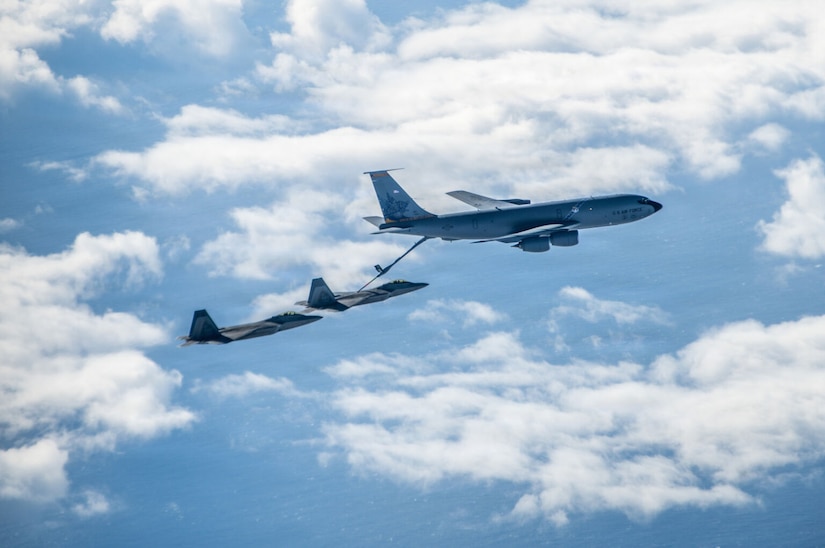
Air Refuelers Among Transcom's Most Critical Assets
#air refuelers #Transcom #military assets #strategic mobility #force projection
📌 Key Takeaways
- Air refuelers are identified as critical assets by U.S. Transportation Command (Transcom)
- These aircraft enable extended missions and global reach for military operations
- Their role is essential for strategic mobility and force projection
- Transcom prioritizes maintaining and modernizing air refueling capabilities
📖 Full Retelling
🏷️ Themes
Military Logistics, Strategic Assets
📚 Related People & Topics

Transcom
Swedish call center company
Transcom WorldWide AB is a Swedish outsourcing company which provides customer care, sales, technical support, and collections services through an extensive network of contact centers and work-at-home agents. The company operates in Europe, North and South America, Asia and North Africa. Transcom em...
Entity Intersection Graph
No entity connections available yet for this article.
Mentioned Entities
Deep Analysis
Why It Matters
This news highlights the strategic importance of air refueling capabilities for U.S. military operations and global power projection. It affects military planners, defense contractors, and allied nations who rely on U.S. air support. The recognition of air refuelers as critical assets signals potential shifts in defense budgeting and procurement priorities. This matters for national security as these aircraft enable extended missions, rapid deployment, and sustained operations worldwide.
Context & Background
- The U.S. Transportation Command (Transcom) is responsible for global mobility operations and strategic airlift
- Air refueling has been a cornerstone of U.S. military strategy since the Cold War, enabling global reach
- The KC-135 Stratotanker has been the primary refueling aircraft since the 1950s, with ongoing modernization efforts
- Recent conflicts in the Middle East and increased great power competition have stressed refueling capacity
- The KC-46 Pegasus program represents the next generation of refueling aircraft, though it has faced technical challenges
What Happens Next
Increased funding and accelerated procurement for next-generation refueling aircraft like the KC-46 Pegasus. Potential expansion of maintenance and upgrade programs for existing KC-135 fleet. Heightened focus on pilot training and crew retention for refueling missions. Possible international partnerships for shared refueling capabilities with allied nations.
Frequently Asked Questions
Air refuelers extend the range and endurance of combat aircraft, allowing them to reach distant targets without landing. They enable rapid global deployment of air power and support continuous operations in contested environments. Without refueling capability, many modern military missions would be impossible.
The aging KC-135 fleet requires increasing maintenance and faces obsolescence issues. The newer KC-46 has experienced technical problems with its refueling systems and cameras. There's also a shortage of qualified pilots and boom operators for these specialized aircraft.
Many NATO allies and partners depend on U.S. refueling support for their own operations. Enhanced refueling capabilities strengthen collective defense agreements. It may lead to increased cooperation on refueling standards and shared use agreements.
This prioritization will likely direct billions in defense spending toward aircraft manufacturers like Boeing. It creates jobs in aerospace manufacturing, maintenance, and training sectors. The focus may also spur innovation in autonomous refueling technologies.
Enhanced refueling capability is crucial for potential conflicts in the Indo-Pacific where distances are vast. It supports increased military presence in Eastern Europe and the Middle East. The capability deters adversaries by demonstrating sustained power projection ability.