
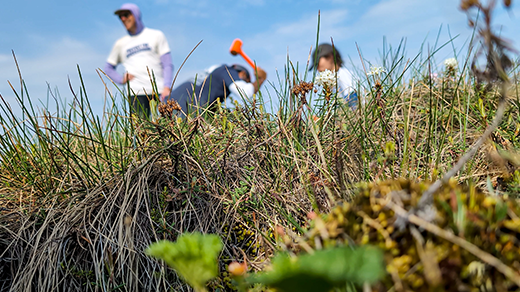
An Arctic Road Trip Brings Vital Underground Networks into View
#Arctic #mycorrhizal fungi #permafrost #climate research #Alaska #ecosystem networks
📌 Key Takeaways
- A biologist's 2025 Arctic road trip highlights the urgency of studying underground fungal networks before climate change alters them.
- The journey along North America's northernmost highway reveals the critical role of mycorrhizal fungi in Arctic ecosystems.
- The article underscores the interconnectedness of climate change, permafrost thaw, and vital but often overlooked biological networks.
- Research aims to understand how warming temperatures affect these fungal systems and their carbon storage capabilities.
📖 Full Retelling
🏷️ Themes
Climate Change Impact, Scientific Exploration
Entity Intersection Graph
No entity connections available yet for this article.
Deep Analysis
Why It Matters
This research is important because it investigates a hidden but vital component of Arctic ecosystems—fungal networks that support plant life and store carbon. As the Arctic warms faster than any other region, understanding these networks is crucial for predicting climate feedback loops and biodiversity loss. It affects climate scientists, policymakers, and conservationists working to mitigate global warming impacts.
Context & Background
- The Arctic is warming at least twice as fast as the global average, a phenomenon known as Arctic amplification.
- Mycorrhizal fungi form symbiotic relationships with plant roots, helping them absorb nutrients and water while storing carbon in soil.
- Alaska's Dalton Highway, the northernmost road in North America, provides access to remote Arctic research sites.
- Long-term ecological research networks, like the NSF's LTER program, monitor environmental changes over decades.
What Happens Next
The research team will analyze collected samples to assess fungal network health and carbon storage capacity. Findings will likely be published in scientific journals in 2025-2026, informing upcoming IPCC reports and Arctic conservation strategies. Further expeditions may follow to monitor changes over time.
Frequently Asked Questions
Mycorrhizal fungi are underground networks that form symbiotic relationships with plant roots. They help plants absorb nutrients and water while storing significant amounts of carbon in soil, making them crucial for ecosystem health and climate regulation.
Rapid warming in the Arctic is altering soil temperatures, moisture levels, and plant communities, which can disrupt fungal networks. This threatens their ability to support vegetation and store carbon, potentially releasing stored carbon into the atmosphere.
Michael Van Nuland is a biologist leading the Arctic expedition. He is likely a researcher specializing in fungal ecology or Arctic ecosystems, driving the fieldwork to collect data on these critical underground networks.
The Dalton Highway is the northernmost road in North America, providing rare access to remote Arctic environments. It allows researchers to reach study sites that would otherwise be inaccessible for collecting ecological data.