
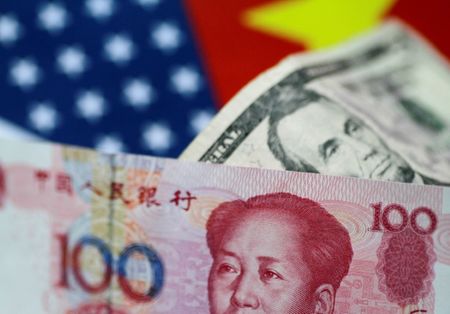
Asia FX firms as dollar weakens ahead of payrolls; yuan steady after soft CPI
#Exchange rates #U.S. Dollar #Chinese Yuan #Nonfarm payrolls #Inflation #Federal Reserve #Asian FX
📌 Key Takeaways
- Asian currencies rose as the U.S. dollar weakened ahead of critical employment data.
- The Chinese yuan maintained stability despite weak domestic inflation figures.
- Investors are awaiting the U.S. nonfarm payrolls report to gauge the Federal Reserve's next move.
- Concerns about deflation continue to linger in China following soft CPI results.
📖 Full Retelling
Most Asian currencies strengthened against the U.S. dollar on Friday as global investors adjusted their positions ahead of the highly anticipated nonfarm payrolls report from the United States. In regional trading hubs, the Japanese yen and various Southeast Asian currencies saw modest gains as the dollar retreated from recent highs, driven by growing expectations that a cooling U.S. labor market might prompt the Federal Reserve to reconsider its prolonged restrictive monetary policy. This shift in sentiment provided a much-needed reprieve for emerging market assets, which have faced significant pressure throughout the week.
Simultaneously, the Chinese yuan remained largely stable despite newly released data showing a softer-than-expected Consumer Price Index (CPI) in China. The National Bureau of Statistics reported that inflationary pressures remain muted, raising concerns about persistent deflationary risks and weak domestic demand within the world's second-largest economy. While the soft CPI data would typically weaken a currency, the yuan was buoyed by suspected intervention from state-owned banks and a general softening of the greenback, preventing a significant slide in its valuation.
The focus of the global financial community now shifts entirely to the U.S. Department of Labor's upcoming employment data, which is considered a primary barometer for the health of the American economy. Analysts suggest that a weaker-than-forecasted payroll number could reinforce the case for interest rate cuts later this year, potentially sparking a more sustained rally in Asian foreign exchange markets. Conversely, a surprise strength in the jobs report could reignite dollar dominance, putting renewed strain on regional central banks to defend their local currencies against capital outflows.
🏷️ Themes
Currency Markets, Global Macroeconomics, Monetary Policy
Entity Intersection Graph
No entity connections available yet for this article.