
Attention's Gravitational Field:A Power-Law Interpretation of Positional Correlation
#attention #gravitational field #power-law #positional correlation #neural networks #sequence modeling #long-range dependencies
📌 Key Takeaways
- The article introduces a 'gravitational field' metaphor for attention mechanisms in neural networks.
- It proposes a power-law interpretation to describe positional correlations in attention.
- This approach aims to model how attention weights vary with distance between tokens.
- The framework may offer insights into long-range dependencies in sequence modeling.
📖 Full Retelling
arXiv:2603.04805v1 Announce Type: cross
Abstract: This paper explores the underlying principles of positional relationships and encodings within Large Language Models (LLMs) and introduces the concept of the Attention Gravitational Field (AGF). By decoupling positional encodings from semantic embeddings, we optimize the model architecture and achieve superior accuracy compared to prevailing encoding methods. Furthermore, we provide an in-depth analysis of AGF, demonstrating its intrinsic consis
🏷️ Themes
Attention Mechanisms, Positional Correlation
📚 Related People & Topics
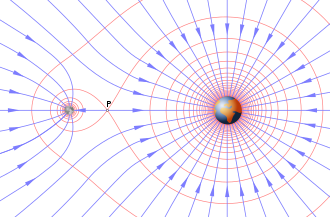
Gravitational field
Vector field representing a mass's effect on surrounding space
In physics, a gravitational field or gravitational acceleration field is a vector field used to explain the influences that a body extends into the space around itself. A gravitational field is used to explain gravitational phenomena, such as the gravitational force field exerted on another massive ...
Entity Intersection Graph
No entity connections available yet for this article.
Mentioned Entities
Original Source
--> Computer Science > Computation and Language arXiv:2603.04805 [Submitted on 6 Feb 2026] Title: Attention's Gravitational Field:A Power-Law Interpretation of Positional Correlation Authors: Edward Zhang View a PDF of the paper titled Attention's Gravitational Field:A Power-Law Interpretation of Positional Correlation, by Edward Zhang View PDF HTML Abstract: This paper explores the underlying principles of positional relationships and encodings within Large Language Models and introduces the concept of the Attention Gravitational Field . By decoupling positional encodings from semantic embeddings, we optimize the model architecture and achieve superior accuracy compared to prevailing encoding methods. Furthermore, we provide an in-depth analysis of AGF, demonstrating its intrinsic consistency with learning and stability curves, as well as its empirical alignment with Newton's Law of Universal Gravitation. By offering a rigorous theoretical exploration of these phenomena, this work represents a significant step toward interpreting the Attention mechanism and unlocks new possibilities for future research in model optimization and interpretability. Subjects: Computation and Language (cs.CL) ; Artificial Intelligence (cs.AI) Cite as: arXiv:2603.04805 [cs.CL] (or arXiv:2603.04805v1 [cs.CL] for this version) https://doi.org/10.48550/arXiv.2603.04805 Focus to learn more arXiv-issued DOI via DataCite (pending registration) Submission history From: Edward Zhang [ view email ] [v1] Fri, 6 Feb 2026 01:51:32 UTC (222 KB) Full-text links: Access Paper: View a PDF of the paper titled Attention's Gravitational Field:A Power-Law Interpretation of Positional Correlation, by Edward Zhang View PDF HTML TeX Source view license Current browse context: cs.CL < prev | next > new | recent | 2026-03 Change to browse by: cs cs.AI References & Citations NASA ADS Google Scholar Semantic Scholar export BibTeX citation Loading... BibTeX formatted citation × loading... Data provided by: Bookmark...
Read full article at source