
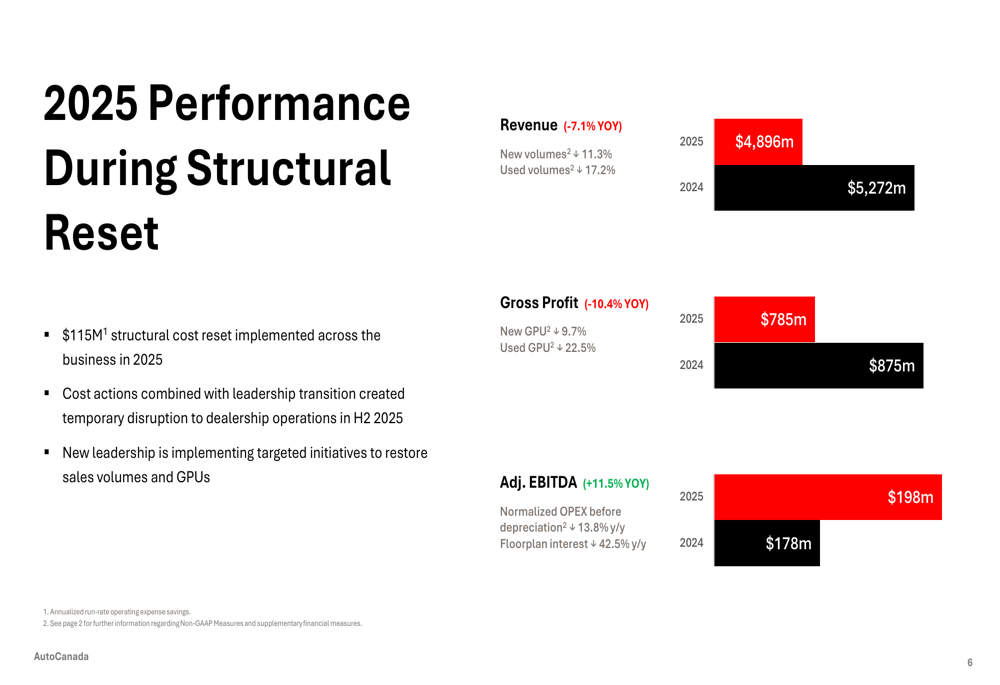
AutoCanada 2025 slides: $115M cost cuts offset operational disruption
#AutoCanada #cost cuts #2025 #operational disruption #financial strategy #expense reduction #automotive retail
📌 Key Takeaways
- AutoCanada plans $115 million in cost cuts by 2025
- The cuts aim to offset operational disruptions
- The strategy is outlined in company slides
- Focus is on financial resilience through expense reduction
🏷️ Themes
Cost Reduction, Operational Strategy
📚 Related People & Topics
AutoCanada
Multi-location automobile dealership group
AutoCanada Inc. is a North American multi-location automobile dealership group currently operating 81 franchised dealerships, consisting of 27 brands in eight provinces in Canada as well as a group in Illinois, USA. AutoCanada currently sells Chrysler, Dodge, Jeep, Ram, FIAT, Alfa Romeo, Chevrolet, ...
Entity Intersection Graph
No entity connections available yet for this article.
Mentioned Entities
Deep Analysis
Why It Matters
This news is important because AutoCanada's $115 million cost-cutting initiative directly impacts the company's financial stability and competitive positioning in the automotive retail sector. The measures affect employees through potential job reductions, shareholders through improved profitability prospects, and customers through potential changes in service quality or pricing. The operational disruption mentioned suggests significant restructuring that could alter how the company operates across its dealership network, making this a critical strategic shift for one of Canada's largest automotive groups.
Context & Background
- AutoCanada is one of Canada's largest multi-location automobile dealership groups, operating franchises across multiple provinces
- The automotive retail industry has faced significant challenges in recent years including supply chain disruptions, inventory shortages, and shifting consumer preferences toward electric vehicles
- Many automotive retailers have implemented cost-cutting measures post-pandemic to address margin pressures and adapt to changing market conditions
- AutoCanada has previously undergone restructuring efforts to optimize its dealership portfolio and improve operational efficiency
What Happens Next
AutoCanada will likely implement the cost-cutting measures throughout 2024-2025, potentially involving dealership consolidations, workforce reductions, and operational streamlining. The company may face short-term operational challenges during the transition period, followed by potential improved financial results in subsequent quarters. Investors will monitor quarterly earnings reports for evidence of successful implementation and margin improvement.
Frequently Asked Questions
AutoCanada's $115 million cost reduction could involve dealership consolidations, workforce reductions, inventory optimization, and streamlining of administrative functions. The company may also renegotiate supplier contracts and implement technology solutions to improve operational efficiency across its network.
Customers might experience changes in dealership operations, potentially including modified service hours, different staffing levels, or consolidated locations. However, the company will likely aim to maintain service quality while reducing costs to remain competitive in the automotive retail market.
AutoCanada is likely responding to margin pressures in the automotive retail sector, including increased competition, changing consumer preferences, and economic uncertainty. The 2025 timeline suggests strategic planning to position the company for sustainable profitability in a challenging market environment.
Initial market reaction may be mixed, balancing optimism about improved profitability against concerns about operational disruption. Long-term stock performance will depend on successful implementation of cost cuts without significantly damaging revenue generation or market position.
Key risks include losing valuable employees, damaging customer relationships, reducing service quality, and creating operational gaps that could hurt sales. The 'operational disruption' mentioned suggests the company anticipates significant transitional challenges during implementation.