
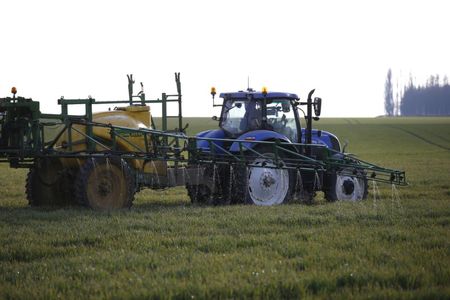
Beijing courts U.S. agribusiness as rural modernization takes center stage
#China agribusiness #U.S.-China trade #Rural revitalization #Five-Year Plan #Agricultural exports #Food security #Urban-rural gap #Trade relations
📌 Key Takeaways
- China is actively courting U.S. agribusiness companies as part of its rural modernization strategy
- Agricultural cooperation remains a stabilizing pillar in U.S.-China economic relations despite broader tensions
- U.S. agricultural exports to China reached record levels in 2025
- The integration of American agricultural technology is seen as crucial for China's food security goals
📖 Full Retelling
🏷️ Themes
Agricultural diplomacy, Economic cooperation, Rural modernization
📚 Related People & Topics

Food security
Measure of the availability and accessibility of food
Food security is the state of having reliable access to a sufficient quantity of affordable, healthy food. The availability of food for people of any class, gender, status, ethnicity, or religion is another element of food protection. Similarly, household food security is considered to exist when al...
Entity Intersection Graph
Connections for Food security:
Mentioned Entities
Deep Analysis
Why It Matters
This news is significant because it highlights China's strategic outreach to American agricultural businesses at a time when U.S.-China relations are increasingly strained in other sectors. The agricultural relationship serves as a crucial stabilizing force between the two economic superpowers, potentially preventing broader trade decoupling. This development affects American farmers and agribusinesses who benefit from access to the massive Chinese market, as well as Chinese consumers who rely on imported agricultural products. It also signals China's commitment to its rural revitalization strategy and its recognition of American technological advantages in modern agriculture.
Context & Background
- China has been implementing its 'rural revitalization' strategy since 2018 as part of its broader efforts to address urban-rural development imbalances
- The 15th Five-Year Plan (2026-2030) represents China's next major policy cycle, with agriculture and rural development highlighted as key priorities
- U.S.-China agricultural trade has historically been a cornerstone of bilateral relations, with China being the largest export market for American agricultural products
- In recent years, China has increased its focus on food security as a national priority, particularly following trade tensions and the COVID-19 pandemic
- The agricultural sector has remained relatively insulated from the broader U.S.-China trade tensions that have affected technology, manufacturing, and other sectors
- China has been investing heavily in agricultural technology and modernization to improve productivity and reduce reliance on imports
- The U.S. has been a key supplier of agricultural technology, seeds, and high-value crops to China, creating deep economic interdependencies
What Happens Next
We can expect increased investment and partnerships between U.S. agricultural companies and Chinese entities in the coming years, particularly in areas like high-tech farming, agricultural biotechnology, and rural infrastructure development. The 15th Five-Year Plan implementation will likely include specific policies and incentives to attract foreign agricultural investment. Given the political sensitivity of U.S.-China relations, we may see continued efforts by both countries to protect and expand agricultural trade as a stabilizing element in their relationship. Additionally, Chinese agricultural imports from the U.S. are likely to remain strong, potentially reaching new records as China continues to modernize its agricultural sector.
Frequently Asked Questions
China views American agricultural technology and expertise as crucial for achieving its rural modernization goals. U.S. companies have advanced capabilities in high-tech farming, biotechnology, and agricultural management that China needs to improve productivity and food security.
Agricultural trade has become a stabilizing force in an increasingly strained bilateral relationship. While tensions persist in sectors like semiconductors and electric vehicles, agricultural trade has remained resilient, acting as a buffer against complete economic decoupling.
American agricultural companies can expect increased market access, potential joint ventures, and opportunities to participate in China's rural infrastructure modernization. The growing Chinese middle class also continues to drive demand for high-quality agricultural products like beef and specialty crops.
U.S. companies may encounter regulatory hurdles, intellectual property concerns, and competition from domestic Chinese agricultural firms. Additionally, geopolitical tensions could potentially disrupt trade flows despite current stability in agricultural trade.
China's focus on rural modernization will likely increase demand for agricultural technology, equipment, and high-value inputs from global suppliers. This could lead to price increases for certain agricultural commodities and create new market opportunities for international agribusinesses.