
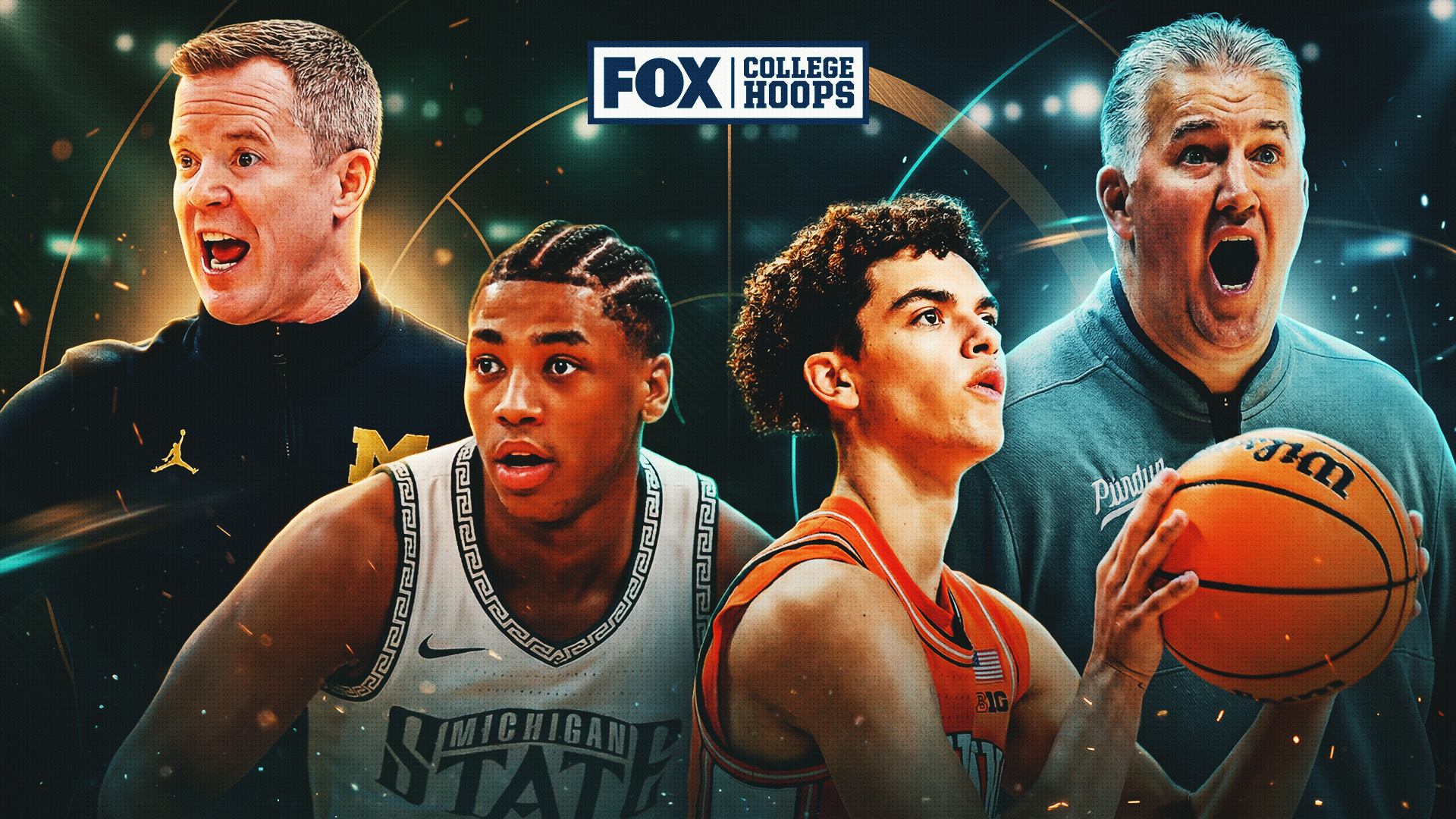
Big Ten’s Historic Sweet 16: Ranking All Six Teams by Championship Potential
#Sweet 16 #Big Ten #NCAA Tournament #Michigan #Iowa #upset #championship potential
📌 Key Takeaways
- Six Big Ten teams reached the Sweet 16, one short of the NCAA record.
- The conference's success is seen as crucial for recruiting, TV rights, and overall prestige.
- Michigan is considered the top team, with Iowa making a surprising run to the Sweet 16.
- The article ranks the six teams' championship potential, highlighting Iowa's upset of No. 1 Florida.
📖 Full Retelling
🏷️ Themes
NCAA Tournament, Big Ten Conference
📚 Related People & Topics
NCAA tournament
Topics referred to by the same term
NCAA tournament may refer to a number of tournaments organized by the National Collegiate Athletic Association:

Big Ten Conference
American collegiate athletics conference
The Big Ten Conference (formerly the Western Conference and the Big Nine Conference, among others) is a U.S. collegiate athletic conference. Founded as the Intercollegiate Conference of Faculty Representatives in 1896, it predates the founding of its regulating organization, the NCAA; it is the olde...

Iowa
U.S. state
Iowa ( EYE-ə-wə) is a landlocked state in the upper Midwestern region of the United States. It borders the Mississippi River to the east and the Missouri River and Big Sioux River to the west; Wisconsin to the northeast, Illinois to the east and southeast, Missouri to the south, Nebraska to the wes...

Michigan
U.S. state
Michigan ( MISH-ig-ən) is a peninsular state in the Great Lakes region of the Upper Midwestern United States. It shares water and land boundaries with Minnesota to the northwest, Wisconsin to the west, Indiana and Illinois to the southwest, Ohio to the southeast, and the Canadian province of Ontari...
Entity Intersection Graph
Connections for NCAA tournament:
Mentioned Entities
Deep Analysis
Why It Matters
This news matters because the Big Ten's unprecedented six-team Sweet 16 showing represents a potential power shift in college basketball after decades of tournament struggles. It affects the conference's national reputation, recruiting competitiveness, and future television rights negotiations worth billions. For fans and alumni of these programs, it validates their programs' investments and creates rare March excitement. The performance also impacts NCAA tournament seeding perceptions and could influence how other conferences approach scheduling and non-conference play.
Context & Background
- The Big Ten hasn't won a national championship since Michigan State in 2000, marking 24 years of tournament frustration
- The SEC set the NCAA Tournament record last year with seven Sweet 16 teams, showing conference depth matters in modern basketball
- Michigan State's 2000 title remains the conference's most recent, despite regular season success from multiple Big Ten programs
- The Big Ten's television rights deal is one of the richest in college sports, making tournament performance crucial for valuation
- Conference realignment has increased pressure on traditional power conferences to demonstrate competitive depth in marquee events
What Happens Next
The immediate next step is Thursday's Sweet 16 matchups, including the all-Big Ten Iowa vs. Nebraska game. Winners will advance to Elite Eight games on Saturday and Sunday, with potential for multiple Big Ten teams reaching the Final Four. Tournament performance will influence offseason recruiting, coaching contract extensions, and transfer portal activity. The conference's television partners will likely highlight this success during upcoming rights negotiations. Selection committees for future tournaments may give more benefit of the doubt to Big Ten bubble teams.
Frequently Asked Questions
It's historically significant because it's one shy of the NCAA record and represents the conference's deepest tournament run in decades. This demonstrates the Big Ten's competitive depth after years of March disappointments, potentially changing national perceptions about the conference's tournament capabilities.
Strong tournament performances directly boost recruiting by showcasing program success on national stages. For television rights, successful March runs increase viewership and advertiser interest, strengthening the conference's negotiating position for its next media deal worth billions of dollars.
Based on the article's analysis, Michigan appears positioned as the favorite given their consistent performance all season. However, Purdue, Illinois and Michigan State also have legitimate paths depending on matchups and continued strong play from key players.
Iowa's victory over the defending national champion and No. 1 seed Florida represents a program-defining moment, marking their first Sweet 16 since 1999. This validates first-year coach Ben McCollum's system and gives the Hawkeyes program momentum it hasn't experienced in 25 years.
Extremely rare—only the SEC last year has had more with seven teams. Typically, power conferences might get 3-4 teams to the Sweet 16 in strong years. Six teams represents exceptional conference depth and successful tournament execution across multiple programs.
Source Scoring
Detailed Metrics
Key Claims Verified
NCAA official bracket and multiple sports news outlets confirm the participants. This is a factual tournament result.
In 2023, the SEC sent 8 teams to the tournament with 7 reaching the Sweet 16, setting the record. The Big Ten's 6 is indeed one less. Verified by NCAA and ESPN records.
Game result and details confirmed by NCAA official box score and play-by-play, as well as recaps from CBS Sports and ESPN.
Iowa's tournament history is documented by sports-reference.com and the university's athletic site, showing their last Sweet 16 was in 1999.
Historical NCAA championship records confirm Michigan State won the title in 2000. No Big Ten team has won since.
This is a subjective opinion/analysis by the author. While Michigan may have had a strong season, 'best' is not a verifiable fact and conference standings/awards might point to other teams.
Caveats / Notes
- The article is primarily analytical/opinion-based (ranking teams by championship potential). The core historical and game-result claims are verifiable and accurate.
- The 'best team' claim is subjective and not suitable for factual verification.
- The article's headline and premise are based on a completed tournament round (Sweet 16), which is a stable, historical fact with low volatility risk.