
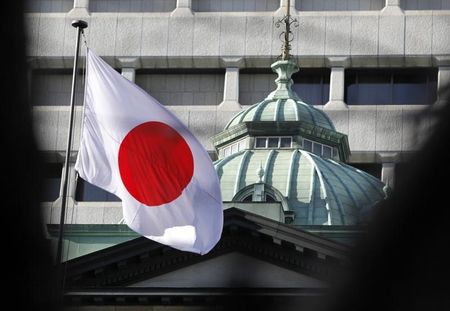
BOJ leaves interest rates unchanged as expected; warns on oil prices, inflation
#BOJ #interest rates #oil prices #inflation #monetary policy #economic warning #central bank
📌 Key Takeaways
- The Bank of Japan (BOJ) decided to maintain its current interest rates, aligning with market expectations.
- The central bank issued a warning regarding the potential economic impact of rising oil prices.
- Inflation concerns were highlighted as a key risk factor in the BOJ's assessment.
- The decision reflects a cautious approach to monetary policy amid external economic pressures.
🏷️ Themes
Monetary Policy, Economic Risk
📚 Related People & Topics

Bank of Japan
Monetary authority of Japan
The Bank of Japan (日本銀行, Nippon Ginkō; BOJ) is the central bank of Japan. The bank is often called Nichigin (日銀) for short. It is headquartered in Nihonbashi, Chūō, Tokyo.
Entity Intersection Graph
Connections for Bank of Japan:
Mentioned Entities
Deep Analysis
Why It Matters
The Bank of Japan's decision to maintain ultra-low interest rates affects global currency markets, particularly the yen's value against the dollar, which impacts Japanese exporters and international trade. This policy stance matters for global investors seeking yield in a world where Japan remains an outlier with negative interest rates. Japanese consumers and businesses face continued pressure from imported inflation while domestic wage growth remains sluggish, creating economic tension.
Context & Background
- The BOJ has maintained negative short-term interest rates since 2016 as part of its aggressive monetary easing program
- Japan has struggled with deflationary pressures for decades, with the BOJ's 2% inflation target remaining elusive until recent global price surges
- The yen has weakened approximately 30% against the US dollar since 2021, boosting export competitiveness but increasing import costs
- BOJ Governor Kazuo Ueda took office in April 2023 with markets watching for any shift from his predecessor's ultra-dovish stance
- Japan's core inflation has exceeded the BOJ's 2% target for over two years, but the bank views this as cost-push inflation rather than sustainable demand-driven price increases
What Happens Next
Markets will scrutinize the BOJ's October 31 policy meeting for any hints of policy normalization, particularly whether the bank will adjust its yield curve control parameters. The December 18-19 meeting represents another key decision point, especially if yen weakness accelerates or inflation proves more persistent than expected. International pressure may mount ahead of the G7 and G20 meetings if Japan's weak yen policy creates trade imbalances.
Frequently Asked Questions
The BOJ believes Japan's inflation is primarily driven by temporary cost-push factors like energy prices rather than sustainable demand, and premature tightening could derail fragile economic recovery. Japan's decades-long battle with deflation makes policymakers exceptionally cautious about normalizing policy too quickly.
Maintaining ultra-low rates while other central banks hike creates widening interest rate differentials that typically weaken the yen. A weaker yen makes Japanese exports cheaper but increases costs for imported energy and food, contributing to inflation pressures.
The BOJ would likely act if they see evidence of sustained wage growth creating a virtuous cycle of demand-driven inflation, or if yen depreciation becomes disorderly and threatens financial stability. Significant changes to their inflation forecasts or upward revisions to wage growth projections would be key triggers.
Japan's low rates provide cheap funding for carry trades where investors borrow yen to invest in higher-yielding assets elsewhere. BOJ policy normalization could unwind these positions, creating volatility across global bond and currency markets. Japanese government bonds serve as a global benchmark affecting sovereign debt worldwide.
Prolonged ultra-low rates distort financial markets, weaken bank profitability, and may allow inflation to become entrenched. Excessive yen weakness could trigger imported inflation that harms household purchasing power and creates political pressure, while also straining relations with trading partners concerned about competitive devaluation.