
SP
BravenNow
Break It To Make It: How Fracturing Sculpts Tissues and Organs
| USA | science | ✓ Verified - quantamagazine.org

Break It To Make It: How Fracturing Sculpts Tissues and Organs

#tissue fracturing #mechanobiology #embryonic development #hydraulic fracture #zebrafish heart #blastocyst formation

📌 Key Takeaways

  • Growing tissues use controlled fracturing to shape organs and structures.
  • Mouse embryos utilize hydraulic pressure to create a blastocoel cavity.
  • Fractures are constructive and temporary, often governed by physics rather than genetics.
  • This mechanism is observed across species, including in the development of zebrafish hearts.

📖 Full Retelling

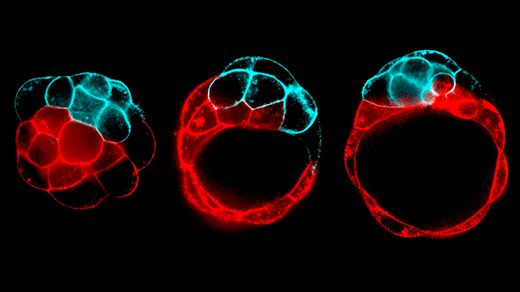
Researchers from institutions including the Collège de France and the Francis Crick Institute have revealed that growing tissues across the animal kingdom deliberately crack and fracture to form complex structures, a phenomenon detailed in findings published on February 27, 2026. By studying processes ranging from mouse embryo implantation to the formation of elephant skin and zebrafish hearts, these scientists have demonstrated that what appears to be destructive damage is actually a constructive mechanism driven by hydraulics and mechanical tension. This discovery highlights a resurgence in the field of mechanobiology, showing that physical forces act faster than genetic programming to sculpt the vital architecture of living organisms. The research focuses heavily on the formation of mouse embryos, where physicists Hervé Turlier and Jean-Léon Maître observed a precise fracturing event as a zygote transforms into a blastocyst. Instead of random fault lines found in inanimate materials like concrete, the fractures in the embryo are a tightly controlled process where hundreds of fluid-filled bubbles expand between cells. These bubbles press outward, prying cell membranes apart before coalescing into a single cavity through a process analogous to Ostwald ripening. This hydraulic fracture exploits differences in cell tension, with fluid naturally flowing toward weaker cells to create the blastocoel, thereby establishing the embryo’s axis of symmetry before the genome can intervene. Beyond embryonic development, this "constructive breaking" is proving essential in other high-stress biological environments, such as the rapidly beating hearts of zebrafish. Developmental biologist Rashmi Priya and computational physicist Alejandro Torres-Sánchez found that the heart’s vigorous mechanical activity requires the tissue to fracture and remodel to accommodate trabeculae, the muscular strands necessary for pumping blood. A comprehensive review published in the journal *Development* suggests that such mechanisms are widespread across the tree of life. It challenges the traditional view that fracturing is merely a failure, positioning it instead as a fundamental evolutionary strategy used to build durable, pliable tissues capable of withstanding immense forces.

🏷️ Themes

Mechanobiology, Embryonic Development, Evolutionary Biology, Biophysics

Entity Intersection Graph

No entity connections available yet for this article.

Deep Analysis

Why It Matters

This discovery fundamentally shifts our understanding of developmental biology by identifying mechanical fracturing as a primary driver of organ formation, rather than just a byproduct of stress. It has significant implications for regenerative medicine and tissue engineering, offering new blueprints for growing artificial organs by mimicking these hydraulic processes. Furthermore, this research bridges the gap between physics and biology, demonstrating that physical forces can shape living architecture faster than genetic programming alone.

Context & Background

  • Mechanobiology is an emerging field that studies how physical forces and mechanical properties influence biological cell behavior and tissue development.
  • Traditional developmental biology has historically focused on genetic signaling and molecular pathways as the primary architects of embryonic structure.
  • The blastocyst stage is a critical early phase in mammalian embryo development where a fluid-filled cavity, the blastocoel, forms to establish the embryo's body plan.
  • Ostwald ripening is a phenomenon observed in physics and chemistry where larger particles grow at the expense of smaller ones to minimize energy, a process now identified in embryonic fluid dynamics.
  • Previous research established that biological tissues often behave like active materials, exhibiting properties of both fluids and solids, but the concept of 'constructive breaking' is a recent paradigm shift.

What Happens Next

Researchers will likely investigate whether these hydraulic fracturing mechanisms are present in human organ development, specifically focusing on heart and lung formation. Tissue engineers are expected to incorporate these controlled fracture techniques into bio-printing methods to create more complex and durable synthetic tissues. Additionally, future studies will likely explore how failures in these mechanical processes contribute to congenital birth defects or structural diseases.

Frequently Asked Questions

What is meant by 'constructive breaking' in this context?

It refers to a biological process where tissues deliberately crack or fracture under hydraulic pressure to create essential structures like cavities or muscle strands.

How does this discovery change our view of genetics in development?

It challenges the view that genetics is the sole architect of life, showing that physical forces like tension and hydraulics can act faster than genetic programming to shape organisms.

What specific example of fracturing did researchers observe in mouse embryos?

They observed fluid-filled bubbles expanding between cells to pry membranes apart, eventually coalescing into a single cavity known as the blastocoel.

Why is fracturing necessary for zebrafish hearts?

The vigorous mechanical activity of the beating heart requires the tissue to fracture and remodel to form trabeculae, which are muscular strands needed for efficient blood pumping.

Which institutions were involved in this research?

The study involved researchers from the Collège de France and the Francis Crick Institute, among others.

}
Original Source
Home Break It To Make It: How Fracturing Sculpts Tissues and Organs Read Later Share Copied! Comments Read Later Read Later development Break It To Make It: How Fracturing Sculpts Tissues and Organs By Clare Watson February 27, 2026 Growing tissues can crack, break, and dissociate to form structures that can later withstand immense forces. Read Later T here’s a moment, just before the tight mass of cells that is a developing mouse embryo implants itself in the womb, that it all comes apart. Hundreds of tiny fluid-filled bubbles expand between each of the orb’s few dozen cells. The bubbles grow and press outward on cell membranes — and then, in a moment of fracture, pry them apart. Thin protein stands tether the cells together as the dissociated embryo floats. Over the course of a few hours, the smaller bubbles empty into larger ones, until the fluid coalesces into a single cavity. With this defining feature, the zygote becomes a blastocyst, ready to embed itself in the lining of the uterus. And inside this hollow ball of cells, reshaped by fracture, a fetus will grow. “It’s fracturing, but not in a way like you might imagine,” said Hervé Turlier , a physicist at the Collège de France in Paris and a member of the team that characterized this process in mouse embryos. Typically, fractures are fault lines that propagate haphazardly under stress and spread through inert materials, such as ice, rock, or concrete. But the fractures that Turlier’s colleagues observed in mouse embryos display different characteristics. They emerged via a tightly controlled mechanical process, governed by differences in physical tension and cells’ bonds to one another. The fractures were also only temporary: Within hours of splitting, the cells sealed back together again. And these fractures were constructive, sculpting new shapes from developing tissues, in an evolutionary approach that scientists are uncovering across the animal kingdom. Shaping tissues requires forces — that much has been...
Read full article at source

Source

quantamagazine.org

More from USA

News from Other Countries

🇬🇧 United Kingdom

🇺🇦 Ukraine