
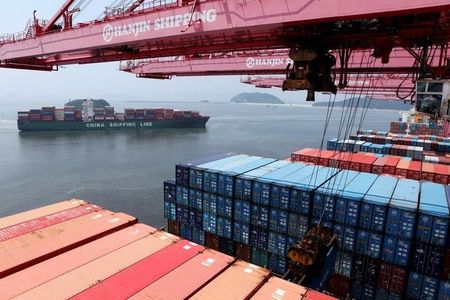
China trade balance grows more than expected in Jan-Feb as exports surge
#China trade balance #Export surge #January-February trade data #Economic recovery #Trade surplus #Manufacturing powerhouse #Global demand
📌 Key Takeaways
- China's trade balance exceeded expectations in January-February 2023
- Exports surged significantly, driving the unexpected trade surplus
- Several factors contributed to the export growth, including eased COVID restrictions and diversified markets
- The trade surplus provides economic flexibility but may increase trade tensions
📖 Full Retelling
🏷️ Themes
Trade, Economic Recovery, Global Economy
📚 Related People & Topics
Balance of trade
Difference between the monetary value of exports and imports
Balance of trade is the difference between the monetary value of a nation's exports and imports of goods over a certain time period. Sometimes, trade in services is also included in the balance of trade but the official IMF definition only considers goods. The balance of trade measures a flow variab...

Economic recovery
Phase of the business cycle following a recession
An economic recovery is the phase of the business cycle following a recession. The overall business outlook for an industry looks optimistic during the economic recovery phase. During the recovery period, the economy goes through a process of economic adaptation and change to new circumstances, incl...
Entity Intersection Graph
Connections for Balance of trade:
Mentioned Entities
Deep Analysis
Why It Matters
China's trade surplus exceeding expectations indicates stronger global demand for Chinese manufactured goods than anticipated, which could positively impact China's economic recovery in 2023. This affects global markets, trading partners, and multinational corporations that rely on Chinese production. The surplus provides China with more policy flexibility to address domestic challenges but may also increase trade tensions with countries concerned about competition from Chinese exports.
Context & Background
- China has been the world's largest exporter since 2009, playing a critical role in global supply chains
- Prior to COVID-19, China's trade surplus had been gradually declining as domestic consumption increased
- During the pandemic, China's manufacturing sector recovered faster than many other major economies, leading to export surges
- Trade tensions with the US have been a significant factor in China's trade strategy over the past few years
- China has been actively pursuing trade diversification, strengthening relationships with emerging economies in Asia, Africa, and Latin America
- The property market downturn and local government debt concerns have created domestic economic challenges that the trade surplus could help offset
What Happens Next
China is likely to maintain export momentum in the coming months as supply chains continue to normalize post-COVID. The government may use the trade surplus to stimulate domestic consumption through targeted policies. However, increased trade tensions with countries concerned about Chinese export competitiveness could lead to more protectionist measures. China will also continue to diversify export markets to reduce reliance on traditional Western partners.
Frequently Asked Questions
China's larger-than-expected trade surplus indicates stronger global demand for Chinese goods, which could support global economic recovery but may also lead to increased competition in international markets and potentially trigger protectionist responses from trading partners.
The export surge was driven by eased COVID-19 restrictions in manufacturing hubs, improved supply chain efficiency, increased demand from key trading partners, competitive pricing strategies, and diversification of export markets to emerging economies.
The surplus provides China with more policy flexibility to stimulate domestic consumption while maintaining economic stability, potentially allowing for targeted measures to address challenges in the property market and local government debt.
Yes, the surplus may increase trade tensions with countries that view China's export strength as a threat to their domestic industries, potentially leading to more protectionist measures and trade disputes.
Electronics, machinery, and consumer products are the main sectors driving China's export growth, reflecting continued global demand for these manufactured goods.