
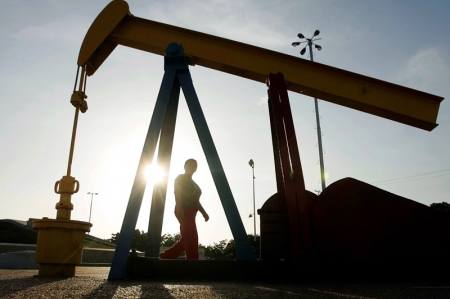
Citi Picks 5 Top Oil Producers to Own Amid Middle East Volatility
#Citi #oil producers #Middle East #volatility #investment #energy sector #geopolitical tensions
📌 Key Takeaways
- Citi identifies five top oil producers as investment picks amid Middle East volatility.
- The selection is based on resilience and strategic positioning in unstable geopolitical conditions.
- These companies are expected to benefit from potential oil price increases due to regional tensions.
- The recommendations aim to guide investors through market uncertainties in the energy sector.
🏷️ Themes
Energy Investment, Geopolitical Risk
📚 Related People & Topics

Citigroup
American multinational investment bank and financial services corporation
Citigroup Inc. or Citi (stylized as citi) is an American multinational investment bank and financial services company based in New York City. The company was formed in 1998 by the merger of Citicorp, the bank holding company for Citibank, and Travelers; Travelers was spun off from the company in 200...

Middle East
Transcontinental geopolitical region
The Middle East is a geopolitical region encompassing the Arabian Peninsula, Egypt, Iran, Iraq, the Levant, and Turkey. The term came into widespread usage by Western European nations in the early 20th century as a replacement of the term Near East (both were in contrast to the Far East). The term ...
Entity Intersection Graph
Connections for Citigroup:
View full profileMentioned Entities
Deep Analysis
Why It Matters
This analysis matters because it provides strategic investment guidance during a period of heightened geopolitical risk in the world's most important oil-producing region. It affects investors, energy sector portfolio managers, and companies in related industries who need to navigate market volatility. The recommendations could influence capital flows toward specific energy companies and impact their stock valuations. Understanding which producers are best positioned helps market participants make informed decisions during uncertain times.
Context & Background
- The Middle East accounts for approximately 30% of global oil production and holds nearly half of the world's proven petroleum reserves
- Geopolitical tensions in the region have historically caused significant oil price spikes, including during the 1973 oil embargo, 1990 Gulf War, and recent Houthi attacks on shipping
- Major oil producers have varying exposure to Middle Eastern operations, with some companies heavily invested in the region while others have more diversified global portfolios
- Investment banks like Citi regularly publish sector analyses to guide institutional clients during periods of market uncertainty
- The energy sector represents about 4-5% of the S&P 500, making it a significant component of many investment portfolios
What Happens Next
Investors will likely monitor Citi's recommended companies for price movements and institutional buying activity. Market analysts will watch for similar recommendations from other major banks like Goldman Sachs and Morgan Stanley. Upcoming OPEC+ meetings in June will provide further direction for oil markets. Continued Middle East tensions could trigger additional volatility, prompting further investment bank analysis and portfolio adjustments throughout Q2 2024.
Frequently Asked Questions
Some producers have more diversified global operations that are less exposed to regional disruptions, while others have strong balance sheets to weather price volatility. Companies with operations outside conflict zones may benefit from higher prices without direct production risks.
Institutional investors like pension funds, hedge funds, and asset managers typically use investment bank research for portfolio decisions. Retail investors might also consider these recommendations through their brokers or financial advisors.
This comes amid ongoing energy transition discussions, where traditional oil producers must balance current profitability with long-term sustainability concerns. The recommendations likely consider both near-term geopolitical risks and longer-term energy market shifts.
They likely evaluated financial stability, geographic diversification, production costs, dividend yields, and management quality. Companies with strong cash flows and lower debt levels typically perform better during volatile periods.
If significant capital flows toward these recommended companies, it could signal market confidence in specific producers while potentially diverting investment from others. This selective investment approach reflects how markets differentiate between companies during sector-wide challenges.