
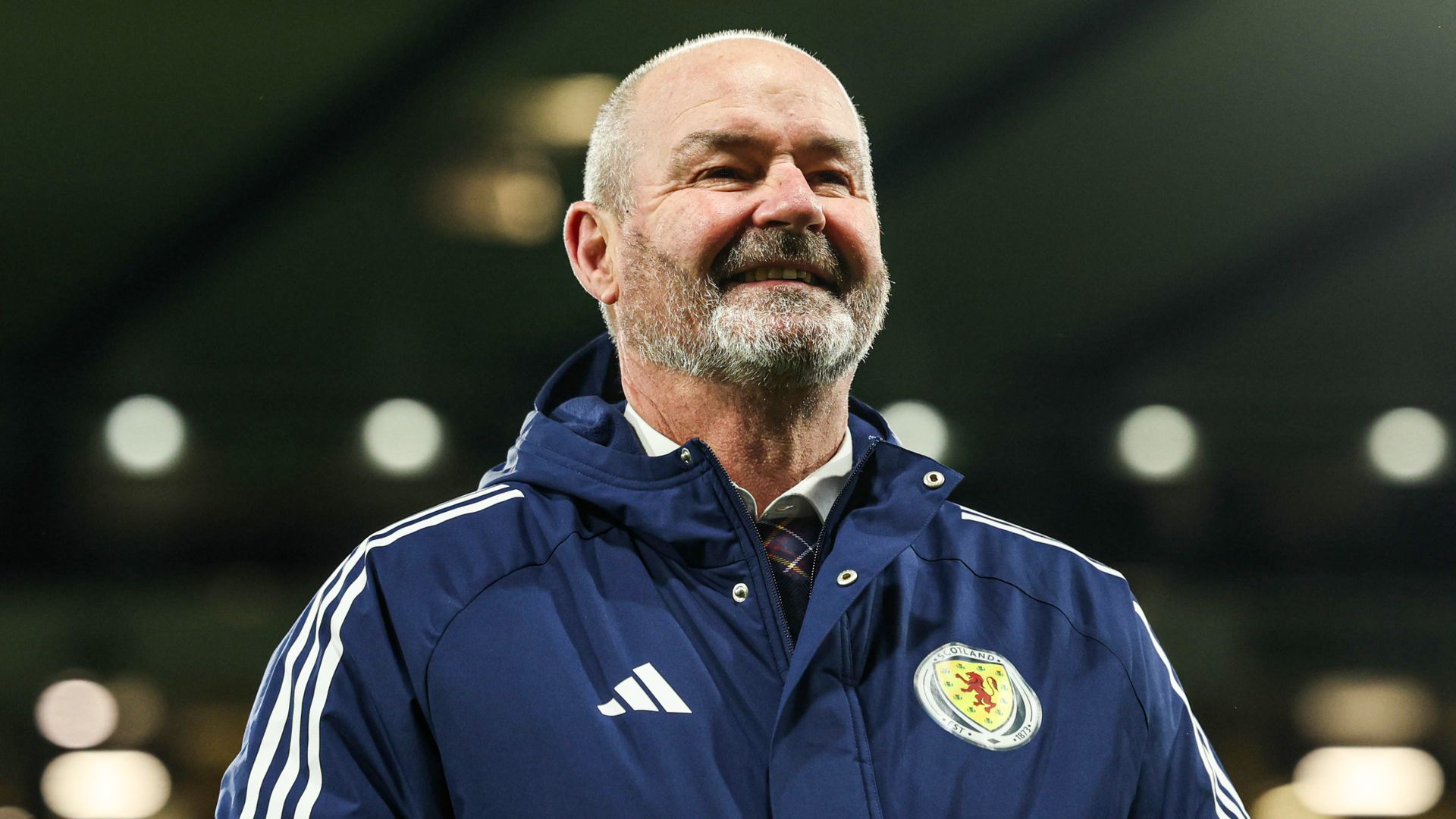
Clarke open to Scotland stay - but wants future decided before World Cup
#Steve Clarke #Scotland #manager #contract #World Cup #future #SFA
📌 Key Takeaways
- Steve Clarke is willing to continue as Scotland manager
- He wants his future resolved before the 2026 World Cup
- Clarke's current contract runs until after Euro 2024
- His decision hinges on discussions with the Scottish FA
🏷️ Themes
Football Management, Contract Negotiations
📚 Related People & Topics

World cup
International sports competition where competitors represent their nation
A world cup is a global sporting competition in which the participant entities – usually international teams or individuals representing their countries – compete for the title of world champion. The event most associated with the name is the FIFA World Cup for association football, which dates back...

Steve Clarke
Scottish footballer and manager
Stephen Clarke (born 29 August 1963) is a Scottish professional football manager and former player who is the manager of the Scotland national team. Clarke played for St Mirren, Chelsea and the Scotland national team, winning three major trophies with Chelsea towards the end of his career. After ret...

Scotland
Country within the United Kingdom
Scotland is a country that is part of the United Kingdom. It contains nearly one-third of the United Kingdom's land area, consisting of the northern part of the island of Great Britain and more than 790 adjacent islands, principally in the archipelagos of the Hebrides and the Northern Isles. In 2022...
Entity Intersection Graph
Connections for World cup:
View full profileMentioned Entities
Deep Analysis
Why It Matters
This news matters because it involves the future of Scotland's national football team manager Steve Clarke, whose leadership has been crucial to Scotland's recent successes including qualification for major tournaments. It affects Scottish football fans, players, and the Scottish Football Association as they prepare for the upcoming World Cup. The timing of this decision could impact team morale and preparation for crucial qualifying matches, making it a significant issue for Scottish football's immediate future.
Context & Background
- Steve Clarke was appointed Scotland manager in May 2019, taking over after Alex McLeish's departure
- Under Clarke's leadership, Scotland qualified for Euro 2020 (played in 2021), their first major tournament since 1998
- Clarke previously managed clubs including Kilmarnock, West Bromwich Albion, and Reading before taking the Scotland job
- Scotland's World Cup qualifying campaign is ongoing as they attempt to reach their first World Cup since 1998
What Happens Next
The Scottish Football Association will likely enter contract negotiations with Clarke in the coming weeks to resolve his future before World Cup preparations intensify. If no agreement is reached, Scotland may need to begin searching for a new manager during a critical phase of World Cup qualifying. The decision will be announced before Scotland's next competitive matches, potentially affecting player selection and tactical preparations.
Frequently Asked Questions
Clarke wants clarity to ensure he can focus fully on World Cup preparations without contract distractions. This stability benefits both the manager and players during crucial qualifying matches and tournament planning.
Clarke led Scotland to Euro 2020 qualification, ending a 23-year major tournament drought. He also guided the team to Nations League promotion and has maintained competitive performances in World Cup qualifying.
Scotland's World Cup qualifying campaign continues with upcoming matches in the European qualification groups. Exact dates depend on the tournament schedule, but qualifiers typically resume in the next international break.
The Scottish FA would need to appoint a new manager quickly to maintain continuity in World Cup preparations. This could disrupt team dynamics and tactical approaches during critical qualifying matches.
Scotland have shown significant improvement under Clarke, achieving notable victories against higher-ranked opponents and developing a more organized, competitive team structure compared to previous years.