
Condemning the Attacks on the Private Residence of Iraqi Kurdistan Region President Barzani
#Iran proxies #Iraqi Kurdistan #Nechirvan Barzani #US condemnation #Terrorist attacks #Iraqi sovereignty #Middle East tensions #Thomas Pigott
📌 Key Takeaways
- US unequivocally condemns Iran-backed attacks on Barzani's residence
- Attacks described as direct assault on Iraq's sovereignty and stability
- US categorically rejects indiscriminate and cowardly terrorist acts by Iranian proxies
- Condemnation represents firm US stance on protecting Iraqi territorial integrity
📖 Full Retelling
🏷️ Themes
Geopolitical tensions, Terrorism, Middle East stability
📚 Related People & Topics

Nechirvan Barzani
President of the Kurdistan Region of Iraq (born 1976)
Nechirvan Idris Barzani (Arabic: نيجرفان بارزاني; Kurdish: نێچیرڤان بارزانی, romanized: Nêçîrvan Barzanî; born 21 September 1966) is an Iraqi Kurdish politician serving as the second President of the Kurdistan Region. He was elected into office by the Kurdistan Region Parliament in June 2019. Nechir...
List of terrorist incidents
The following is a list of terrorist incidents that were not carried out by a state or its forces (see state terrorism and state-sponsored terrorism). Assassinations are presented in List of assassinations and unsuccessful attempts at List of people who survived assassination attempts and List of he...
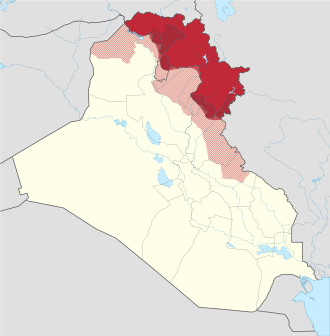
Iraqi Kurdistan
Kurdish-inhabited region in Iraq
Iraqi Kurdistan or Southern Kurdistan (Kurdish: باشووری کوردستان, romanized: Başûrê Kurdistanê) refers to the Kurdish-populated part of northern Iraq. It is considered one of the four parts of Greater Kurdistan in West Asia, which also includes parts of southeastern Turkey (Northern Kurdistan), nort...
Entity Intersection Graph
No entity connections available yet for this article.
Mentioned Entities
Deep Analysis
Why It Matters
This news is significant as it represents a major escalation in tensions between Iran and the US in the Middle East, directly impacting Iraq's sovereignty and stability. The attack on a sitting regional president's residence demonstrates a blatant disregard for Iraqi governance and could further destabilize the already volatile region. This development affects not only Iraq and Iran but also US foreign policy in the Middle East, Kurdish regional autonomy, and the broader geopolitical balance in the region.
Context & Background
- Iraq has experienced ongoing instability since the 2003 US-led invasion and the subsequent withdrawal of US troops in 2011
- The Kurdish Regional Government has sought greater autonomy from Baghdad, leading to tensions between the central government and Kurdish authorities
- Iran has significant influence in Iraq, with various militia groups aligned with Tehran operating in the country
- The US maintains a military presence in Iraq and has been increasingly concerned about Iranian-backed groups targeting American interests and Iraqi officials
- President Nechirvan Barzani has been a key figure in Kurdish politics, leading the Kurdistan Region through periods of both conflict and negotiation with Baghdad
- Tensions between Iran and the US have been high since the US withdrawal from the Iran nuclear deal in 2018 and the subsequent assassination of Iranian General Qasem Soleimani in 2020
What Happens Next
We can expect heightened diplomatic activity between the US and Iraq regarding security cooperation and protection of officials. The Kurdish Regional Government may seek additional security assurances from the US following this attack. Iran may respond to the US condemnation with its own statements, potentially escalating tensions further. There could be increased security measures for Iraqi officials, particularly Kurdish leaders. The incident may lead to renewed discussions about the US military presence in Iraq and its mandate.
Frequently Asked Questions
According to the US statement, the attacks were carried out by Iran's militia proxies, indicating that the US holds Iran responsible for the actions of these groups operating under its influence.
This attack represents a significant escalation in tensions between Iran and its adversaries in the region, as it targeted a sitting regional president and represents a direct challenge to Iraqi sovereignty, which the US has identified as a red line.
This condemnation could further strain US-Iran relations, potentially leading to more confrontational postures from both sides and complicating any potential diplomatic channels between Washington and Tehran.
Targeting the residence of the Kurdish regional president is a direct attack on the leadership of the autonomous Kurdish region, representing an attempt to destabilize the Kurdish Regional Government and undermine its authority.
The Iraqi central government may issue its own condemnation of the attack, though its response could be tempered by its complex relationship with Iran and its desire to maintain a balance between various regional powers.
Source Scoring
Detailed Metrics
Key Claims Verified
Confirmed by the official U.S. Department of State press statement, which is a primary source for the U.S. government's position.
This is a direct assertion made by the U.S. Department of State, confirmed by the primary source as the U.S. government's stated position.
Confirmed by the official U.S. Department of State press statement (primary source).
Confirmed by the official U.S. Department of State press statement (primary source).
Confirmed by the official U.S. Department of State press statement (primary source).
Supporting Evidence
- Primary U.S. Department of State [Link]
Caveats / Notes
- The verification of claims regarding the perpetrators of the attack (Iran's proxies) confirms that this is the stated position of the U.S. government. It does not reflect independent corroboration of the perpetrators' identity beyond the U.S. assertion itself.