
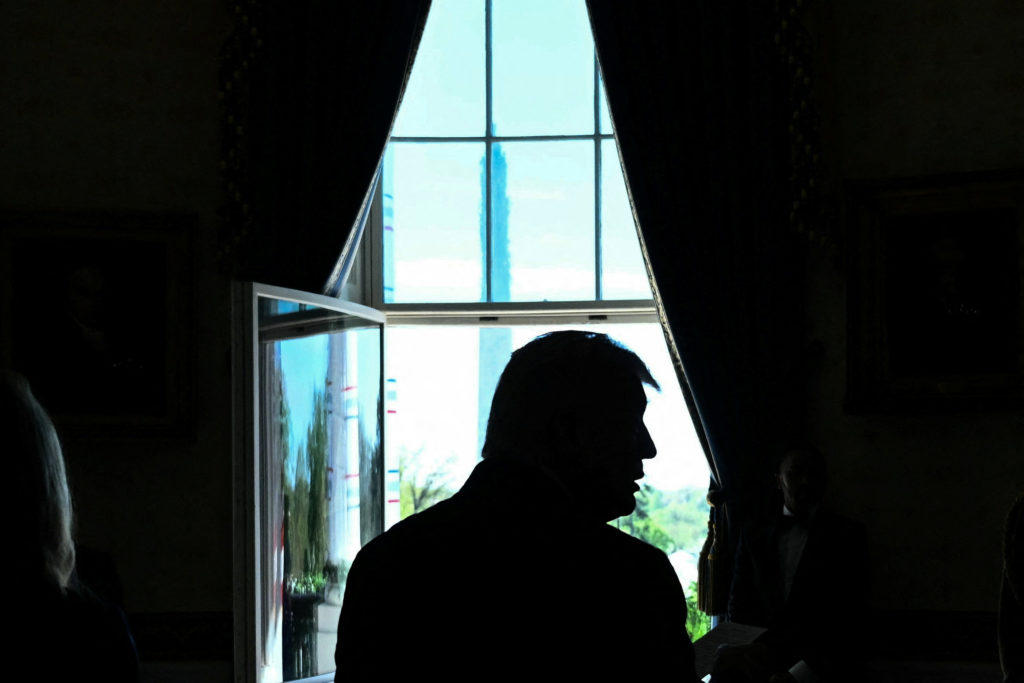
Democrats grow bolder on talk about removing Trump from office after his Iran threats
#Donald Trump #Democrats #impeachment #Iran tensions #25th Amendment #ceasefire #U.S. Congress
📌 Key Takeaways
- Democrats are escalating discussions on removing President Trump via impeachment or the 25th Amendment.
- The catalyst was Trump's threats against Iran, which raised fears of reckless escalation before a ceasefire was agreed.
- The debate centers on presidential authority, national security, and constitutional checks and balances.
- The party is divided between aggressive action and political caution ahead of elections.
📖 Full Retelling
Democratic lawmakers in the United States are intensifying discussions about potential measures to remove President Donald Trump from office following his recent threats against Iran, which culminated in a de-escalation and a two-week ceasefire agreement. This development occurred in Washington D.C. in the aftermath of the heightened U.S.-Iran tensions in early January 2020, driven by concerns over presidential authority, national security, and the constitutional balance of power.
The rhetoric from Democratic leaders and members of Congress has grown notably more assertive. While impeachment remains a complex and politically charged tool, conversations have expanded to include other constitutional mechanisms, such as invoking the 25th Amendment, which deals with presidential incapacity. This shift reflects a deepening conviction within the party that Trump's actions and rhetoric, particularly regarding the use of military force, constitute a grave danger requiring the most robust legislative response available.
The immediate catalyst was the president's public threats of disproportionate retaliation against Iran, which many Democrats and some foreign policy experts argued recklessly escalated tensions and brought the two nations to the brink of a broader conflict. Although the situation was temporarily defused with the announcement of a ceasefire, the episode solidified a view among Trump's opponents that his decision-making in matters of war and peace is impulsive and destabilizing. This has galvanized a faction within the Democratic Party that believes mere opposition is insufficient and that formal removal proceedings, however difficult, must be seriously considered to uphold national security and democratic norms.
Internally, the party is navigating significant strategic and political calculations. While the progressive wing is pushing for the most aggressive stance, more moderate Democrats are cautious, weighing the potential electoral backlash and the high bar for success in a Republican-controlled Senate. Nevertheless, the consensus is moving toward a posture of maximum resistance, framing the debate not just as a political disagreement but as a constitutional imperative to check a president they view as exceeding his authority and endangering global stability.
🏷️ Themes
U.S. Domestic Politics, Foreign Policy, Constitutional Law
📚 Related People & Topics

Donald Trump
President of the United States (2017–2021; since 2025)
Donald John Trump (born June 14, 1946) is an American politician, media personality, and businessman who is the 47th president of the United States. A member of the Republican Party, he served as the 45th president from 2017 to 2021. Born into a wealthy New York City family, Trump graduated from the...
Entity Intersection Graph
Connections for Democrat:
👤
Donald Trump
23 shared
👤
State of the Union
14 shared
🌐
Republican
10 shared
🌐
Iran
6 shared
🌐
Congress
5 shared
Mentioned Entities
Original Source
While President Donald Trump eventually pulled back on his threat and agreed to a two-week ceasefire with Iran, Democrats face growing demands to oppose the Republican president in the strongest possible terms.
Read full article at source