
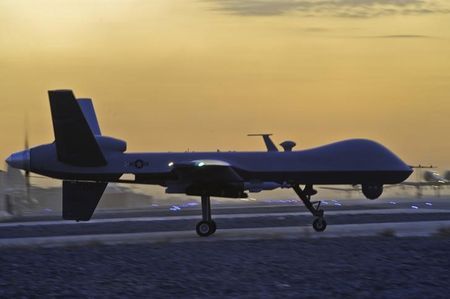
Drones are now expected to become a $250 billion market by 2035
#drone market #artificial intelligence #Physical AI #defense technology #autonomous systems #global security #market projection
📌 Key Takeaways
- Global drone market projected to reach $250 billion by 2035
- Integration of AI into drones labeled 'Physical AI' transforming defense industry
- Market has doubled from $20 billion in 2020 to over $40 billion in 2025
- Defense contractors evolving into tech firms focused on software and AI
📖 Full Retelling
🏷️ Themes
Economic growth, Technological transformation, Defense evolution
Entity Intersection Graph
No entity connections available yet for this article.
Deep Analysis
Why It Matters
This news is important because it signals a fundamental transformation in the defense industry, with AI-powered drones becoming a massive economic force. The shift to 'Physical AI' represents a significant realignment of value from traditional hardware to software and autonomous decision-making systems. This will affect defense contractors, technology companies, military organizations, and potentially create new market leaders while disrupting established players. The $250 billion projection indicates this is not just a niche trend but a major economic shift with global implications.
Context & Background
- The drone market has experienced rapid growth, doubling from $20 billion in 2020 to over $40 billion in 2025
- Early drones were primarily used for surveillance and simple reconnaissance missions
- The integration of AI represents a significant technological evolution beyond remote-controlled operation
- Military applications have historically driven drone development and adoption
- Commercial drone markets have been expanding for delivery, agriculture, and inspection applications
- The concept of 'Physical AI' represents the convergence of robotics, AI, and real-time decision-making
- Traditional defense contractors have historically focused on physical hardware rather than software systems
What Happens Next
Over the next decade, we can expect increased investment in AI development for autonomous drone systems. Defense contractors will likely undergo significant restructuring to focus on software capabilities rather than just hardware manufacturing. The development of drone swarms with collective intelligence will accelerate, requiring substantial investment in data centers and computing infrastructure. Regulatory frameworks will need to evolve to address the autonomous capabilities of these systems. By 2030, we may see the first fully autonomous drone swarms deployed in military operations, with human oversight gradually transitioning to monitoring rather than direct control.
Frequently Asked Questions
'Physical AI' refers to the integration of artificial intelligence into physical systems like drones, enabling autonomous decision-making and operation. It's significant because it transforms drones from remotely controlled devices to intelligent systems capable of complex tasks without human intervention, fundamentally changing their capabilities and applications.
Traditional defense contractors will need to transform from hardware-focused manufacturers to technology companies with expertise in AI, data processing, and autonomous systems. Those that fail to adapt risk becoming obsolete as value shifts from physical drones to the software and computing infrastructure that enables their autonomous operation.
The industry faces several challenges including the high upfront costs of software development, ensuring reliable AI decision-making in complex environments, addressing cybersecurity concerns for autonomous systems, developing appropriate regulatory frameworks, and managing the transition from human-controlled to fully autonomous operations.
'Physical AI' will reduce the need for human personnel in high-risk environments by enabling autonomous drone operations for reconnaissance, combat, and logistics. This will lower operating costs and potentially reduce casualties, but will also require new training programs and create different roles focused on overseeing autonomous systems rather than directly controlling them.
Technology companies specializing in AI, data processing, and cloud computing will have significant opportunities as the drone industry shifts toward software and infrastructure. Companies that can develop robust autonomous decision-making systems, efficient data processing for drone swarms, and secure communication networks will be positioned to capture substantial value in this growing market.